


Embroidery Digitizing Trends 2026 | The Future of Modern Fashion Stitching
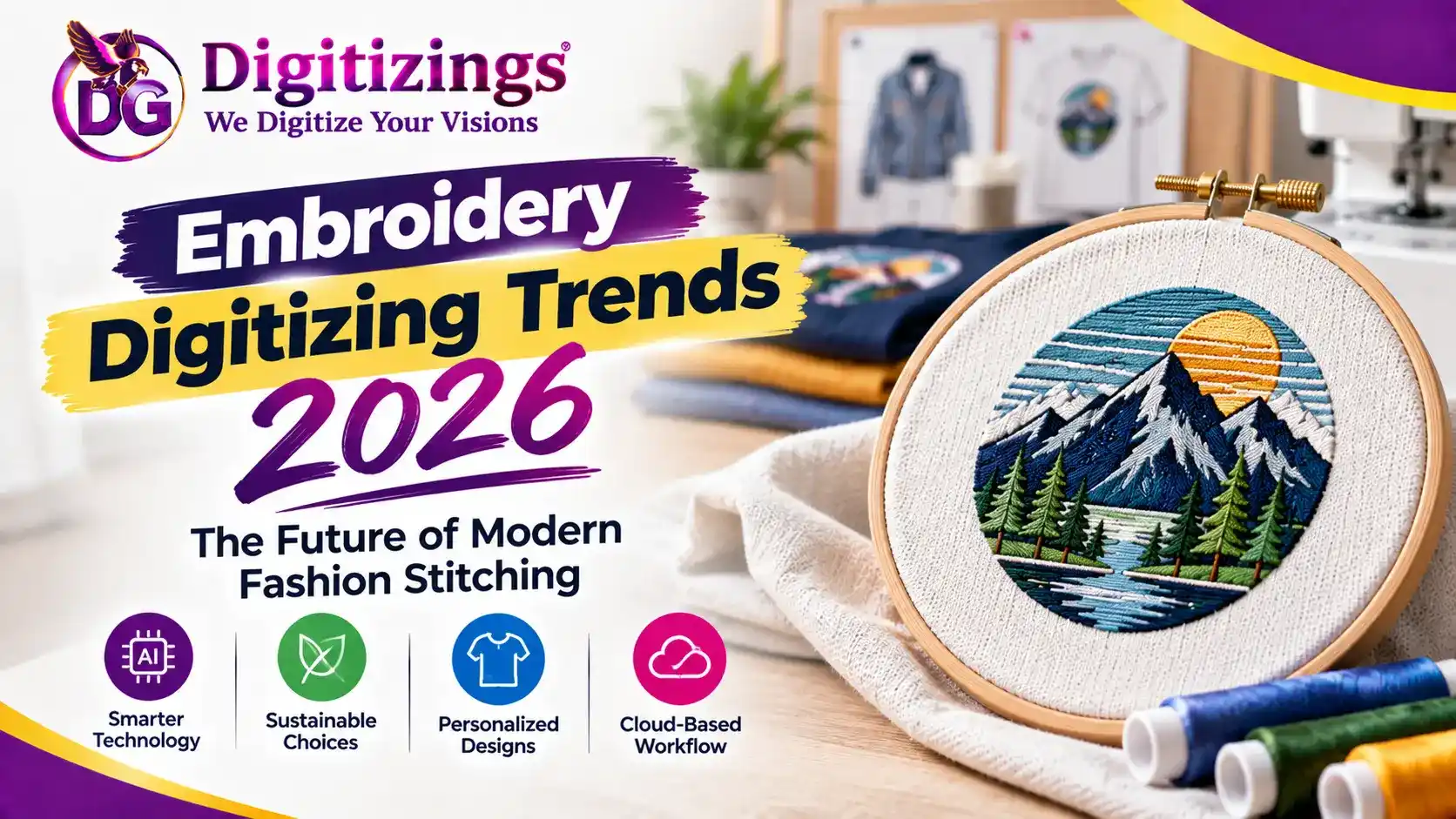
Embroidery is changing quickly.
What was once mainly used for traditional decoration is now becoming an important part of modern fashion, branding, streetwear, personalized apparel, accessories, and even smart textiles.
In 2026, embroidery is moving in two directions at the same time. Technology is making digitizing faster and more flexible, while designers are placing greater value on texture, personalization, craftsmanship, and sustainability.
Current industry trend reports highlight sustainable materials, raised embroidery, personalization, statement typography, specialty threads, and new forms of texture as important directions for 2026. Fashion reporting for Autumn/Winter 2026 is also showing stronger interest in embellishment, tactile surfaces, and craftsmanship.
These changes are creating new opportunities for embroidery digitizers and fashion brands.
The New Role of Embroidery in Fashion
Embroidery is no longer limited to a small logo on a shirt or a traditional decorative pattern.
Designers are using stitching to create visual texture, raised surfaces, personalized details, artistic graphics, and statement pieces.
This is especially noticeable in fashion categories where consumers want products that feel unique.
Embroidery can add something that printed graphics cannot easily reproduce: physical texture.
The thread becomes part of the design rather than simply displaying an image.
This is one reason modern embroidery continues to find new applications across clothing, bags, accessories, home products, and branded merchandise.
1. AI-Assisted Embroidery Digitizing
Artificial intelligence is becoming one of the most discussed developments in embroidery digitizing.
AI-based tools can assist with artwork preparation, object recognition, stitch suggestions, sequencing, and other parts of the digitizing process.
The goal is not simply to press a button and create a finished design.
Instead, AI can act as an assistant that helps digitizers work more efficiently.
Some 2026 industry discussions describe AI being used for predictive stitch behavior, fabric-aware adjustments, automated compensation, and virtual visualization. These capabilities are developing quickly, although their availability and reliability vary between software platforms.
Human Skill Still Matters
AI can process information quickly, but embroidery remains a physical process.
A digitizer still needs to understand:
- Fabric behavior
- Stitch density
- Underlay
- Stitch direction
- Thread tension
- Design size
- Compensation
- Production requirements
The likely direction is not simply AI replacing digitizers. It is AI giving skilled digitizers more tools to work with.
2. More Demand for Raised and 3D Embroidery
Flat embroidery remains important, but dimensional stitching is becoming increasingly attractive.
3D puff embroidery creates raised surfaces by placing foam beneath selected areas of the design.
Other dimensional approaches include raised textile techniques and mixed-material effects.
Industry trend coverage for 2026 specifically highlights puff, trapunto, stumpwork, and other textured approaches as ways designers are adding physical depth to embroidery.
Why 3D Designs Stand Out
Raised embroidery can make:
- Brand logos more noticeable
- Streetwear designs more distinctive
- Lettering more dramatic
- Caps more visually interesting
- Fashion pieces more tactile
For digitizers, however, 3D embroidery requires careful planning.
Not every design can simply be converted into puff embroidery. Shapes, stitch direction, borders, spacing, and foam coverage all need to be considered.
3. Personalization Becomes More Important
Personalized embroidery continues to grow because customers want products that feel unique.
Instead of purchasing exactly the same design as everyone else, consumers can add names, initials, dates, signatures, short messages, or custom artwork.
Personalization is particularly useful for:
- Monograms
- Gifts
- Team apparel
- Corporate clothing
- Wedding products
- Baby products
- Custom jackets
- Small business branding
Current 2026 embroidery trend coverage identifies personalization and subtle embroidered details as important design directions.
4. Micro-Embroidery and Smaller Details
Large embroidery is not the only direction in modern fashion.
Tiny embroidery is also becoming interesting.
Micro-embroidery can place a small design in an unexpected location, such as a cuff, collar, pocket, hem, or inside detail.
The result can be subtle while still giving a garment a premium appearance.
Digitizing Small Designs Requires Precision
Small embroidery creates technical challenges.
Details that look clear on a computer screen may disappear when stitched.
Small text can become difficult to read, while excessive density can make a tiny design too heavy.
This makes accurate digitizing especially important for micro-embroidery.
5. Texture Is Becoming a Major Design Element
Texture is one of the biggest themes emerging in modern embroidery.
Designers are experimenting with embroidery that can be seen and felt.
Different stitch types, thread weights, raised techniques, layering, and specialty materials can create different surface effects.
Fashion's 2026 movement toward heavier embellishment and tactile craftsmanship supports this broader shift toward clothing with more physical and visual depth.
Layered Embroidery
Layering different embroidery elements can create depth without relying entirely on 3D techniques.
A design might combine:
- Flat fills
- Satin borders
- Running-stitch details
- Applique
- Raised elements
- Specialty threads
The result can look more dimensional and artistic.
6. Sustainable Embroidery Practices
Sustainability is becoming increasingly important across fashion.
Embroidery is part of this conversation.
Brands are exploring organic fabrics, recycled materials, alternative fibers, and production methods that reduce unnecessary waste.
Current 2026 embroidery trend reporting points to sustainable and eco-conscious materials as an important direction, including interest in organic cotton, recycled materials, and alternative thread options.
Better Digitizing Can Also Reduce Waste
Digitizing quality can influence production efficiency.
An unnecessarily dense design may consume more thread and take longer to stitch.
Excessive trims and poorly planned sequencing can also increase production time.
Efficient digitizing can therefore support more controlled embroidery production.
7. Statement Typography and Creative Lettering
Text is becoming a design feature rather than simply information.
Large embroidered words, unusual lettering, bold fonts, signatures, and artistic typography are gaining attention.
This creates new opportunities for custom apparel.
A simple word can become the central visual element of a jacket, sweatshirt, cap, or fashion accessory.
Lettering Requires Specialized Digitizing
Not every font works well for embroidery.
The digitizer needs to consider:
- Letter height
- Column width
- Stitch direction
- Density
- Spacing
- Fabric
- Thread thickness
Small fonts often require specialized adjustments to remain readable.
8. Specialty Threads Add More Visual Effects
Standard embroidery thread is no longer the only option.
Designers are experimenting with specialty threads to create different visual effects.
Examples include:
- Metallic threads
- Iridescent threads
- Glow effects
- Matte threads
- Reflective materials
- Textured threads
2026 trend reporting specifically identifies metallic, iridescent, and glow-related specialty fibers as part of the renewed interest in expressive embroidery.
These materials can add another layer of creativity to otherwise simple designs.
However, specialty threads can behave differently during stitching, so digitizing and machine settings may need additional attention.
9. Heritage Designs Meet Modern Digitizing
Embroidery has a long history.
Traditional motifs, cultural patterns, vintage-inspired artwork, and classic decorative techniques continue to influence modern fashion.
The difference is that these ideas are increasingly being recreated with modern embroidery technology.
This creates an interesting combination:
traditional visual language with modern production techniques.
A vintage-inspired motif can be digitized for a contemporary jacket.
A traditional pattern can be adapted for streetwear.
A classic monogram can be given a modern typeface.
This combination allows brands to create designs that feel familiar without looking outdated.
10. Embroidery and Mixed-Media Fashion
Embroidery does not always need to exist by itself.
Designers can combine stitching with other materials and techniques.
Examples include:
- Embroidery and applique
- Embroidery and printed graphics
- Embroidery and patches
- Embroidery and sequins
- Embroidery and beads
- Embroidery and specialty fabrics
Mixed-media designs can create stronger visual contrast.
They also give digitizers more creative options when planning a complex fashion piece.
11. More Unexpected Embroidery Placement
Traditional embroidery often appears on predictable locations such as the left chest, sleeve, cap front, or jacket back.
Modern fashion is expanding beyond those locations.
Designers are exploring embroidery on:
- Collars
- Cuffs
- Hems
- Pockets
- Side panels
- Bags
- Accessories
- Layered garments
Unexpected placement can make a relatively simple design feel more distinctive.
12. Digital Visualization Before Production
Another developing area is the use of digital visualization.
Instead of relying entirely on a physical sample, designers can increasingly preview how embroidery may appear on a garment before production.
Industry discussions around 2026 describe the growing use of 3D visualization and digital garment simulation for evaluating embroidery appearance and texture.
This can help reduce unnecessary sampling and make design approval easier.
It is particularly useful when working with:
- Large fashion collections
- Custom apparel
- Multiple colorways
- 3D embroidery
- Specialty threads
- Complex garment placements
13. Smart Textiles Could Expand Embroidery Beyond Decoration
One of the more technical developments is functional embroidery.
Conductive threads and embroidered electronic components can allow stitching to become part of a functional textile system rather than simply a decorative element.
Recent academic research is exploring machine embroidery for smart textiles and conductive applications, including methods for dealing with seams and variations in textile surfaces.
Potential applications include:
- Wearable technology
- Sensors
- Interactive clothing
- Sports products
- Electronic textiles
This area is still more specialized than everyday fashion embroidery, but it shows how far embroidery technology can extend.
What These Trends Mean for Embroidery Digitizers
The changing embroidery industry creates new expectations for digitizers.
Being able to convert a logo into stitches is still important, but modern digitizers may also need to understand different production techniques.
Skills involving 3D puff, applique, lettering, specialty materials, mixed-media designs, and advanced software tools can become increasingly valuable.
Software knowledge is important, but embroidery knowledge remains the foundation.
A digitizer who understands how stitches behave on real fabric can make better decisions than someone who only knows how to operate software.
How Businesses Can Use the 2026 Trends
Embroidery trends can create new opportunities for apparel businesses and custom product sellers.
A business could introduce personalized products instead of selling only standard designs.
It could offer raised embroidery for premium products.
It could experiment with small embroidered details for minimalist collections.
Sustainable materials can also become part of a brand's product story when supported by genuine material and production choices.
The important point is to use trends where they fit the product.
Not every design needs every new technique.
The Importance of High-Quality Digitizing in Modern Embroidery
Modern embroidery gives designers more creative possibilities, but those possibilities also make accurate digitizing more important.
A complicated design with poor stitch planning can create production problems.
Common issues include:
- Excessive density
- Thread breaks
- Poor registration
- Uneven coverage
- Excessive trims
- Weak small details
- Fabric distortion
Professional digitizing helps turn creative ideas into practical embroidery files.
As designs become more detailed and experimental, technical knowledge becomes just as important as visual creativity.
What the Future of Embroidery Could Look Like
The future of embroidery is likely to combine traditional craftsmanship with increasingly advanced technology.
AI-assisted tools may help automate repetitive tasks.
Digital visualization may make sampling more efficient.
Personalization may continue to create new custom-product opportunities.
3D and textured embroidery may give fashion pieces more physical character.
Sustainable materials may become increasingly important.
Functional embroidery could eventually connect stitching with wearable technology.
These developments do not remove the importance of the digitizer. Instead, they create new tools and techniques for skilled professionals to use.
About Digitizings
Digitizings provides professional embroidery digitizing and vector art services for businesses, apparel brands, embroidery shops, and individuals.
The service covers a wide range of embroidery requirements, including custom embroidery digitizing, logo digitizing, 3D puff digitizing, cap and hat digitizing, applique, jacket-back designs, monograms, patches, lettering, and other custom embroidery projects.
As embroidery continues to evolve, accurate digitizing remains essential for turning creative artwork into production-ready embroidery.
Conclusion
Embroidery digitizing in 2026 is moving beyond simple logo stitching.
AI-assisted tools, raised embroidery, personalization, micro-embroidery, sustainable materials, specialty threads, mixed-media techniques, digital visualization, and smart textiles are expanding what can be achieved with modern stitching.
At the same time, the fundamentals have not changed.
Good embroidery still depends on appropriate stitch types, density, underlay, sequencing, compensation, fabric knowledge, and careful testing.
The future of embroidery will likely belong to designs that combine creative ideas with strong technical execution. For brands, designers, and digitizers, understanding these trends can help create embroidery that feels modern while maintaining the quality and craftsmanship that make stitched products special.
FAQs
1. What are the biggest embroidery trends for 2026?
Major 2026 trends include AI-assisted digitizing, 3D and raised embroidery, personalization, micro-embroidery, sustainable materials, textured designs, specialty threads, bold typography, mixed-media techniques, and digital visualization.
2. Is AI changing embroidery digitizing in 2026?
Yes. AI-assisted tools are being developed for tasks such as artwork processing, stitch suggestions, sequencing, compensation, and visualization. The capabilities differ between software platforms, and human editing remains important for production-quality results.
3. Is 3D puff embroidery still popular in 2026?
Yes. Raised and textured embroidery continues to be highlighted as an important 2026 direction because it adds physical depth and a distinctive appearance to apparel and accessories.
4. Why is personalization important in modern embroidery?
Personalization allows customers and brands to create products with names, initials, signatures, custom lettering, or unique details. This can make embroidered products feel more individual and meaningful.
5. Will technology replace traditional embroidery digitizing?
Technology is changing how digitizers work, but embroidery still requires an understanding of fabric, thread, stitch behavior, density, underlay, sequencing, and production. New technology is more likely to change the tools and workflow than eliminate the need for embroidery knowledge.

 English
 French
 Spanish
 Portuguese
 Deutsch
 Turkish
 Dutch
Dutch
 Italiano
 Russian
 Romaian
 Portuguese (Brazil)
 Greek
Greek