


From Preclinical Studies to Clinical Development: Building an Efficient Drug Development Strategy
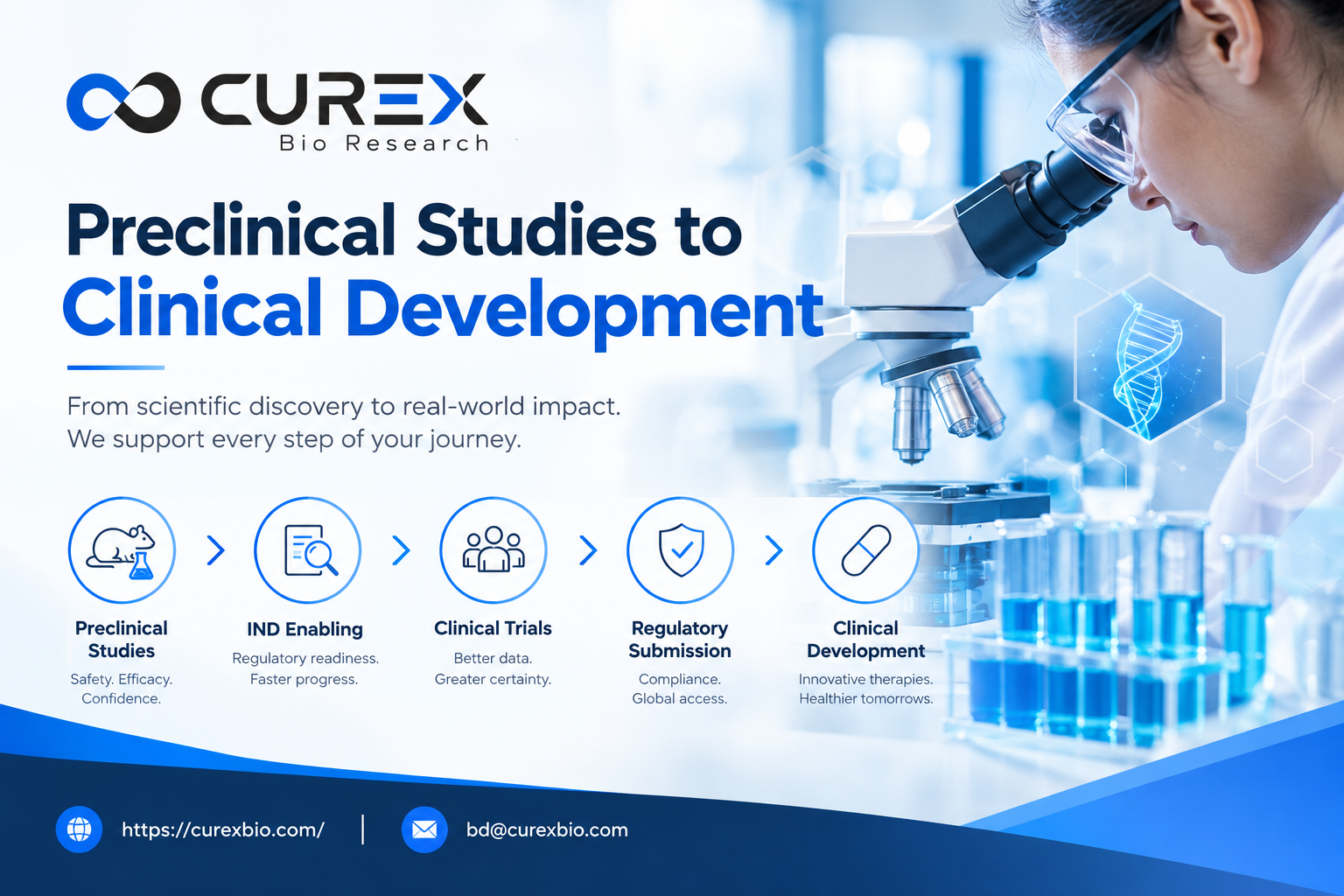
The journey of a novel therapeutic molecule from an initial discovery concept to a commercially viable pharmaceutical product is one of the most complex, resource-intensive, and strictly regulated endeavors in modern science. Historically, the drug development lifecycle has been characterized by high attrition rates, escalating costs, and lengthy timelines.
A critical factor separating successful molecules from abandoned pipeline projects is the formulation of an integrated, efficient drug development strategy. By bridging preclinical studies discovery seamlessly into early- and late-phase clinical development, pharmaceutical and biotechnology innovators can mitigate regulatory risks, optimize capital allocation, and accelerate time-to-market.
The Preclinical Foundation: De-risking Before First-in-Human
The transition from benchtop science to translational medicine begins in the preclinical phase. The primary objective here is not just to demonstrate efficacy, but to rigorously evaluate safety, toxicity, pharmacokinetics (PK), and pharmacodynamics (PD) before a molecule ever encounters a human participant.
-
Robust Pharmacokinetic and Toxicological Profiling: Understanding absorption, distribution, metabolism, and excretion (ADME) profiles early helps predict how a drug behaves in biological systems. Comprehensive GLP (Good Laboratory Practice) toxicology studies are non-negotiable prerequisites for obtaining regulatory clearance to proceed with human trials.
-
Formulation Optimization: Establishing the right dosage form and stability profile during the preclinical phase prevents costly reformulations later. Analytical testing, bioequivalence evaluations, and early process development lay the groundwork for scalable manufacturing.
-
Translational Biomarker Identification: Pinpointing reliable biomarkers in preclinical models allows researchers to track target engagement and therapeutic response more accurately once clinical trials commence.
Bridging the Gap: The Preclinical-to-Clinical Transition
One of the most vulnerable phases in drug development is the "valley of death"—the critical transition zone where pre-clinical data must be translated into an Investigational New Drug (IND) or Clinical Trial Application (CTA) filing.
To bridge this gap effectively, organizations must adopt a "fail-fast, learn-faster" mindset. Key strategies include:
-
Regulatory Alignment from Day One: Designing preclinical protocols with ultimate clinical and regulatory end-goals in mind ensures that safety margins, endpoint selections, and data formats satisfy global regulatory authorities (such as the USFDA, EMA, or regional agencies) from the outset.
-
Integrated Bio-analytical Support: Utilizing sophisticated bio-analytical methods during preclinical studies that can seamlessly scale into clinical phases ensures data continuity. Consistency in analytical assays eliminates variability when transitioning from animal models to human biofluids.
-
Cross-Functional Collaboration: Breaking down silos between discovery scientists, preclinical toxicologists, clinical operations teams, and regulatory affairs specialists ensures that manufacturing feasibility, clinical design, and safety profiles are evaluated holistically.
Streamlining Clinical Development (Phase I–III)
Once clinical clearance is achieved, maintaining momentum requires agile operational strategies:
-
Risk-Based Monitoring (RBM): Implementing decentralized elements, targeted source data verification (SDV), and continuous digital data surveillance helps clinical teams catch safety signals and protocol deviations early.
-
Adaptive Trial Designs: Modern adaptive designs allow for sample size re-estimation, seamless Phase I/II transitions, or arm dropping based on interim data, significantly reducing patient exposure to ineffective doses and saving millions in trial costs.
-
Patient-Centric Recruitment: Operational efficiency heavily relies on retention and recruitment. Utilizing real-world data and targeted site selection ensures that patient populations are engaged effectively without causing protocol delays.
Accelerating Success with Strategic Partnerships
Navigating the continuum from preclinical optimization through complex clinical milestones requires specialized infrastructure, deep regulatory insight, and advanced analytical capabilities. Few organizations possess every necessary resource entirely in-house.
Partnering with specialized contract research organizations (CROs) and bio-analytical experts bridges internal gaps. At CurexBio, we empower pharmaceutical and biotech innovators with end-to-end solutions—ranging from advanced bio-analytical testing and pharmacokinetic evaluations to comprehensive drug development strategies—ensuring your therapeutic pipeline moves smoothly, safely, and swiftly from concept to clinic.

 English
 Arabic
 French
 Spanish
 Portuguese
 Deutsch
 Turkish
 Dutch
Dutch
 Italiano
 Romaian
 Portuguese (Brazil)
 Greek
Greek