


Are Stop Turn Tail Reverse Lights Hard to Build
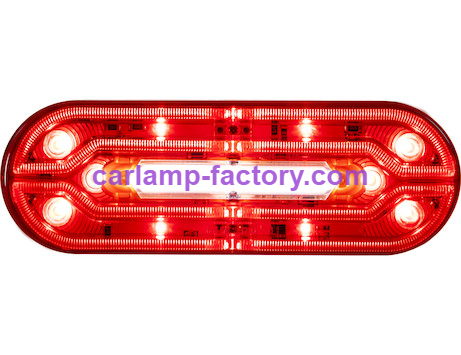
A driver behind you needs to know several things at once: whether you are slowing down, which way you plan to turn, whether your lights are on, and whether you are backing up. Rather than fit four separate housings on each side of a vehicle, manufacturers build a combined lamp that carries all of these signals in one unit. A Stop Turn Tail Reverse Lights Manufacturer deals with this challenge every day, since the functions share a housing, a lens, and often a single wiring connector. Designers who follow the work at carlamp-Factory see the same question come up repeatedly. How do stop turn tail reverse lights work in a combined lamp assembly?
The answer starts with the circuit layout. Each function receives its own feed, and the lamp uses shared or separate ground paths depending on the design. The tail circuit runs at low intensity whenever the parking lights are on, feeding a dim output through a resistor or a reduced-duty signal. The stop circuit overrides that dim state and drives the same filament or LED segment at full brightness when the brake pedal is pressed. The turn circuit pulses that same segment on and off, which is why a brake light and a turn signal can appear to share one lamp. The reverse circuit sits apart, usually on a clear or white segment, and only activates when the transmission enters reverse.
Optics decide how each signal reads from a distance. A single lens must diffuse light for the tail function, project a sharp beam for the stop function, and meet color requirements for the turn function. Reflector geometry, LED placement, and lens texture all contribute. Amber and red segments need separation so a turn signal does not wash into a brake light, and the reverse segment needs enough output to light the ground behind the vehicle. Manufacturers run photometric tests to confirm each function meets the required intensity and color.
Wiring and control add another layer. Vehicles with separate turn and brake bulbs behave differently from those that combine them, so a combined lamp may include a converter or rely on the vehicle's body control module. Trailer applications often use a module that merges the signals before they reach the lamp. Getting this wrong produces symptoms such as a brake light that flashes with the turn signal or a tail light that stays bright. Skilled assembly and clear wiring documentation prevent these faults.
Baozhiwei Vehicle Industry Co., Ltd. builds LED custom tail lights, sequential LED tail lights, and modified tail lights from its base in Taizhou, and its production line carries each lamp from assembly through testing. A Stop Turn Tail Reverse Lights Manufacturer working at this level keeps circuit design, lens optics, and fitment in view at the same time, and Baozhiwei applies that approach to the platforms it serves. Buyers who want to review lamp options for specific vehicles, including the tail lamp for Toyota series listed at https://www.carlamp-factory.com/, can examine the range and the fitment details behind each model. The driver behind you reads every signal without confusion when the housing, the wiring, and the light output all line up.

 English
 Arabic
 Spanish
 Portuguese
 Deutsch
 Turkish
 Dutch
Dutch
 Italiano
 Russian
 Romaian
 Portuguese (Brazil)
 Greek
Greek