


What Is the Typical Lifespan of a Golf Shaft?
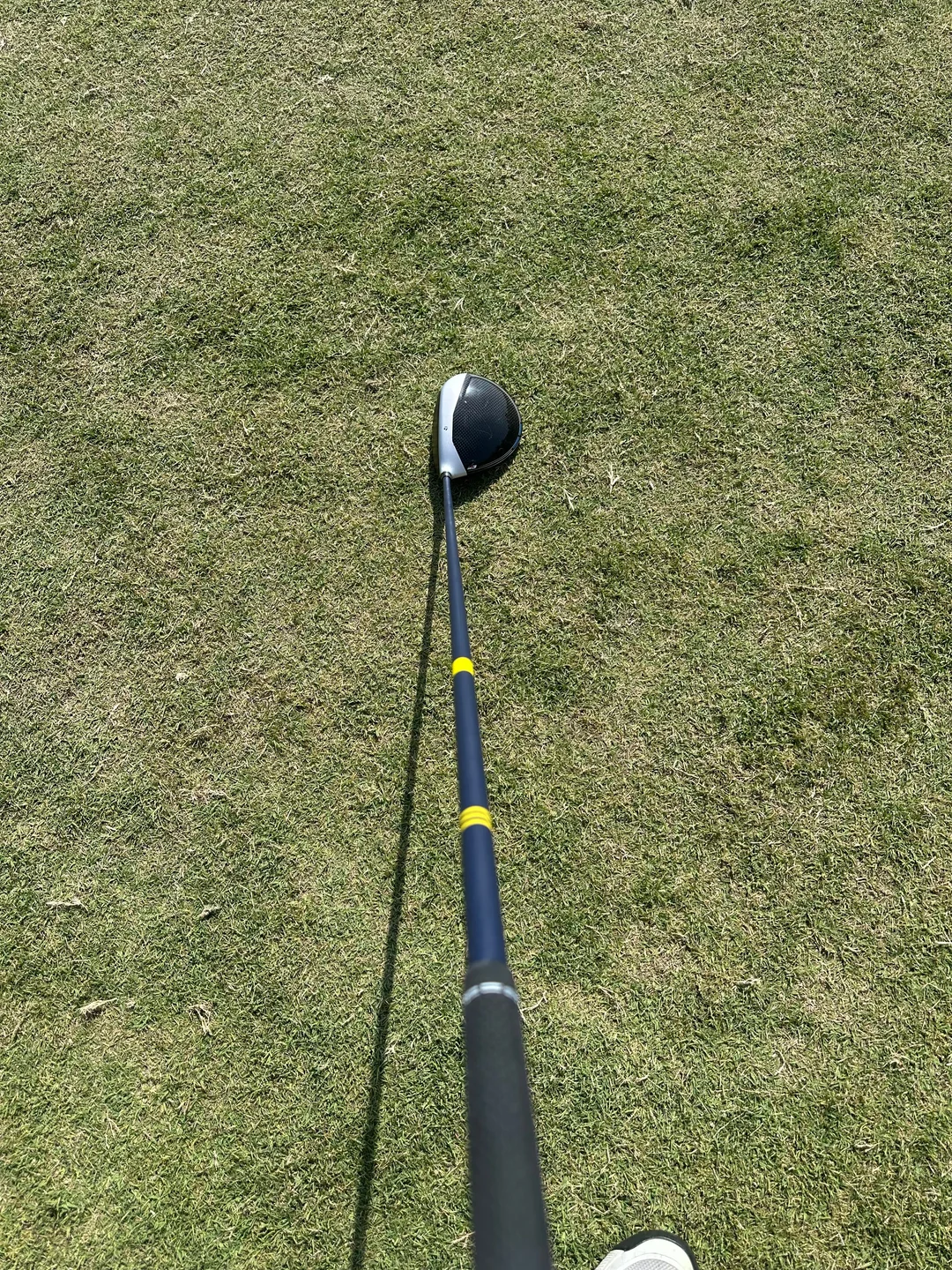
If you have been playing the same golf shaft for years, you may eventually wonder: what is the typical lifespan of a golf shaft?
The simple answer is that golf shafts do not have a fixed expiration date.
A well-maintained graphite or steel golf shaft can last for many years and, in some cases, potentially longer than the golfer using it. Unlike grips, which naturally wear down with regular play, golf shafts do not normally need to be replaced after a specific number of rounds or seasons.
What usually ends a shaft's useful life is not age itself. It is more commonly physical damage, corrosion, improper handling, or a change in your swing that makes the shaft a poor fit.
Understanding that difference can save you from replacing a perfectly good shaft while also helping you recognize when an upgrade actually makes sense.
How Long Do Golf Shafts Last?
For most golfers, a properly maintained golf shaft can last many years or even decades.
Graphite shafts are designed to withstand thousands of repeated swings. Normal use does not necessarily cause them to gradually become "soft" or lose their performance simply because they are getting older.
Steel shafts are also extremely durable. Their bigger long-term concern is usually moisture and corrosion rather than normal swing fatigue.
In other words, there is no rule saying you should replace your golf shaft every five, seven, or ten years.
The condition of the shaft matters much more than the date you bought it.
Several factors can shorten its lifespan.
Physical Damage
Cracks, dents, deep scratches, splintering, or other structural damage are among the clearest reasons to stop using a shaft.
Graphite deserves particular attention because damage to the carbon-fiber structure may compromise the shaft even when the affected area initially looks relatively small.
If you notice visible structural damage, replacing the shaft is safer than continuing to play it.
Rust and Moisture
Steel shafts can develop corrosion when moisture gets inside the shaft or clubs are repeatedly stored in damp environments.
Keeping your clubs clean and dry can therefore make a significant difference to their long-term condition.
Repeated Shaft Removal
Golfers who frequently move a graphite shaft between different clubheads should also be careful.
Removing a bonded shaft may require heat to break down the epoxy. When this is done incorrectly or repeatedly, unnecessary heat and handling can potentially damage the shaft.
For the average golfer who leaves the shaft installed, this is usually much less of a concern.
Your Swing Has Changed
This is one of the most overlooked reasons for replacing a golf shaft.
Your shaft can remain structurally perfect but stop being the best fit for your swing.
Changes in strength, flexibility, tempo, transition, swing speed, or physical condition can affect the shaft profile that works best for you.
The shaft has not worn out. You may simply have outgrown its specifications.
If you are noticing unexplained distance loss, unusual ball flight, or changes in dispersion, checking your current shaft fit may be more useful than focusing only on its age.
Are 20-Year-Old Golf Clubs Still Good?
Yes, 20-year-old golf clubs can still be perfectly playable if they have been stored and maintained properly.
A golf shaft does not automatically become unusable when it reaches a certain age. A 20-year-old steel or graphite shaft with no cracks, corrosion, or structural damage may still function normally.
The larger difference is usually the technology surrounding it.
Modern golf equipment has benefited from advances in clubhead design, materials, adjustability, shaft profiles, and fitting technology. Newer drivers can also provide more options for adjusting loft, lie, launch conditions, and overall setup.
That does not mean an older golf club suddenly becomes bad.
If you consistently hit your older clubs well and like their feel, there is no need to replace them simply because of their age.
However, if your distance, launch, or accuracy has changed significantly, it may be worth checking whether your current equipment still matches your swing.
Can You Hit 300 Yards With a Regular Flex Shaft?
Yes, it is technically possible to hit a 300-yard drive with a regular-flex shaft.
But shaft flex alone does not determine distance.
Clubhead speed, ball speed, launch angle, spin rate, strike location, swing efficiency, weather conditions, and ground conditions can all influence total driving distance.
The more important question is whether a regular-flex shaft matches your swing characteristics.
As swing speed and transition become more aggressive, some golfers may benefit from a stiffer shaft profile to improve stability and consistency. Other golfers can produce strong results with a softer flex because their tempo and loading pattern are different.
This is why choosing a shaft simply because you want more distance can be misleading.
The goal should be to find a shaft that helps you deliver the club consistently.
For a more detailed comparison, read Stiff vs. Regular Flex Driver Shafts: Which Is Best for You? and use our Driver Shaft Flex Chart to better understand where your swing may fit.
How Far Should a 72-Year-Old Man Hit a 7 Iron?
There is no single distance every 72-year-old golfer should hit a 7 iron.
Age-based golf distance statistics can provide a general reference, but they should never be treated as a required benchmark.
Swing speed generally changes as golfers get older, but individual results vary considerably based on strength, mobility, technique, club loft, fitness, strike quality, and how frequently someone plays.
A golfer in his 70s who plays several times each week may produce very different numbers from another golfer of exactly the same age.
That is why your own distance pattern is more useful than comparing yourself with another golfer.
For example, if your 7 iron has gradually gone from 140 yards to 125 yards, the important question is not whether 125 yards is "normal" for your age.
Instead, ask why the change occurred.
It could be swing speed, contact quality, physical changes, club specifications, or a combination of factors.
If your distances have changed noticeably, a fitting can help determine whether your current equipment still matches your swing.
How Much Does It Cost to Replace a Golf Shaft?
The cost of replacing a golf shaft varies significantly depending on the shaft model, grip, adapter, and installation requirements.
Budget and mid-range replacement setups can often cost roughly $100 to $150, while premium aftermarket shafts can cost $300 or considerably more.
Before spending money, determine whether the existing shaft actually needs replacing.
If the shaft is structurally healthy and still fits your swing, replacing it solely because it is old may provide little benefit.
If you are considering an upgrade, see our complete guide: How Much Does a Golf Driver Shaft Cost in 2026?
How Long Is Scottie Scheffler's Driver Shaft?
Tour-player equipment is often discussed because golfers want to know what the world's best players are using.
However, copying a professional golfer's shaft specifications is rarely a useful fitting strategy.
A PGA Tour player's driver setup is built around that player's individual swing speed, delivery, launch conditions, feel preferences, and desired ball flight.
The important lesson is not the exact number of inches in a professional's driver shaft.
It is that shaft length, weight, flex, and profile should work together to match the golfer swinging the club.
What works for an elite professional with extremely high clubhead speed may be completely inappropriate for a recreational golfer.
Your own numbers should guide your equipment decisions.
How Do You Know When It's Time to Replace a Golf Shaft?
Instead of asking only how old your shaft is, ask three questions:
Is the shaft physically damaged?
Look for cracking, splintering, dents, corrosion, or other visible structural problems.
Has your swing changed?
Changes in swing speed, tempo, transition, strength, or mobility may mean your old shaft specification no longer fits.
Has your performance changed?
Unexpected distance loss, inconsistent dispersion, unusual launch, or a different ball flight can justify checking both your swing and equipment.
If the shaft is damaged, replacement may be necessary.
If your swing has changed, a fitting can help determine whether you need a different flex, weight, or shaft profile.
If neither applies, there may be no reason to replace a shaft simply because you have owned it for a long time.
Keep Building the Right Golf Setup
Not sure whether your current shaft still fits your game?
Take the Shaft Selector Quiz to narrow down a shaft based on your current swing.
If you suspect damage, read 7 Signs It's Time to Replace Your Golf Shaft for a more detailed wear-and-tear checklist.
You can also read How Often Should You Actually Get Refit? if your swing or distances have changed over the years.
And once you know an upgrade makes sense, explore the Jupiter One Driver Shaft to find a setup designed around your current game.
The Bottom Line
So, what is the typical lifespan of a golf shaft?
There really is no universal number.
A quality graphite or steel golf shaft that is properly stored, maintained, and protected from damage can remain usable for many years. In some cases, it may last for decades.
What matters more than age is condition and fit.
Golf shafts usually reach the end of their useful life because they become damaged, develop corrosion, are compromised through improper handling, or no longer match the golfer's swing.
Before replacing yours simply because it is "old," inspect its condition and consider whether your swing has changed.
Your shaft may not be worn out at all.
It might still have plenty of golf left in it.

 English
 Arabic
 French
 Spanish
 Portuguese
 Turkish
 Dutch
Dutch
 Italiano
 Russian
 Romaian
 Portuguese (Brazil)
 Greek
Greek