


Ningdeli Wholesale Springs for Precision Custom Orders
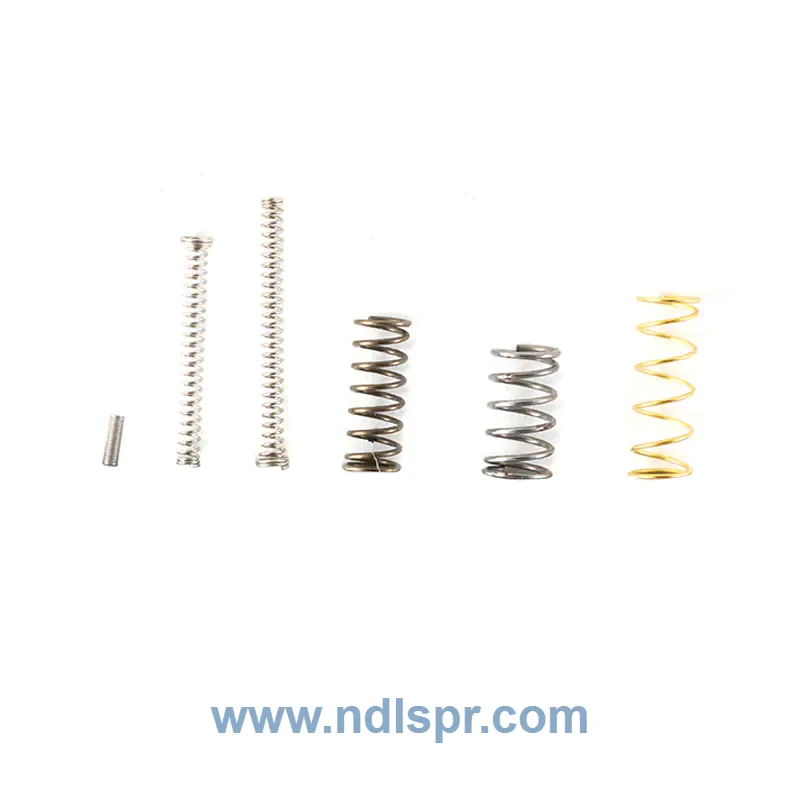
Can Wholesale Springs be made from customer drawings? For industrial buyers, the answer depends on the information shown in the drawing, the required spring structure, material selection, dimensional tolerances, application conditions, and the manufacturer's production capability. A technical drawing gives a spring manufacturer a useful starting point for understanding how a component should look and function inside a finished assembly. At ndlspr, Zhejiang Ningdeli Spring Co., Ltd. develops and manufactures precision spring components for different industries, with product categories covering compression springs, tension springs, torsion springs, wire formed springs, precision small springs, medical springs, automotive springs, inductor coils, and stamping parts.
A customer drawing can contain information that would be difficult to communicate through a simple product name. Spring diameter, wire size, free length, coil arrangement, end configuration, installation position, and working conditions can all affect the final component. When these details are included in a technical drawing, engineers can review the structure before production begins. This is particularly useful for OEM projects where the spring needs to fit into a specific housing, mechanism, electrical assembly, automotive component, or precision instrument. Instead of selecting a standard component without knowing whether it will fit the intended structure, buyers can provide their own design information and discuss production feasibility with the manufacturer.
The drawing should be as clear as practical, especially when the spring is used in a mechanism with tight assembly requirements. Important dimensions should be identified, while tolerances should be stated where they have a direct effect on fitting or operation. Material requirements, surface treatment, load conditions, working stroke, installation direction, and environmental factors can also be included when they are relevant to the project. If a specification is missing, the manufacturer may need to communicate with the buyer before preparing a production plan. This exchange is useful because a spring can appear simple while its actual working behavior depends on several connected design factors.
Material selection is another part of the discussion. A spring used in an electronic product may have different requirements from one installed in automotive equipment or a medical instrument. Depending on the working environment, buyers may consider stainless steel, carbon spring steel, alloy materials, or other suitable options. Corrosion exposure, repeated movement, operating temperature, required elasticity, fatigue conditions, and electrical characteristics can all influence the material decision. Ningdeli's official information describes its spring manufacturing activities across industries including healthcare, aerospace, electronics, electrical appliances, automotive products, household appliances, communication equipment, and new energy applications.
The type of spring shown in the drawing also influences the production process. Compression springs are commonly used when a component needs a controlled return force or cushioning function. Tension springs are designed to work under extension and can use different hook structures according to the installation method. Torsion springs create rotational force and may require carefully formed arms to match the surrounding mechanism. Wire formed springs can be shaped into non-standard geometries for positioning, clamping, resetting, conduction, or other functions. Ningdeli provides these spring categories and also develops special-shaped components for applications where conventional coil structures cannot satisfy the design space or force direction.
A customer drawing can also become the foundation for sample development. Before a production batch is arranged, a manufacturer may produce samples so the buyer can examine dimensions, assembly fit, force behavior, surface condition, and general functionality. This step is especially useful for newly designed equipment because the spring has to work with surrounding parts rather than operate independently. If the sample reveals an issue with the installation position or mechanical response, the drawing can be discussed and adjusted before regular production. Such communication helps both sides establish a clear understanding of the component before the purchasing process moves into a larger production stage.
Inspection is equally important when springs are produced according to drawings. Dimensional checks can cover wire diameter, coil diameter, free length, end shape, and other specified characteristics. Depending on the application, functional testing may also examine compression force, extension force, torque, working stroke, or repeated operation. Ningdeli states that its production system includes high-precision spring machinery, automated optical inspection equipment, and automated cleaning systems, while the company operates under an IATF 16949:2016 quality management system. These capabilities are intended to support controlled production and inspection for precision spring components.
For buyers ordering custom components in batches, production consistency is an important consideration. A drawing normally remains the technical reference throughout repeated manufacturing, so the supplier needs to understand which dimensions are critical and which characteristics require inspection. Buyers can discuss sample approval, material certificates, inspection records, packaging requirements, delivery arrangements, and other purchasing conditions before production starts. A clear specification also gives the manufacturing team a practical reference when checking finished components. This can be particularly useful for automotive, electronic, medical, and industrial projects where a small spring may be installed inside a larger product with limited access after assembly.
Production equipment can also affect the feasibility of a drawing. Different spring geometries require suitable forming methods, tooling arrangements, wire handling, and inspection procedures. Ningdeli reports that it operates production bases in Zhejiang and Dongguan and has a substantial range of imported high-precision spring machines and computerized production equipment. Its published manufacturing information indicates support for spring wire diameters across a broad range, together with automated optical inspection and cleaning equipment. These resources allow engineering teams to discuss prototypes and recurring production within the same manufacturing system when the project requirements are suitable.
The drawing does not always need to be the only source of technical information. If a customer is replacing an existing spring, photographs, physical samples, assembly drawings, or application descriptions can help explain details that may not be visible in a standalone component drawing. For a new project, information about the surrounding parts can also help the manufacturer understand the intended installation. A spring that fits the drawing dimensionally may still require careful consideration of its actual working environment, particularly when it is exposed to repeated movement, vibration, moisture, temperature changes, or contact with other components.
Communication is therefore an important part of drawing-based spring production. Buyers can provide the technical drawing together with the intended application, preferred material, working conditions, required quantity, surface treatment, inspection expectations, and any available reference samples. The manufacturer can then review the information and discuss questions before production. This approach gives purchasing teams a practical way to move from an initial concept to sampling and then into regular supply without relying only on a generic catalog specification.
For companies looking for a spring manufacturer capable of handling drawing-based development, Zhejiang Ningdeli Spring Co., Ltd. offers precision spring manufacturing across compression, tension, torsion, wire formed, small precision, medical, automotive, and other specialized categories. The company states that it supports customers with customized products developed from drawings or samples, while its production and inspection resources are designed for precision component manufacturing. Buyers with an existing design can contact Ningdeli to discuss materials, dimensions, tolerances, samples, production requirements, and application conditions, while the product range at https://www.ndlspr.com/ provides a direct reference for exploring spring solutions and discussing Wholesale Springs requirements with the manufacturer.

 English
 Arabic
 French
 Spanish
 Portuguese
 Turkish
 Dutch
Dutch
 Italiano
 Russian
 Romaian
 Portuguese (Brazil)
 Greek
Greek