


Cloud VPS Hosting 2026: Prices, Features & Buying Guide
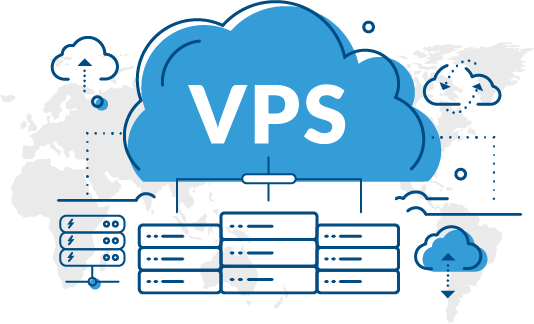
Cloud VPS hosting gives a website or application its own virtual server resources inside cloud infrastructure. It sits between shared hosting and a dedicated server, giving more control, steadier performance, and room to scale without paying for an entire physical machine.
For Dubai businesses, e-commerce stores, SaaS tools, CRM systems, and WordPress websites can outgrow shared hosting. A VPS adds dedicated resources, root access, isolation, and NVMe storage.
This guide explains how the service works, what affects price, and how a buyer can choose a plan.
What Is Cloud VPS Hosting?
A cloud VPS is a virtual private server created on cloud infrastructure. It behaves like an independent machine even though hardware is shared. Each virtual machine receives assigned vCPU, RAM, storage, networking, and operating-system resources.
How Does a Cloud VPS Server Work?
KVM virtualization separates a physical server into isolated virtual machines. Each instance can have its own operating system and resource allocation, making cloud VPS hosting more flexible than basic shared hosting.
Dedicated Resources vs. Shared Resources
Shared hosting users compete for one resource pool. A VPS gives each account a defined allocation, which can make performance more consistent during traffic spikes.
How Does a Cloud VPS Work?
Cloud infrastructure combines compute, storage, and networking. The provider assigns CPU, RAM, disk space, bandwidth, and IP. The customer can install software, configure security rules, host databases, or run websites.
Modern VPS platforms often use NVMe SSD storage for lower latency. Providers may also offer backups, monitoring, firewalls, and DDoS protection. Plan details should be checked before purchase.
Cloud VPS vs. Traditional VPS
Both options provide isolated virtual servers, but their infrastructure and scaling models can differ.
|
Feature |
Cloud VPS |
Traditional VPS |
|
Scalability |
High |
Moderate |
|
Infrastructure |
Cloud-based |
Often tied to one physical host |
|
Resource upgrades |
Usually easier |
May require migration or reboot |
|
Availability |
Depends on architecture |
More host-dependent |
|
Control |
High |
High |
|
Pricing |
Flexible |
Often fixed plans |
A “cloud” label does not guarantee automatic failover. Buyers should check the provider’s availability design and service-level terms.
Cloud VPS vs. Shared Hosting
Shared hosting is inexpensive but offers less control. A VPS suits workloads needing custom software, root access, more RAM, or predictable CPU capacity.
Cheap cloud VPS hosting can be a practical next step after a site outgrows shared hosting. A buyer should still compare resource limits, support, backup policy, and renewal cost instead of choosing by headline price alone.
Cloud VPS vs. Dedicated Server
A dedicated server gives one customer an entire physical machine and can suit heavy databases or workloads needing maximum hardware control.
A cloud VPS is often more economical because resources can be sized closer to demand.
Key Benefits of a Cloud VPS
The main benefits are control, isolation, scalability, and cost efficiency. A business can size CPU, RAM, storage, and the operating system to its workload.
Affordable cloud VPS hosting can support growth without dedicated hardware. Root access lets developers configure web servers, PHP, databases, caching, security tools, and custom applications.
Important Cloud VPS Hosting Features in 2026
CPU and RAM
CPU affects processing speed, while RAM supports applications, databases, and concurrent users. Small sites may use 2–4 GB RAM; e-commerce, CRM, ERP, or application servers may need 8 GB or more.
NVMe SSD Storage
NVMe storage is a major buying factor for high-performance VPS hosting. Faster storage can help databases, dynamic websites, dashboards, and applications with frequent read and write operations.
Bandwidth, Backups, and Security
Bandwidth, port speed, and data center location affect delivery speed. Useful features include backups, firewalls, DDoS protection, monitoring, SSL, and secure SSH access.
Cloud VPS Hosting Price in 2026
Cloud VPS hosting pricing depends mainly on CPU, RAM, storage, traffic allowance, management level, operating system, and backup options.
|
VPS Level |
Typical Resources |
Suitable For |
|
Starter |
1–2 vCPU, 2–4 GB RAM |
Blogs, development, small sites |
|
Business |
2–4 vCPU, 4–8 GB RAM |
Business sites, stores, growing apps |
|
Advanced |
4–8+ vCPU, 8–16+ GB RAM |
Busy applications, databases, SaaS |
HostBreak currently lists VPS plans from PKR 6,500 per month, with higher tiers adding CPU, RAM, storage, and traffic. Buyers should confirm the live rate before ordering.
Managed vs. Unmanaged VPS
Managed hosting suits customers who do not want every server task. It may cover updates, security, backups, monitoring, migration, or tuning.
Unmanaged hosting gives more control but requires stronger Linux or Windows administration skills. It suits technical teams that want to configure the stack themselves.
Linux vs. Windows Cloud VPS
Linux Cloud VPS is common for WordPress, PHP, Node.js, Python, databases, Docker, and open-source tools. It is flexible and usually avoids a Windows license cost.
Windows Cloud VPS suits Windows Server, Remote Desktop, ASP.NET, or Microsoft SQL Server workloads. The choice depends on application compatibility.
NVMe VPS: Why Storage Performance Matters
NVMe uses a faster interface than older SATA SSD setups. For database-heavy sites, WooCommerce stores, APIs, and dynamic applications, storage latency can affect response time.
A fast disk cannot fix poor code or an overloaded CPU. Storage should be judged with CPU, RAM, caching, and network quality.
Who Should Use a Cloud VPS?
Cloud VPS Hosting fits growing WordPress sites, WooCommerce stores, SaaS applications, developer environments, databases, agencies, and business systems such as CRM or ERP.
Virtual Private Server Hosting is especially useful when a project needs software that shared hosting does not allow or when predictable resources become more important than the lowest monthly price.
How to Choose the Best Cloud VPS
A buyer should compare CPU, RAM, NVMe storage, bandwidth, server location, backups, uptime terms, security, management, support, scalability, and renewal cost.
Cloud server hosting should also match the customer’s technical ability. A low-priced unmanaged server can become expensive if the team later needs emergency administration or security recovery.
How Much RAM Does a Cloud VPS Need?
Around 2 GB can handle light development or a small site. Four GB gives more room for WordPress. Eight GB suits busier stores or several sites, while 16 GB or more may suit databases and heavier applications.
Traffic alone does not decide RAM needs. Plugins, database size, caching, background jobs, and application design also matter.
How to Improve Cloud VPS Performance
Performance improves when the server is tuned around the workload. Useful steps include caching, a CDN, database cleanup, tuned PHP workers, image optimization, and regular updates.
Monitoring CPU, memory, disk I/O, and network data can reveal the real bottleneck before a customer pays for a larger server.
Cloud VPS Security Checklist
A secure VPS should use strong authentication, restricted SSH access, current software, firewall rules, malware protection where needed, SSL, sensible permissions, backups, and monitoring.
Speed should not come at the expense of security. A fast server with weak credentials or no backup plan creates unnecessary risk.
How to Migrate a Website to Cloud VPS Hosting
The safe process is to back up data, configure the new VPS, move files and databases, test the site, update DNS, and monitor logs.
Keep the old hosting active until DNS changes have propagated and the new environment is stable. This provides a fallback if a problem appears.
Common VPS Mistakes to Avoid
Common mistakes include buying only on price, choosing too little RAM, ignoring location, skipping backups, weak security settings, and choosing unmanaged hosting without the skills to maintain it.
Overbuying is wasteful. A smaller, scalable plan can be a better starting point when upgrades are easy.
Frequently Asked Questions
What is cloud VPS hosting?
It is a virtual private server hosted on cloud infrastructure with assigned CPU, RAM, storage, networking, and operating-system resources.
Is a cloud VPS better than shared hosting?
It offers more control, isolation, and scalable resources. Shared hosting remains suitable for smaller sites that do not need server-level access.
How much RAM does a VPS need?
A small site may run on 2–4 GB, while busy stores, databases, and applications often benefit from 8 GB or more. Actual software load should guide the choice.
Is NVMe VPS better than SSD VPS?
NVMe can deliver lower latency and higher throughput than older SATA SSD storage. Real-world speed still depends on CPU, RAM, software, caching, and network performance.
Is managed VPS hosting worth it?
It can help businesses that want support with maintenance, security, backups, and troubleshooting. Technical teams may prefer unmanaged hosting for greater control.
Final Thoughts: Is Cloud VPS Hosting Worth It in 2026?
Cloud VPS Hosting is a strong middle ground for websites and applications that need more control and scalable resources than shared hosting but do not require a full dedicated server.
The best plan is not simply the cheapest. A buyer should match CPU, RAM, NVMe storage, bandwidth, management, security, and data center location to the workload. For Dubai businesses, network quality and support response should matter as much as monthly price.

 English
 Arabic
 French
 Spanish
 Deutsch
 Turkish
 Dutch
Dutch
 Italiano
 Russian
 Romaian
 Portuguese (Brazil)
 Greek
Greek