


Australia Spouse Visa Requirements from India
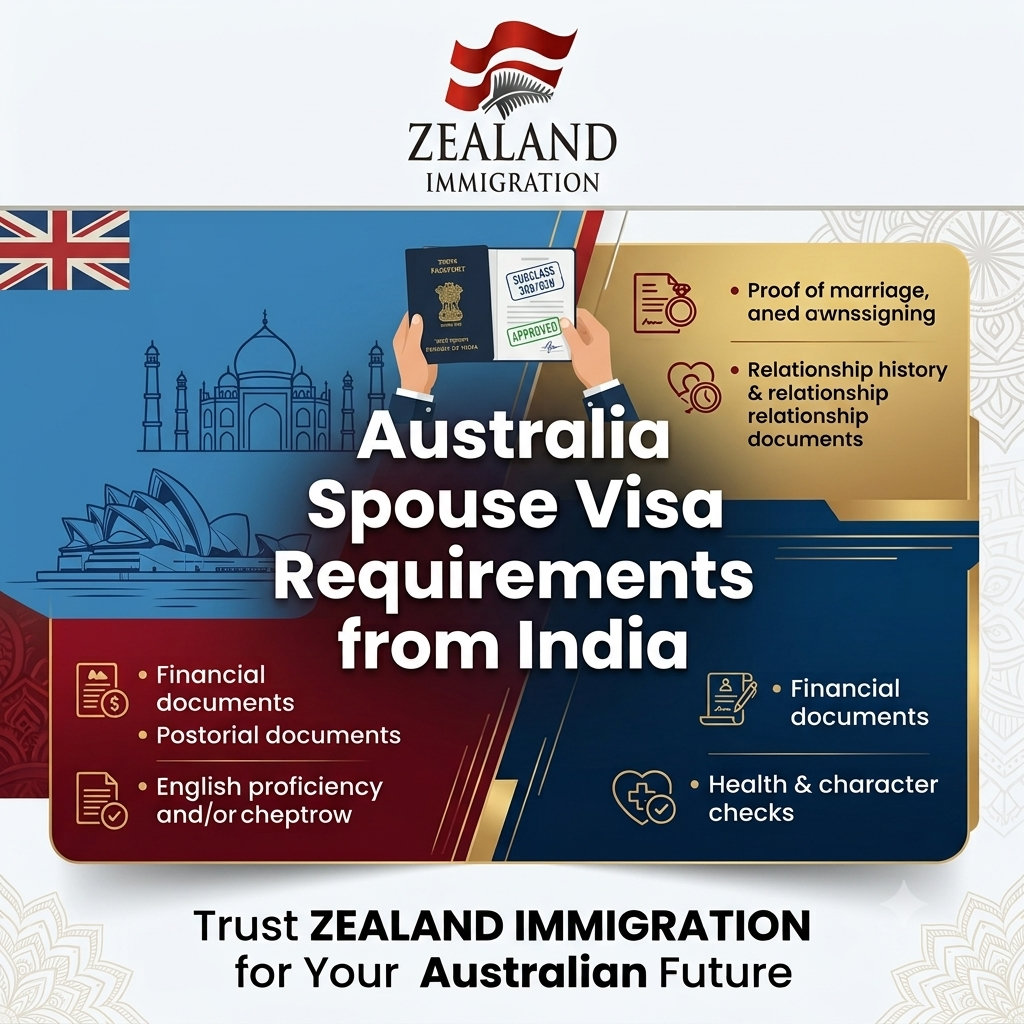
Moving to Australia to live with your husband, wife, or partner is an important step for many families in India. Australia has different family visa options, and the right option depends on your relationship, the location of the applicant, and the status of the partner in Australia. Before applying, it is important to understand the visa type, documents, relationship evidence, application process, and expected costs.
If you are planning to apply for an Australia Spouse Visa, you normally need to show that your relationship is genuine and continuing. The sponsoring partner is generally an Australian citizen, Australian permanent resident, or eligible New Zealand citizen. Married couples can provide marriage evidence, while de facto partners need to provide evidence showing their relationship meets the relevant requirements.
Types of Partner Visas for Australia
Australia provides different partner visa pathways depending on where you are when you apply.
| Visa Type | Main Purpose |
|---|---|
| Subclass 820 | Temporary partner visa for applicants applying in Australia |
| Subclass 801 | Permanent partner visa after the temporary stage |
| Subclass 309 | Provisional partner visa for applicants applying outside Australia |
| Subclass 100 | Permanent partner visa after the provisional stage |
| Subclass 300 | Prospective Marriage visa for people planning to marry their partner |
For the 820/801 pathway, you must be in Australia when you apply. For the 309/100 pathway, you must be outside Australia when you apply. The temporary and permanent stages are generally applied for together.
Who Can Apply for a Partner Visa?
The main requirement is having the correct relationship with an eligible sponsor. Your spouse or de facto partner must generally be an Australian citizen, Australian permanent resident, or eligible New Zealand citizen. The Department also checks whether the relationship is genuine and continuing.
For married applicants, the marriage certificate is an important document. For de facto applicants, additional evidence may be needed to show the nature and history of the relationship. Each application is considered according to the relevant visa requirements.
Documents Required from India
Preparing correct documents is an important part of the application. Your documents should clearly explain your identity, relationship, personal history, and circumstances.
Common documents may include:
-
Valid passport and identity documents
-
Marriage certificate, where applicable
-
Birth certificate and other civil documents
-
Evidence of previous marriages or relationships, if applicable
-
Photographs showing your relationship
-
Joint bank account or financial documents
-
Joint bills, lease or property documents
-
Evidence of visits and travel together
-
Messages, calls, emails, or other communication evidence
-
Statements from people who know your relationship
-
Police and health documents when requested
-
English translations of documents that are not in English
The Department may look at financial, household, social and commitment aspects of a relationship. Evidence such as joint accounts, shared bills, joint travel, common social activities and regular communication can help explain the relationship history.
Relationship Evidence
Relationship evidence is one of the most important parts of a partner application. Your documents should tell a clear and truthful story about how you met, how the relationship developed, and how you support each other.
Financial evidence can include joint bank accounts or shared financial responsibilities. Household evidence can include joint leases, bills and documents showing your living arrangements. Social evidence may include photographs, invitations, travel records and information showing that family or friends know about your relationship.
If you have lived apart because of work, study, or another genuine reason, communication records and travel documents can help explain how you continued the relationship.
Application Process from India
The application process starts by selecting the correct visa pathway and preparing the required documents. Most partner visa applications are lodged online through ImmiAccount.
The general process is:
-
Check your eligibility and visa pathway.
-
Prepare identity and relationship documents.
-
Collect financial and supporting evidence.
-
Create or use your ImmiAccount.
-
Complete the online application.
-
Upload the required documents.
-
Pay the applicable visa charge.
-
Complete health or character requirements when requested.
-
Respond to any further requests from the Department.
-
Wait for the visa decision.
Providing complete and correct information can help avoid delays caused by missing documents or requests for additional information.
Costs and Processing Time
Partner visa costs can change, so applicants should check the current Department of Home Affairs pricing information before submitting an application. The current Department pages list the base charge for most 820/801 and 309/100 applicants from AUD 11,710, while other costs may apply for health checks, police certificates, biometrics, or additional applicants.
Processing time is not the same for every applicant. The Department states that partner visa processing times vary and that complex applications or requests for additional information can take longer. Therefore, applicants should use the official processing-time guide as an indication rather than a guaranteed timeframe.
Study and Future Plans in Australia
Some applicants may also plan their education or career after joining their partner in Australia. If study is part of your future plan, Australia study programs can offer different options depending on your education level, career goals and visa conditions. It is important to check the conditions attached to your specific visa before making study or work plans.
Professional guidance can also help applicants understand document requirements, relationship evidence and the correct application pathway. Registered MARA agents can provide immigration assistance where authorised and can help explain the application process based on your individual circumstances.
Important Points for Indian Applicants
Before submitting your application, check that your passport and civil documents are correct and that names and dates are consistent across documents. Any non-English documents should be translated according to Australian requirements. Keep copies of your application and supporting evidence for your records.
If you are currently in Australia on another visa, check your visa conditions before applying. If you are outside Australia in India, the offshore partner pathway may be relevant if you meet its requirements. Always check the latest Department of Home Affairs information because visa rules and charges can change.
FAQs
1. Can I apply for a partner visa from India?
Yes. If you are outside Australia, the subclass 309/100 pathway may apply if you meet the requirements.
2. Can I apply if my partner is an Australian permanent resident?
Yes. Australian permanent residents are among the eligible sponsor categories for partner visas.
3. What relationship evidence is useful?
Marriage documents, joint financial records, shared household documents, travel records, photographs and communication evidence can help demonstrate the relationship.
4. Is the permanent visa granted immediately?
Usually, the temporary or provisional stage comes first. For many applicants, eligibility for permanent assessment begins two years after the relevant application was made, although some circumstances may allow earlier assessment.
5. Can visa fees change?
Yes. Australian visa charges can change, so applicants should check the current official pricing information before applying.

 English
 Arabic
 French
 Spanish
 Portuguese
 Deutsch
 Turkish
 Italiano
 Russian
 Romaian
 Portuguese (Brazil)
 Greek
Greek