


Thermal Paper: How It Works and What to Check Before Buying
Thermal Paper: What's Actually in the Coating
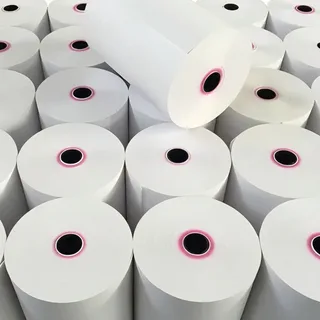
Thermal paper looks simple from the outside, a plain white roll, but the chemistry behind it determines how sharp a receipt prints, how long it stays readable, and how well it holds up in a busy till or handheld terminal. Understanding what thermal paper actually is, rather than treating every roll as interchangeable, prevents printer jams, faded receipts, and unnecessary reordering headaches for any business printing at volume.
How Thermal Paper Works
Thermal paper carries a heat-sensitive coating on one side. Inside a thermal printer, a print head applies precise heat to specific points across that coating, triggering a chemical reaction that darkens the paper exactly where heat was applied. No ink cartridge, ribbon, or toner is involved at any stage.
The Core Chemistry
-
A colour developer, usually a weak acid, embedded in the coating
-
A leuco dye, colourless until it reacts with the developer under heat
-
A sensitiser, controlling the temperature at which the reaction triggers
-
A protective top coat, present on higher-grade papers to resist smudging and moisture
Why This Matters Beyond the Technical Detail
The specific chemistry used affects two things buyers actually care about: how fast a receipt can print without smudging, and how long that receipt stays legible before fading.
Types of Thermal Paper Coatings
Standard Coated Paper
The general-purpose option for everyday receipts, order slips, and queue tickets, balancing cost and reliability for typical retail volume.
BPA-Free and Phenol-Free Formulations
Many thermal coatings historically relied on bisphenol-based developers. A growing share of suppliers now offer BPA-free and phenol-free alternatives, which businesses increasingly prefer given how frequently staff and customers handle printed receipts by hand.
High-Sensitivity Paper
Reacts to lower heat levels, allowing faster print speeds on machines built for high transaction volume, without sacrificing print clarity.
Long-Life Coated Paper
Uses an additional protective layer specifically to slow fading, useful for receipts or records that need to stay legible for longer than a typical till slip.
Paper Width, Diameter, and Core Size
Why Sizing Mistakes Happen
A roll that doesn't match a printer's paper bay simply won't load correctly, and this is the most common reason businesses end up with unused stock.
Common Width Standards
-
57 mm or 58 mm, typical for handheld card machines and compact printers
-
80 mm, the standard width for most desktop POS receipt printers
-
112 mm, used in select kitchen and specialty printers
Diameter and Core
Diameter determines how much paper is on a roll, with larger diameters lasting longer between changes but requiring a printer with sufficient bay space. The core, the cardboard tube at the centre, usually follows a standard size, though some machines require a specific fit, so checking the printer's manual before bulk ordering avoids costly mismatches.
Paper Weight and Print Quality
Paper weight, measured in grams per square metre, affects both cost per roll and how the paper handles inside the printer.
What Happens With Low-Quality Paper
-
Faint, inconsistent printing that's hard to read
-
Paper dust building up on the print head over time
-
More frequent jams from uneven roll winding
-
Faster wear on the print head itself
A slightly higher cost per roll for consistent quality thermal paper rolls is usually far cheaper than replacing a damaged print head down the line.
Where Thermal Paper Is Used
Retail Counters
Receipts, refund slips, and promotional vouchers printed at high volume throughout the day.
Restaurants and Kitchens
Customer bills and kitchen order tickets, where heat and steam near the printer make coating quality especially relevant.
Pharmacies and Clinics
Dispensing slips and receipts that sometimes need to remain legible for record-keeping purposes.
Card Payment Terminals
Narrow-width rolls built for handheld and countertop card machines.
Choosing the Right Thermal Paper
-
Match width, diameter, and core exactly to the printer's specifications
-
Consider transaction volume, since high-traffic counters benefit from larger-diameter rolls
-
Check sensitivity requirements for faster printers running high volume
-
Decide on BPA-free needs, particularly relevant where staff handle receipts constantly
-
Choose long-life coating for anything that needs to stay legible for record purposes
-
Test a small batch first before committing to bulk ordering from a new supplier
Storing Thermal Paper Properly
Heat-sensitive coatings react to their environment even before printing.
-
Store in a cool, dry location, away from radiators and direct sunlight
-
Keep rolls in original packaging until needed
-
Avoid contact with adhesives or plastic wrap, which can transfer chemicals that darken or fade the coating
-
Keep away from solvents and strong cleaning products
Why Thermal Receipts Fade Over Time
Fading is caused primarily by heat, sunlight, friction, and contact with plasticisers found in some wallets or plastic folders. For records that genuinely need to last years, scanning or photographing important receipts is more reliable than storing the original paper alone.
Basic Printer Care Tips
-
Load paper with the coated side facing the print head; loading it backwards produces blank prints
-
Clean the print head periodically with a soft cloth and isopropyl alcohol, following manufacturer guidance
-
Never force an ill-fitting roll, since it strains the feed mechanism
-
Replace worn feed rollers if paper starts skipping or feeding unevenly
Quick Test for the Coated Side
Lightly scratch the paper's surface with a fingernail. The coated side leaves a visible dark mark from the friction heat.
For further more related posts or blogs or this type of contents click here
Frequently Asked Questions
Does all thermal paper work in any thermal printer?
No. Width, diameter, core size, and heat sensitivity all need to match the specific printer's requirements.
Why do thermal receipts fade so quickly?
Heat, sunlight, and contact with certain plastics all accelerate fading in the coating. Long-life coated paper slows this process but doesn't eliminate it entirely.
Is BPA-free thermal paper worth paying more for?
For businesses where staff handle large volumes of receipts daily, many now consider it a reasonable standard rather than a premium option.
Final Thoughts
Thermal paper might seem like a minor, interchangeable purchase, but the coating chemistry, sizing, and paper weight all directly affect print quality, printer lifespan, and how long a receipt stays useful. Checking a printer's exact specifications, choosing a coating suited to the job, and storing rolls properly are small steps that prevent most of the common problems businesses run into at the till.

 English
 Arabic
 French
 Spanish
 Portuguese
 Deutsch
 Turkish
 Dutch
Dutch
 Italiano
 Russian
 Portuguese (Brazil)
 Greek
Greek