


Seiko Prospex: Seiko ProspexBuilt for Places Most Watches Never
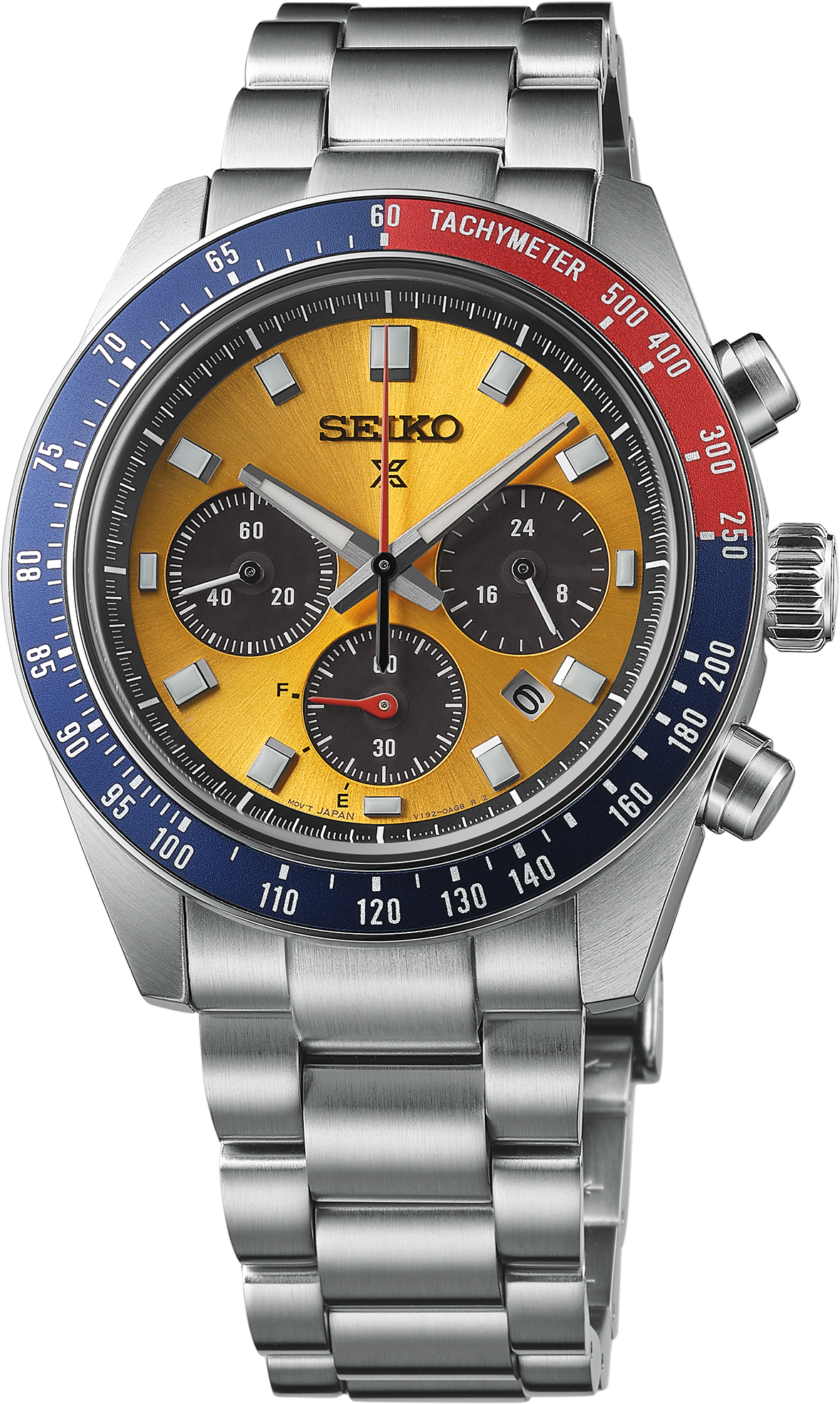
Few watch lines have a story as tied to real-world use as Seiko Prospex. The name is short for "Professional Specifications," and it has covered Seiko's tool watches for divers, mountaineers, pilots and racers for years. It is also a route into serious mechanical watchmaking that doesn't require a luxury budget.
A Name With Deep Roots
Prospex was formally introduced in 2014, but the ideas behind it are much older. Seiko brought many of its sport and professional models together under one banner, giving a scattered range a clear identity. The heritage goes back to 1965, when Seiko released its first Japanese dive watch, a 150-meter model built at a time when Swiss brands dominated the category. In 1968, Seiko followed with a 300-meter professional diver that used a high-beat movement, showing the company was competing on engineering rather than just price.
The 1970s produced some of the most distinctive designs in watchmaking. The 1975 professional diver introduced a 600-meter-rated watch with a titanium case, later nicknamed the "Tuna" for its shroud-like outer casing. The 1976 "Turtle" earned its name from its rounded, cushion-shaped case. These weren't marketing exercises. They came from Seiko's work with professional divers, including saturation divers who needed watches that could survive extreme pressure and helium exposure.
The Four Pillars: Sea, Land, Sky and Speed
Prospex is organized around environments, and the watch in each category is designed for its conditions.
Sea is the heart of the range. The dive watches include the modern Turtle, Samurai, Sumo, Monster-inspired designs and the Tuna family. Most carry at least a 200-meter rating and meet ISO 6425, the international standard for diver's watches, which means a rotating bezel, legible markers, luminescence, water resistance and shock tolerance. The Save the Ocean special editions, with their ocean-inspired dial colors, have become collectors' favorites while supporting marine conservation efforts.
Land covers outdoor and expedition watches. The Alpinist, a line first launched in 1961, is a good example. Its compass bezel, integrated inner rotating ring and often green or deep-toned dials make it a handsome field watch that also works as a daily wearer.
Sky is the aviation side, with flight-oriented chronographs and GMT-style watches. These tend to emphasize legibility and multi-time-zone functionality.
Speed focuses on racing and motorsport, with chronograph layouts, tachymeter scales and sporty dials for people who like their watches with a little adrenaline.
Technology Under the Dial
One reason Prospex appeals to such a wide audience is the variety of movements. Seiko builds nearly everything in-house, so buyers can choose the technology that suits them:
- Automatic movements such as the 4R and 6R series offer the traditional mechanical experience, with hand-winding and hacking features on many models.
- Solar movements are powered by light and need no battery changes, which makes them practical for adventurers and everyday users alike.
- Spring Drive blends a mechanical mainspring with quartz-regulated accuracy and a smooth, gliding seconds hand. It is usually reserved for the higher end of the range.
- Quartz and Kinetic options exist in some lines for those prioritizing precision or low maintenance.
This range lets Seiko serve beginners buying their first "proper" watch and experienced collectors who want something more refined.
The Rise of Prospex LX
In 2020, Seiko introduced the Prospex LX line, a more premium tier that borrows finishing techniques associated with Grand Seiko. Sharp lines, polished surfaces and upgraded materials such as high-intensity titanium give these watches a more elevated presence. The LX models keep the tool-watch DNA, but they suit collectors who care about case finishing and design as much as raw specification. They show that Seiko sees Prospex as a platform that can scale from accessible to aspirational.
Why Enthusiasts Love It
There are a few reasons Prospex has such a loyal following.
Value. Seiko delivers strong build quality, reliable movements and real water resistance at prices that often undercut competitors from Switzerland. A well-priced Prospex diver can feel like a much more expensive watch.
Authentic design. These watches look the way they do because they were designed around function. Bold lume, thick crystals and legible dials all serve a purpose.
Heritage without stuffiness. Many Prospex models are reinterpretations of vintage Seiko designs, so you get a real story without the reverence and price of true vintage pieces.
Versatility. A Prospex diver works on a boat, at a desk or with a suit. Its rugged character is part of the appeal.
Things to Consider Before Buying
No watch is perfect for everyone. Some Prospex models are large and chunky, which may not suit smaller wrists. Bracelets and clasps on entry-level pieces can feel basic compared to the case and movement, and many owners upgrade to aftermarket straps or bracelets. It also helps to decide early whether you want an automatic, solar or Spring Drive watch, since the ownership experience differs. Trying one on in person is worth doing when possible.
The Bottom Line
Seiko Prospex works because it starts from a clear idea: watches should be built for the demands of real environments, then made accessible to real people. From the ocean floor to mountain ridgelines, the collection offers proven engineering, distinctive design and a level of value that keeps drawing new fans. Whether you're after a first mechanical watch, a rugged everyday companion or a collectible with genuine history, Prospex is one of the most rewarding places to look.

 English
 Arabic
 French
 Spanish
 Portuguese
 Deutsch
 Turkish
 Italiano
 Russian
 Romaian
 Portuguese (Brazil)
 Greek
Greek