


Why Simulation-Based Testing Matters for Control Systems
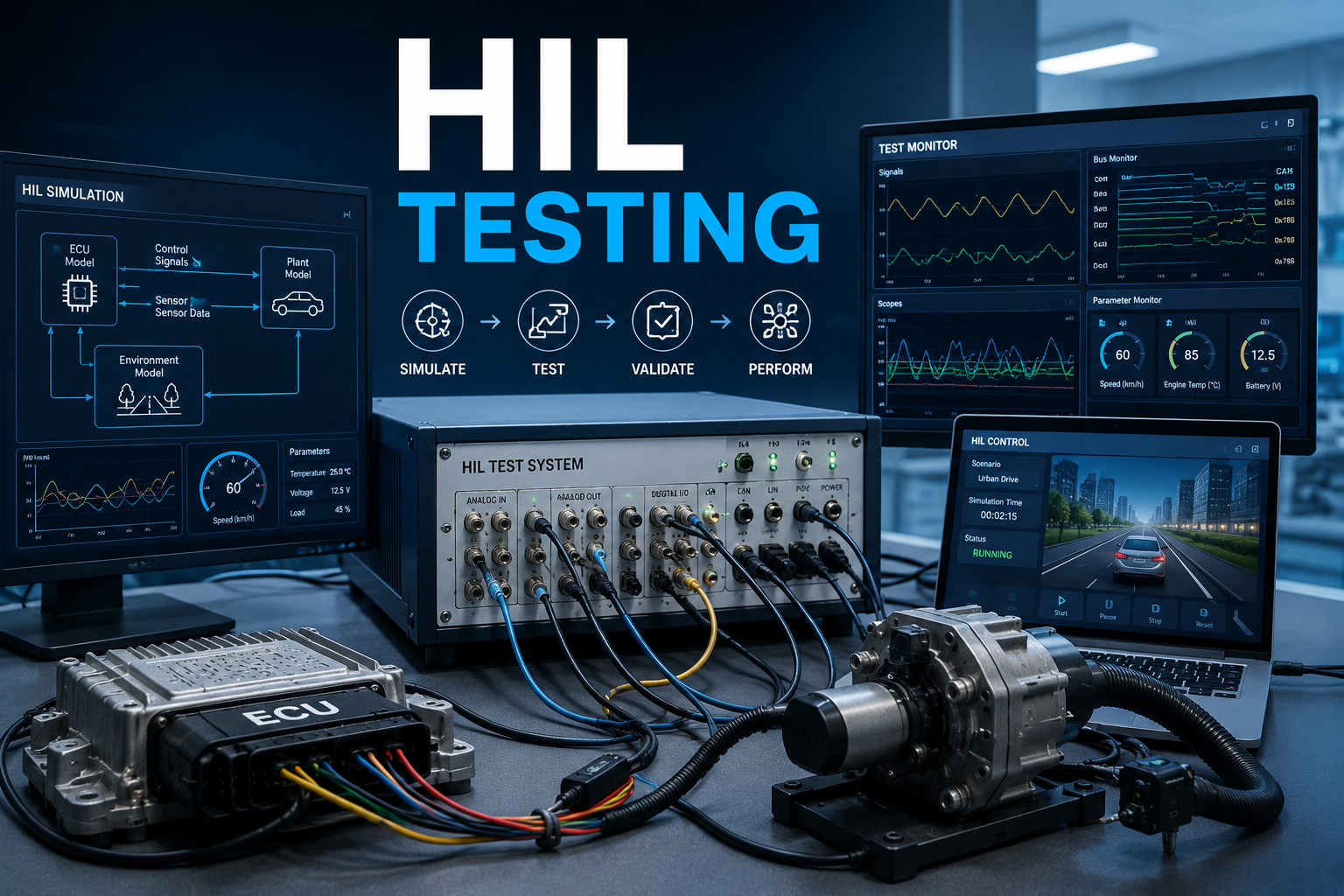
Testing a control system only after connecting it to a complete physical machine can be expensive and time-consuming. Engineers therefore use different simulation and validation techniques to identify potential problems earlier in the development process.
HIL Software Testing, or Hardware-in-the-Loop testing, allows real hardware to interact with a simulated environment. Instead of connecting the controller directly to the complete physical system, engineers can use a computer-based model to represent the system being controlled.
This setup makes it possible to test different operating conditions in a controlled environment. Engineers can simulate different inputs and observe how the real controller responds.
HIL testing can also be useful for testing unusual or fault conditions that may be difficult to reproduce safely using physical equipment. Engineers can study system behavior and identify problems in control logic or software.
Another advantage is repeatability. The same simulated test conditions can be run multiple times, allowing engineers to compare results after making changes to the software.
HIL Software Testing is used in areas such as automotive engineering, embedded systems, industrial automation, and other control applications. By combining real hardware with simulation, engineers can create a structured testing process and improve confidence in system behavior before final deployment.

 English
 Arabic
 French
 Spanish
 Portuguese
 Turkish
 Dutch
Dutch
 Italiano
 Russian
 Romaian
 Portuguese (Brazil)
 Greek
Greek