


New Zealand Graduate Programs: Study Options, Fees & Requirements
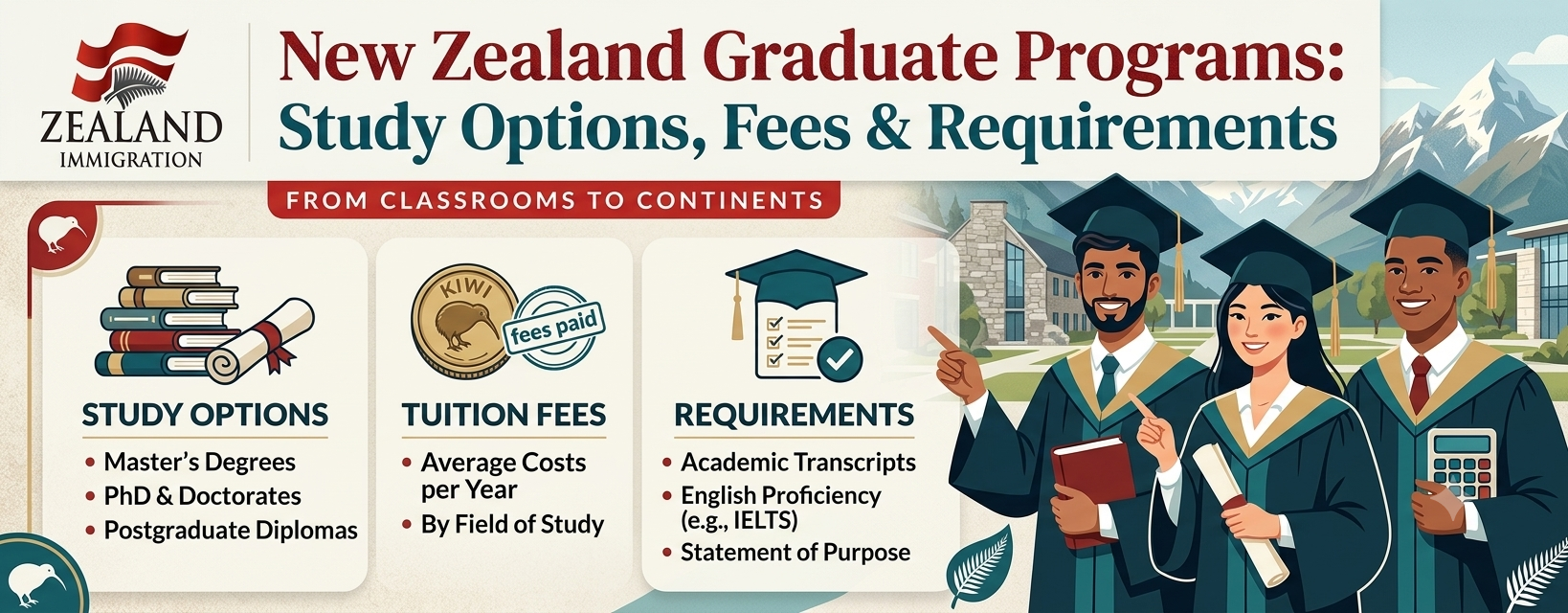
Planning to study in New Zealand after completing your bachelor’s degree? New Zealand offers a range of postgraduate study options for students who want to improve their knowledge, learn new skills, and prepare for better career opportunities. Universities and other approved education providers offer programmes in areas such as business, engineering, information technology, health, management, science, and many other subjects.
If you are planning higher studies after graduation, New Zealand Graduate Programs can be a useful option for building advanced academic and professional skills. The right programme depends on your previous education, career goals, academic background, and the entry requirements of the institution. Before applying, students should carefully check the course details, tuition fees, admission rules, and visa requirements.
Types of Graduate Study Options in New Zealand
New Zealand provides different postgraduate study options depending on the student’s academic level and career plans. Common options include postgraduate certificates, postgraduate diplomas, master’s degrees, and research-based programmes.
| Study Option | General Purpose |
|---|---|
| Postgraduate Certificate | Short advanced study in a specific subject |
| Postgraduate Diploma | More detailed study after a bachelor’s degree |
| Master’s Degree | Advanced academic or professional qualification |
| Research Programme | Focuses on research and specialised knowledge |
The length of each programme can be different. Some courses may take several months, while a master’s programme can take one or more years depending on the subject, institution, and study structure.
Admission Requirements for Graduate Programmes
To study at postgraduate level, students normally need a recognised bachelor’s degree or another qualification accepted by the education provider. Each university or institution can set its own entry requirements, so students should check the official course page before applying.
Academic performance can also be considered during admission. Some programmes may ask for specific subjects, previous work experience, portfolios, interviews, or other supporting evidence. Research-based courses may have additional requirements, such as a research proposal or supervisor approval.
English language ability is another important requirement for international students. Depending on the institution and course, students may need to provide IELTS, TOEFL, PTE, or another accepted English language test. The required score can be different for each programme.
Documents Required for Graduate Study
Students should prepare their documents before starting the application process. Common documents may include:
- Valid passport or recognised identity document
- Recent passport-sized photograph
- Bachelor’s degree certificate
- Academic transcripts and mark sheets
- English language test result, if required
- Updated CV or resume, where applicable
- Statement of purpose or personal statement
- Letters of recommendation, if required
- Work experience documents, where applicable
- Portfolio for selected creative or professional courses
- Research proposal for certain research programmes
- Financial documents for visa purposes
- Offer of place from the education provider
Documents that are not in English may need certified translations. Students should also make sure that names and dates are consistent across their academic and identity documents.
Financial Requirements and Tuition Fees
The cost of postgraduate study depends on the university, programme, subject, and duration. Professional and specialised courses may have different fees from general academic programmes. Students should check the current tuition fee directly with their selected education provider before making financial plans.
In addition to tuition fees, students need money for accommodation, food, transport, insurance, study materials, and other daily expenses. Financial planning is important because students may need to provide evidence that they can support themselves during their stay.
Students should also keep funds available for travel and other initial expenses after arriving in New Zealand. The financial evidence required for immigration can depend on the type and length of study. The uploaded reference also highlights that students should check official immigration information because financial thresholds and visa policies can change.
Student Visa Application Process
International students need the appropriate visa before beginning their studies. If you are travelling to New Zealand for an approved full-time course, you may need a New Zealand Student Visa, depending on your circumstances and course.
The general application process includes:
- Choose a suitable postgraduate course and education provider.
- Check the academic and English language requirements.
- Submit your application to the institution.
- Receive an offer of place.
- Prepare academic, financial, identity, and other required documents.
- Complete the relevant visa application.
- Pay the required application charges.
- Provide medical, X-ray, or police documents if requested.
- Wait for the immigration decision and respond to any information request.
- Travel to New Zealand after receiving the required visa approval.
Students should carefully read their visa conditions before travelling. Work rights, study conditions, and other requirements can depend on the visa granted.
What Can Students Expect From Postgraduate Study?
Postgraduate study can help students develop deeper knowledge in their chosen field. It may include classroom learning, practical projects, group work, research, presentations, and industry-related activities.
For students planning a long-term academic or professional journey, NZ higher education provides different study pathways through universities and other approved education providers. Students should compare course content, duration, fees, location, entry requirements, and future career plans before selecting a programme.
FAQs
Q1. Can I study a postgraduate programme in New Zealand after a bachelor’s degree?
Yes. Students with a recognised bachelor’s qualification can apply for suitable postgraduate programmes, provided they meet the institution’s entry requirements.
Q2. Do I need IELTS for postgraduate study in New Zealand?
Many programmes require proof of English language ability, but the exact requirement depends on the institution and course.
Q3. How much does postgraduate study cost in New Zealand?
Tuition fees vary by course, institution, and study level. Students should check the current fee directly with their chosen provider.
Q4. What documents are normally required?
Common documents include a passport, degree certificate, academic transcripts, English test results, financial evidence, and an offer of place. Additional documents may be required for specific programmes.
Q5. Can I work while studying in New Zealand?
Work rights depend on the visa conditions attached to your particular student visa. Students should check their visa conditions before starting any employment.

 English
 Arabic
 French
 Spanish
 Portuguese
 Deutsch
 Dutch
Dutch
 Italiano
 Russian
 Romaian
 Portuguese (Brazil)
 Greek
Greek