


10 Simple Ways to Improve Your Driving in Golf
Every golfer wants to hit longer, straighter, and more consistent drives. The good news is that improving your driving doesn't always require rebuilding your entire golf swing. Small adjustments to your grip, setup, tempo, body movement, and equipment can make a noticeable difference.
While technique should always come first, equipment matters too. Playing the right Golf Shaft and choosing a Driver Shaft that matches your swing can help you produce more consistent contact, control, and distance.
Whether you're struggling with a slice, losing yards off the tee, or simply trying to find more fairways, these 10 simple golf driving tips can help.
1. Check Your Grip First
Your grip controls how your hands interact with the club throughout the swing. If it's too strong or too weak, you may struggle to return the clubface square at impact.
Place the grip diagonally across the fingers of your lead hand instead of deep in your palm. Your trail hand should fit comfortably around the grip without excessive pressure.
Try to maintain a neutral grip and relaxed hands. Too much tension can restrict wrist movement and reduce clubhead speed.
A simple way to improve is to keep a spare club at home and practice your grip for a few minutes each day. Over time, the correct position should start to feel natural.
2. Build a Stable Driver Setup
A powerful drive starts before you move the club.
Stand with your feet approximately shoulder-width apart and your knees slightly flexed. Your weight should feel balanced rather than sitting heavily on your heels or toes.
Tilt forward naturally from your hips and allow your arms to hang comfortably.
For most golfers, positioning the ball near the inside of the lead heel provides a good starting point. This forward position can make it easier to catch the ball with an upward angle of attack.
A stable, athletic setup creates the foundation for speed without sacrificing control.
3. Experiment With Your Tee Height
Tee height can influence where the ball contacts your driver face.
If you tee the ball too low, you may encourage contact low on the face or create a downward strike. A slightly higher tee can give you more room to sweep through the ball.
Start with roughly half the golf ball sitting above the top of your driver at address and adjust from there.
Instead of focusing only on tee height, pay attention to strike location. Consistent center-face contact is far more valuable than simply trying to launch the ball as high as possible.
4. Make a Smooth, Full Backswing
Trying to create more distance by swinging harder often produces the opposite result.
A rushed backswing creates tension and can make it harder to control the club.
Instead, focus on rotating your shoulders while keeping your body balanced. Allow your lead arm to remain comfortably extended and let your wrists hinge naturally.
You don't need to force the club beyond your natural range of motion.
A controlled backswing gives your body time to sequence correctly and helps your Driver Shaft load naturally during the transition.
The result can be a smoother delivery and more consistent strike.
5. Start the Downswing With Your Lower Body
One of the biggest mistakes amateur golfers make is starting the downswing entirely with their arms.
Instead, allow your lower body to begin rotating toward the target while your torso, arms, hands, and club follow.
This sequence helps transfer energy efficiently through the golf swing.
Think about creating speed gradually rather than throwing the club at the ball. Your hips begin the movement, followed by your upper body and finally the clubhead.
When everything works in sequence, you can generate speed without feeling like you're swinging out of your shoes.
6. Complete Your Follow-Through
Your golf swing doesn't stop when the club hits the ball.
After impact, allow your arms to extend naturally while your body continues rotating toward the target. Your weight should finish primarily on your lead foot, with your chest facing down the fairway.
A balanced finish is often a sign of good sequencing.
Try holding your finish for two or three seconds after every practice drive. If you can remain comfortably balanced, there's a good chance your weight transfer and tempo are working together.
If you're regularly falling backward or sideways, slow things down and focus on balance before chasing additional speed.
7. Develop a Repeatable Swing Tempo
Swinging faster doesn't automatically mean hitting the golf ball farther.
A smooth, repeatable tempo allows your body and equipment to work together more efficiently.
One useful practice method is to think about a roughly 3:1 backswing-to-downswing rhythm. You don't need to measure the timing precisely. The goal is simply to prevent yourself from rushing the transition.
Try hitting several drives at around 70–80% effort.
You may find that your controlled swing produces similar or even better distance because you're making cleaner contact with the center of the clubface.
Once you establish consistent contact, gradually increase your speed while maintaining the same rhythm.
8. Use Your Legs to Generate More Power
Your lower body is an important source of power in the golf swing.
During the backswing, pressure naturally shifts toward your trail side. As you begin the downswing, that pressure should move toward your lead side while your hips rotate toward the target.
This movement helps transfer energy through your body and into the club.
Golfers who rely almost entirely on their arms often struggle to generate efficient speed.
Using your legs, hips, and core together can help you create more clubhead speed without swinging aggressively.
The key is coordination. Avoid excessively sliding toward the target or forcing your hips open too early.
9. Improve Your Core Strength and Mobility
A stronger, more mobile body can make it easier to maintain posture and generate rotational speed.
Your core helps stabilize your body while your shoulders and hips rotate throughout the swing.
Exercises such as planks, bird dogs, medicine-ball rotations, and controlled rotational movements can improve stability. Mobility work for your hips, shoulders, and upper back can also help you complete a comfortable turn.
You don't need to spend hours in the gym.
Regular strength and mobility exercises can help you develop a more athletic golf swing and maintain better balance throughout your motion.
10. Make Sure Your Golf Shaft Fits Your Swing
You can improve your grip, stance, sequencing, and tempo, but your equipment still needs to complement your swing.
Your GolfShaft plays an important role in how the club feels and performs. Shaft weight, torque, bend profile, and Driver Shaft Flex can influence your delivery, launch conditions, strike consistency, and overall confidence.
A shaft that's too heavy, too light, too stiff, or too flexible for your swing may make consistent contact more difficult.
That's why finding the Best Driver Shaft shouldn't simply mean buying the most expensive option. It means finding a shaft that complements your swing speed, transition, and preferred feel.
Some golfers may benefit from a lightweight Carbon fiber golf shaft because reducing shaft weight can make it easier to generate clubhead speed while maintaining control.
Others may need a different weight or flex profile.
For golfers focused on finding a Driver Shaft for Accuracy, dispersion should be considered alongside distance. A driver that travels five yards farther isn't necessarily an improvement if you're constantly missing the fairway.
Similarly, golfers searching for the Best Golf Shaft for Distance should focus on efficient energy transfer, launch, spin, and center-face contact instead of simply choosing the lightest or stiffest shaft available.
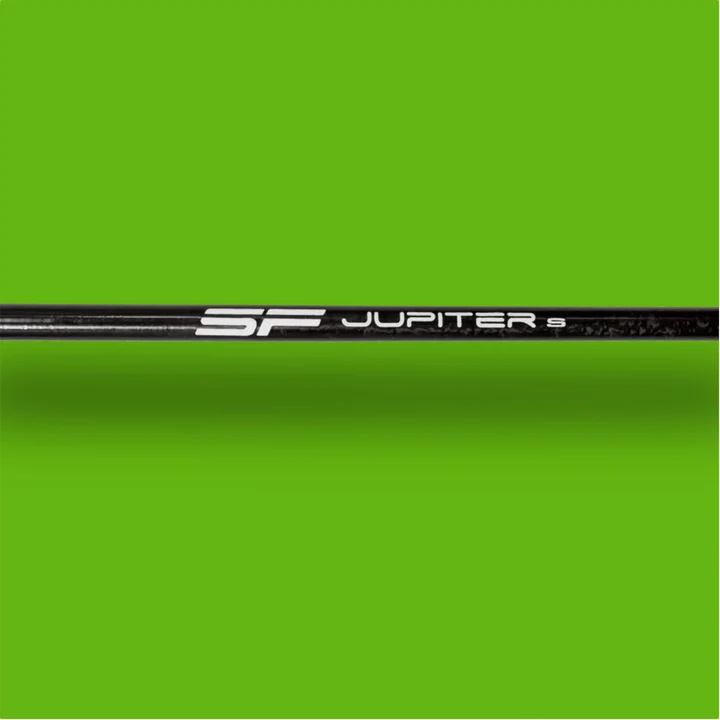
Steadfast Golf's Jupiter lineup provides Custom Golf Shafts designed around different swing characteristics. The goal is to help golfers find a shaft configuration that complements their individual swing rather than forcing them to change their technique around their equipment.
A well-matched High Performance Golf Shaft can support speed, stability, feel, and consistency, but it should always work alongside solid swing fundamentals.
What Driver Shaft Flex Should You Use?
Choosing the correct Driver Shaft Flex depends on more than swing speed.
Your transition, tempo, release, strike pattern, and preferred feel can all influence which flex performs best.
For example, two golfers with similar driver speeds may prefer completely different shaft profiles because one has a smooth transition while the other loads the club aggressively.
Common shaft flex options include:
-
Senior/A-Flex
-
Regular
-
Stiff
-
X-Stiff
Instead of choosing flex based solely on age or handicap, consider how you actually swing the golf club.
This is particularly important for golfers searching for the best senior driver shafts. A senior golfer doesn't automatically need the softest available flex. Swing speed, tempo, strength, and delivery should guide the decision.
Distance vs. Accuracy: What Should You Prioritize?
Most golfers want both.
The good news is that improving strike quality can help with distance and accuracy simultaneously.
Before trying to swing significantly faster, focus on consistently finding the center of the driver face. A centered strike generally transfers energy more efficiently than an off-center strike produced with additional clubhead speed.
Once your contact improves, equipment becomes easier to evaluate.
If you're comparing Best Performance Golf Shafts, don't look at distance alone. Consider your shot dispersion, launch, spin, strike pattern, consistency, and how confidently you can swing the club.
The right shaft should help create a driver setup you can trust repeatedly—not just one impressive shot on a launch monitor.
How to Improve Your Driving Distance
If distance is your main goal, work through your swing systematically.
Start with grip, stance, ball position, and tee height. Then focus on creating a smooth backswing, proper lower-body sequencing, and a balanced follow-through.
Once these fundamentals are consistent, start increasing speed gradually.
Equipment should be evaluated afterward.
Your Driver Shaft needs to complement the way you create speed. The right combination of shaft weight, Driver Shaft Flex, torque, and bend profile can help you create a driver setup suited to your swing.
For some golfers, moving into a lightweight Carbon fiber golf shaft may help generate additional clubhead speed. For others, maintaining stability with a slightly heavier profile may produce better overall results.
That's why testing and proper shaft selection matter.
Put It All Together
Improving your driving in golf rarely comes down to one secret move.
Better drives come from your grip, setup, ball position, rotation, sequencing, tempo, strength, and equipment working together.
Start with your swing fundamentals and make one adjustment at a time. Once your technique becomes more repeatable, evaluate whether your current Golf Shaft is actually suited to your swing.
Whether you're searching for a Driver Shaft for Accuracy, Best Golf Shaft for Distance, Custom Golf Shafts, High Performance Golf Shaft, best senior driver shafts, or the Best Performance Golf Shafts, focus on finding equipment that complements the way you naturally swing.
The Best Driver Shaft isn't necessarily the one promising the most distance. It's the one that gives you a combination of speed, control, consistency, and confidence.
Not sure which Steadfast Jupiter Driver Shaft fits your game?
Take the Shaft Selector Quiz to find a shaft configuration matched to your swing:
https://steadfastgolf.com/pages/steadfast-golf-shaft-selector-quiz
Better driving starts with solid fundamentals—and equipment designed to work with them.

 English
 Arabic
 Spanish
 Portuguese
 Deutsch
 Turkish
 Dutch
Dutch
 Italiano
 Russian
 Romaian
 Portuguese (Brazil)
 Greek
Greek