


Heavy-Duty Work Truck Beds: Storage, Access, and Load Features to Know
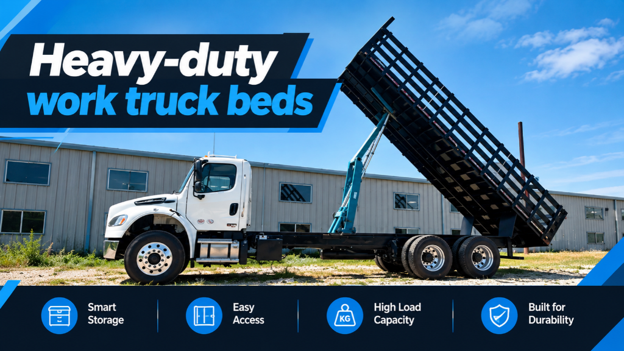
If you've ever stood at a job site digging through a cluttered truck bed looking for one tool while your crew waits, you already know the real cost of a bed that wasn't built for the work. Loose gear sliding around, tools getting buried under debris, and awkward reach-overs to grab something from the front of the bed all add up to wasted minutes that turn into wasted hours by the end of the week. That's the problem most contractors, landscapers, and haulers run into with a generic setup that was never designed around how they actually work.
The fix isn't a bigger truck. It's a bed built with purpose. Heavy-duty work truck beds solve this by giving you dedicated storage, real access points, and load capacity that matches the job instead of fighting it. And for crews handling turf, mulch, and landscaping materials day after day, multipurpose lawn care beds take that same thinking and shape it around seasonal, repetitive work where speed and organization matter just as much as strength.
This post walks through what actually separates a well-built work bed from an average one, so you know what to look for before your next purchase or custom order.
Why Storage Layout Matters More Than People Think
A truck bed with no real storage plan forces workers to improvise, and improvising costs time. Good bed design puts storage where it's actually used.
● Overhead compartments with gas spring supports keep long-handled tools accessible without digging
● Underbody storage holds items like water coolers, gas cans, and shovels off the main deck
● Removable racks for tools like weed eaters allow full ground access when needed
When storage is planned around the actual workflow, crews spend less time searching and more time working.
Access Points Change How Fast a Job Moves
Getting in and out of a truck bed sounds minor until you're doing it fifty times a day. Fully drop-down sides, front steps that stay accessible even with the sides down, and lift gates that open with one hand all shave seconds off every single trip. Those seconds compound fast across a full workday.
Positive latching on gates also matters more than it seems. A gate that locks securely during transport but releases easily at the job site keeps cleanup quick and keeps loose material from shifting mid-drive.
Load Capacity Should Match the Actual Job, Not a Guess
Underbuilding a bed leads to premature wear, sagging, and repair costs down the line. Overbuilding wastes money and adds unnecessary weight. The right approach is matching bed length, steel thickness, and hoist capacity to what the truck will actually carry on a regular basis.
This is where custom builds outperform off-the-shelf options. A crew hauling gravel and construction debris has different needs than one moving sod and mulch, even if both trucks look similar from a distance. High-grade steel construction and a hoist rated for the real workload, not a theoretical maximum, keep the truck reliable over years rather than months.
Grating and Surface Design Aren't Afterthoughts
Anyone who's worked outdoors knows mud doesn't wait for a convenient day. Heavy-duty grating built for traction, even when wet or muddy, reduces slips and keeps footing solid during loading and unloading. It's a small detail on paper, but it shows up directly in fewer accidents and faster turnaround between loads.
Dump Features Built for Landscape and Material Work
For teams regularly transporting sod, dirt, or stone, a dump bed with full barn door access changes the whole loading and unloading process. Instead of shoveling material out by hand, the bed does the heavy lifting. Rear barn doors, tailgate and spreader combinations, and customizable hoist options let the bed adapt to different materials without switching trucks.
This kind of setup pulls double duty for landscaping crews: it's the general work truck for daily jobs, and it's the hauler for larger landscape material moves, all in one build.
Customization Beats a One-Size-Fits-All Bed
No two crews load a truck the same way, so a bed that can be shaped around specific business needs will always outperform a stock option. Side access doors, tailgate configurations, storage placement, and even steel thickness can all be adjusted based on what a business actually hauls week to week.
This is really the core difference between buying a truck bed and investing in one. A bed built around your actual jobs pays for itself in fewer repairs, faster loading, and less downtime.
What This Means for Your Next Truck:
Choosing a bed isn't just about picking the biggest or strongest option available. It's about matching storage, access, and load capacity to the work your crew does every single day. A bed with smart compartment placement, easy-access gates, durable grating, and a hoist matched to real payload needs will outperform a generic setup in almost every practical way.
For crews looking for dependable heavy-duty work truck beds that hold up to daily contractor and hauling demands, the details in construction and design make the long-term difference. And for landscaping operations juggling tools, materials, and tight schedules, multipurpose lawn care beds offer the kind of organized, accessible setup that keeps a crew moving instead of digging through clutter. Whether you're hauling gravel, sod, or a full toolkit, the right bed setup turns a truck into a genuine extension of your crew's workflow, not just a vehicle that gets you to the site.
FAQs:
1. What makes a truck bed "heavy-duty" compared to a standard bed?
It comes down to steel gauge, frame construction, and hoist or load rating built for repeated, demanding use rather than occasional light hauling.
2. Are lawn care beds only useful for landscaping businesses?
No. Their storage layout and drop-down access work well for any crew that carries tools, materials, and equipment on a daily basis, not just lawn care operations.
3. Can these beds be customized for a specific truck or job type?
Yes. Bed length, steel thickness, storage placement, and hoist capacity can all be built around your specific hauling needs.
4. How does dump bed access help with landscaping material?
Barn doors and tailgate/spreader combinations let you move sod, dirt, or stone without manual shoveling, cutting down unloading time significantly.
5. How long do well-built work truck beds typically last?
With high-grade steel and proper load matching, a well-built bed can serve a crew reliably for many years, even under daily heavy use.

 English
 Arabic
 French
 Spanish
 Portuguese
 Deutsch
 Turkish
 Dutch
Dutch
 Russian
 Romaian
 Portuguese (Brazil)
 Greek
Greek