


How to Become a Professional Drone Technician
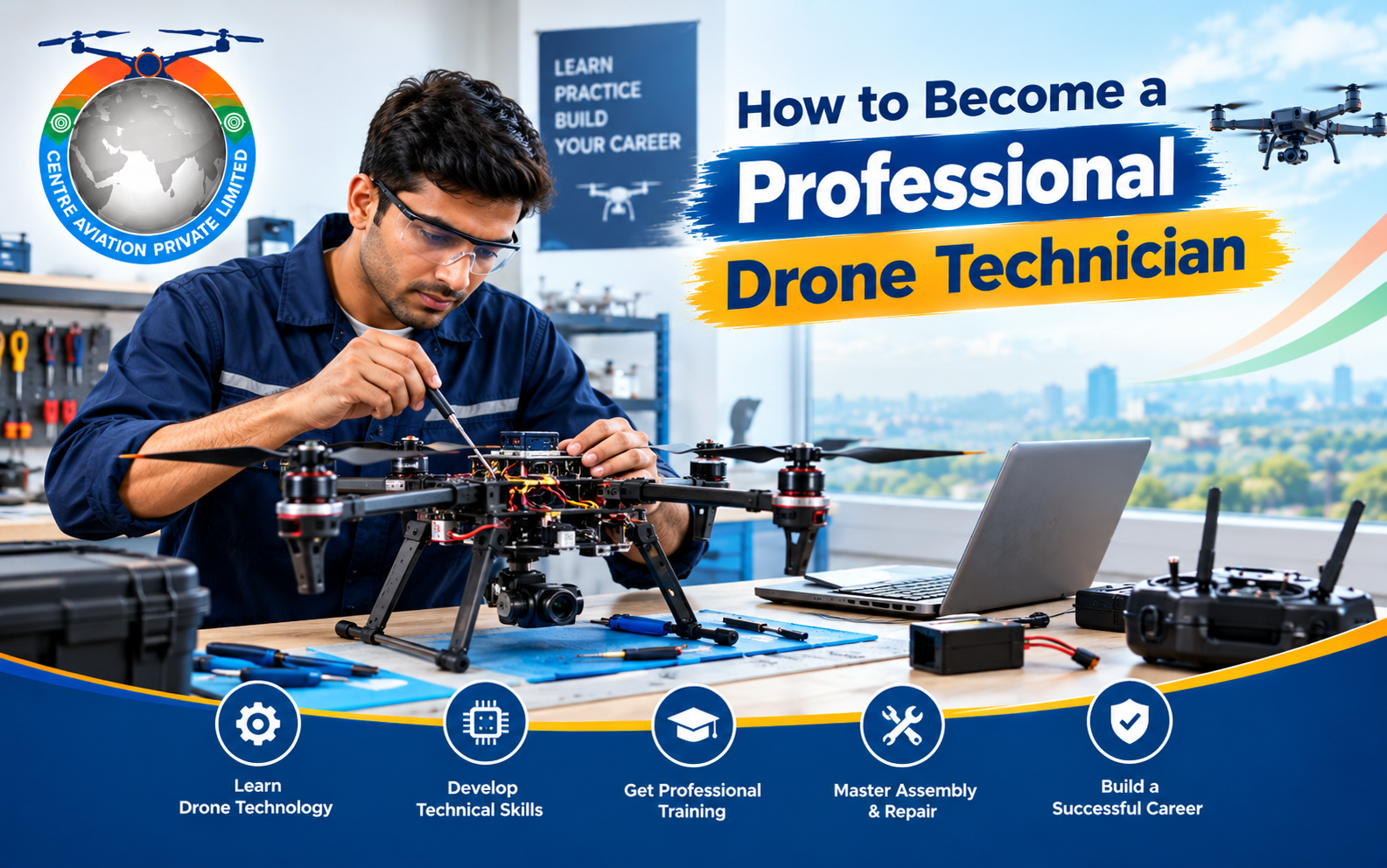
The drone industry is creating opportunities not only for pilots but also for people who enjoy working with machines, electronics, and technology. Every drone depends on properly functioning mechanical and electronic components, which means skilled technicians are an important part of the industry.
A professional drone technician works with the technical side of unmanned aircraft. Their responsibilities may include inspecting components, identifying faults, carrying out maintenance, replacing damaged parts, troubleshooting systems, and making sure the drone is ready for operation.
For students and beginners who have an interest in technology, becoming a drone technician can be an interesting career path. However, it requires more than knowing the names of drone components. A good technician needs practical knowledge, attention to detail, problem-solving ability, and an understanding of how different systems work together.
Tras Aviation helps learners explore the technical side of the drone industry and understand the skills that can be developed through structured training.
1. Understand What a Drone Technician Does
Before starting a technical career, it is useful to understand the actual responsibilities of a drone technician.
A technician may inspect drones before and after operations, identify damaged components, replace faulty parts, test electrical connections, examine motors and propellers, check batteries, and troubleshoot problems reported by pilots.
The exact responsibilities can vary depending on the type of drone and the organisation. Some technicians may work mainly with small consumer or professional drones, while others may work with specialised aircraft used for surveying, agriculture, inspection, mapping, or other applications.
A technician may also work alongside drone pilots, engineers, operators, and other technical professionals. This makes communication an important part of the job.
The role requires patience because a technical problem is not always immediately visible. A drone may appear normal from the outside while having an issue with an internal component or electronic system.
2. Learn the Basic Parts of a Drone
The first step toward becoming a professional drone technician is understanding the major components of a drone.
Depending on the aircraft, these can include the frame, motors, propellers, electronic speed controllers, flight controller, battery, power distribution system, sensors, communication equipment, GPS or positioning systems, landing components, and camera equipment.
Each component has a specific purpose, but they also work together as a complete system.
For example, motors provide the movement required for flight, while the flight controller helps manage the aircraft's behaviour. Batteries supply electrical power, while sensors provide information that can help the aircraft understand its movement and surroundings.
A technician needs to understand these relationships because a problem in one area can sometimes affect another part of the system.
Tras Aviation encourages learners to develop a complete understanding of drone systems instead of looking at individual components in isolation.
3. Develop Practical Technical Skills
Reading about drone components is useful, but professional technical work requires practical experience.
Learners should become familiar with activities such as inspecting components, handling tools correctly, checking connections, identifying visible damage, and following appropriate maintenance procedures.
Practical training can also help students understand how to work carefully around sensitive electronic components.
Attention to detail is particularly important. A loose connection, damaged wire, incorrectly installed propeller, or poorly fitted component can affect the performance of the entire aircraft.
Students should therefore learn to work methodically rather than rushing through a repair or inspection.
Practical experience also helps learners become more comfortable with the tools and equipment commonly used for technical work.
4. Learn Drone Maintenance
Regular maintenance is an important part of keeping drone equipment in suitable working condition. A drone that is used frequently may require regular inspection and servicing.
Maintenance can involve checking propellers, motors, batteries, connectors, wiring, structural components, and other systems. The exact maintenance requirements depend on the aircraft and manufacturer recommendations.
Technicians should understand that maintenance is not simply about repairing something after it breaks. Preventive inspection can help identify potential problems before they become larger issues.
Students interested in developing this area of knowledge can explore drone repair and maintenance courses in india to learn more about technical training opportunities.
Learning maintenance procedures can give students a stronger understanding of how drones should be inspected and cared for in professional environments.
5. Learn How to Troubleshoot Drone Problems
Troubleshooting is one of the most important skills for a drone technician.
When a drone does not operate correctly, the technician needs to determine what may be causing the problem. This requires observation, logical thinking, testing, and a systematic approach.
For example, if a motor is not operating correctly, the technician may need to examine the motor itself, wiring, connections, electronic speed controller, power supply, or other related components.
The goal is not simply to replace parts until the problem disappears. A professional technician should try to understand the actual cause of the issue.
Good troubleshooting involves asking questions:
- What happened before the problem appeared?
- Which component is showing unusual behaviour?
- Is the problem mechanical or electrical?
- Can the issue be reproduced during testing?
- Are there visible signs of damage?
- Has the equipment been maintained properly?
Developing this type of thinking can make a technician more effective when dealing with real-world equipment.
6. Understand Batteries and Power Systems
Drone batteries require particular attention because they provide the energy needed for flight.
Technicians should understand the basic characteristics of the batteries used by the aircraft they work with and follow appropriate handling, charging, storage, and inspection procedures.
A battery that is damaged, swollen, overheated, or otherwise showing abnormal signs should not simply be treated as a normal component.
Technicians should also understand how electrical connections and power systems relate to the aircraft's operation.
This area of knowledge can be especially useful because power-related problems may affect several systems at the same time.
Proper technical training can help learners understand why batteries and electrical components require careful handling.
7. Learn About Electronics
Modern drones contain a range of electronic systems. These may include flight controllers, sensors, communication modules, electronic speed controllers, power systems, cameras, and other components.
A technician does not necessarily need to become an electronics engineer, but a strong foundation in electronics can be valuable.
Understanding basic concepts such as connections, circuits, power flow, components, and signals can make troubleshooting easier.
Students who enjoy electronics may find this part of drone technology particularly interesting because it combines practical work with problem-solving.
Tras Aviation provides exposure to the broader technical aspects of drone education, allowing learners to understand how electronics and mechanical components come together in modern aircraft.
8. Learn Drone Assembly
Drone technicians may also need to understand how aircraft are assembled.
Assembly knowledge helps technicians understand how components are positioned, connected, and integrated into the overall system. It can also make later troubleshooting easier because the technician understands how the aircraft was put together.
Learners can begin by understanding individual components and gradually move toward complete systems.
During practical learning, attention should be given to correct component placement, secure connections, proper installation, and appropriate testing.
Assembly is not simply about putting parts together. The final aircraft needs to operate as a coordinated system.
This is another reason why technical training should include hands-on learning rather than relying entirely on classroom theory.
9. Develop Attention to Detail
A professional technician needs to be careful and patient.
Small technical issues can sometimes create larger problems. A loose connector, damaged wire, incorrectly fitted component, or unnoticed crack in a structural part can affect the aircraft's operation.
Developing a habit of checking work carefully can therefore be extremely useful.
Technicians should also maintain appropriate records where required. Recording maintenance work, replaced components, inspections, and identified problems can help organisations track the condition of their equipment.
Good documentation can also make it easier for pilots and other technicians to understand what work has already been completed.
10. Understand Safety During Technical Work
Safety is important not only while flying a drone but also while working on one.
Technicians may work with batteries, electrical components, motors, rotating parts, tools, and other equipment. Appropriate safety procedures should always be followed.
Before working on an aircraft, technicians should understand the equipment and the task they are performing. Power should be handled appropriately, tools should be used correctly, and damaged components should be treated carefully.
A technician should never rush through a repair simply because an aircraft needs to return to operation quickly.
Professional technical work requires a balance between efficiency and careful inspection.
Tras Aviation emphasises the importance of developing responsible technical habits alongside practical drone knowledge.
11. Choose the Right Training
Students interested in becoming drone technicians should look for training that provides both theoretical understanding and practical exposure.
A course can help learners understand drone components, maintenance procedures, assembly, troubleshooting, electronics, and other technical areas.
Students should review the course structure, practical training opportunities, equipment exposure, eligibility requirements, and learning objectives before choosing a program.
For learners interested in certification and small-class drone training, the Small Class Drone Certification Course can be explored as part of their research into drone-related training options.
The right training should help learners build practical confidence rather than focusing only on theoretical information.
12. Build Experience Step by Step
Technical skills improve with practice.
After learning the fundamentals, students should continue developing their skills through supervised practical work, equipment inspections, troubleshooting exercises, and other suitable learning activities.
They should also keep learning about new drone technologies because the industry continues to develop.
A technician who remains curious and willing to learn can gradually expand their knowledge into areas such as advanced electronics, specialised sensors, payload systems, drone assembly, or industry-specific equipment.
Tras Aviation can help learners understand the importance of continuous learning when developing a career in the drone industry.
Career Opportunities for Drone Technicians
Drone technicians can explore opportunities across different areas of the drone ecosystem. Depending on their training and experience, they may work with drone manufacturers, service providers, training organisations, surveying companies, agriculture-related operations, inspection teams, or other businesses using drones.
Some technicians may focus on maintenance and repair, while others may work with assembly, testing, equipment preparation, or technical support.
Additional skills can also help technicians expand their career options. Learning about drone operations, electronics, data systems, or specific industry applications can complement their technical foundation.
The exact career path will depend on a person's interests, training, experience, and the requirements of employers or organisations.
Final Thoughts
Becoming a professional drone technician requires a combination of technical knowledge, practical skills, patience, and continuous learning. The role is about much more than repairing a damaged drone. A technician needs to understand how different components work together and how to identify, investigate, and resolve technical problems.
Students interested in this career should begin by learning the fundamentals of drone systems. From there, they can develop practical skills in maintenance, assembly, electronics, troubleshooting, battery handling, and equipment inspection.
Hands-on experience is particularly valuable because technical confidence develops through practice.
Tras Aviation supports learners who want to understand the different technical and professional opportunities available in the drone industry. With structured learning and consistent practice, students can build a foundation for exploring careers related to drone maintenance, repair, assembly, and technical support.
The drone industry is continuing to evolve, and technical professionals will remain an important part of keeping these systems ready for safe and reliable operations. For someone who enjoys technology, problem-solving, and practical work, becoming a professional drone technician can be a meaningful way to enter this growing field.

 English
 Arabic
 French
 Spanish
 Portuguese
 Deutsch
 Turkish
 Italiano
 Russian
 Romaian
 Portuguese (Brazil)
 Greek
Greek