


Large Data Center Grid Interconnection Engineering Guide
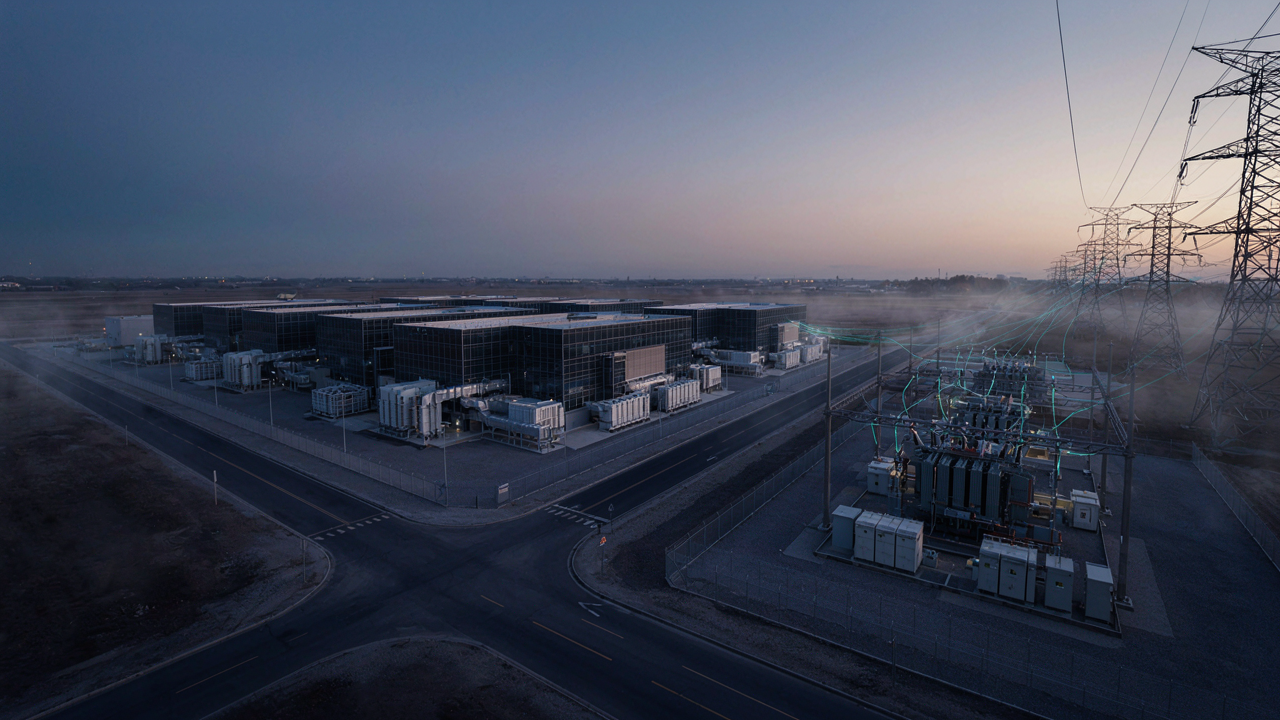
1. Why Data Center Grid Interconnection Requires Specialized Engineering
The rapid growth of cloud computing, artificial intelligence, digital services, and high-performance computing is driving demand for larger data centers. Unlike conventional commercial facilities, modern data centers can require substantial electrical capacity and operate continuously with very limited tolerance for power interruptions.
A successful data center grid interconnection therefore involves much more than connecting a new facility to an available transmission or distribution circuit. Engineers must evaluate how the proposed load will interact with the utility network, determine the required transmission and substation upgrades, assess system reliability, and verify that the connection will not create unacceptable impacts on existing customers or grid equipment.
Large facilities may also have rapidly changing load profiles, redundant electrical systems, backup generation, energy storage, and power-electronic equipment. These characteristics make detailed power system studies an important part of the planning and design process.
2. Defining the Large Load and Interconnection Requirements
The first engineering step is to develop a clear electrical load profile. Data center demand should be evaluated not only under normal operating conditions but also under maximum anticipated loading and relevant contingency scenarios.
A large load interconnection assessment typically considers:
- Peak and continuous electrical demand
- Expected load growth and future expansion
- Voltage level and point of interconnection
- Power factor and reactive power requirements
- Redundant utility supplies
- Backup generators and emergency systems
- Battery energy storage systems
- UPS and power-electronic equipment
- Expected commissioning and operating schedules
Accurate load information allows utilities and project engineers to determine whether existing infrastructure can accommodate the facility or whether new substations, transmission lines, transformers, breakers, or other network upgrades will be required.
It is also important to consider phased development. A data center campus may initially require a fraction of its ultimate capacity and then expand substantially. Planning the interconnection around realistic future requirements can reduce the risk of expensive redesigns later.
3. Power System Studies for Data Center Interconnection
Detailed power system analysis provides the technical foundation for evaluating a proposed connection. The exact study package depends on the utility, voltage level, project size, and grid characteristics.
Load flow studies help engineers determine voltage profiles, transformer loading, line loading, and reactive power requirements under normal and contingency conditions. These studies can identify network constraints before construction begins.
Short-circuit studies evaluate available fault current at the proposed point of interconnection and within the data center electrical system. The results support equipment ratings, breaker selection, protection design, and coordination.
Transient and dynamic studies can become particularly important for very large data centers. Sudden changes in electrical demand, generator operation, inverter-based equipment, or utility disturbances can affect system stability and recovery.
Power quality should also be examined. UPS systems, variable-speed drives, rectifiers, inverters, and other power-electronic devices may contribute to harmonic distortion or other electrical disturbances. Engineers can evaluate these characteristics and determine whether mitigation measures are necessary.
4. Substation, Transmission, and Protection Considerations
A major data center connection may require significant electrical infrastructure beyond the facility boundary. Depending on available grid capacity, the project could involve a new high-voltage substation, additional transformers, transmission extensions, circuit breakers, protection systems, or network reinforcements.
Substation design must account for the required capacity, equipment ratings, insulation coordination, grounding, protection, communications, physical layout, and future expansion.
Protection engineering is equally important. Protective relays and associated equipment must detect faults quickly while maintaining appropriate selectivity. Protection coordination studies help ensure that faults are cleared by the appropriate devices without unnecessarily disconnecting healthy portions of the electrical system.
For facilities with multiple utility feeds, engineers should also evaluate transfer arrangements and contingency performance. The objective is to understand how the facility and surrounding network respond when a transmission line, transformer, breaker, or other critical component is unavailable.
Grounding and fault-current considerations should be integrated into the design rather than treated as a late-stage activity. Proper grounding supports personnel safety, equipment protection, and reliable operation of protection systems.
5. Reliability, Resiliency, and Future Expansion
Data centers often have strict reliability requirements because even a short interruption can affect computing workloads, networking equipment, cooling systems, and other critical infrastructure.
Grid interconnection planning should therefore examine both utility-side reliability and facility-side resiliency. Multiple utility connections, independent electrical paths, standby generation, UPS systems, and energy storage can provide different levels of redundancy, but each configuration introduces additional engineering requirements.
Engineers should analyze credible contingency conditions and determine how the facility behaves during abnormal grid events. This can include voltage disturbances, frequency deviations, loss of a transmission element, transformer outages, and other relevant system conditions.
Future expansion should also be considered. A campus designed for substantial growth may need additional transformer bays, switchgear positions, transmission capacity, or substation space. Planning these requirements early can make future expansion more practical and reduce operational disruption.
6. Utility Coordination and the Path to Interconnection
Successful interconnection depends on close coordination between the data center owner, electrical engineers, utility, equipment suppliers, and other stakeholders. Each party needs a clear understanding of the proposed load, operating characteristics, project schedule, technical requirements, and expected expansion.
A structured engineering process typically moves from preliminary load assessment to feasibility analysis, detailed system studies, utility review, infrastructure design, protection coordination, equipment specifications, and final interconnection documentation.
Strong technical documentation is particularly valuable for large projects. Accurate one-line diagrams, load models, equipment data, study assumptions, protection settings, and operating scenarios allow stakeholders to review the design efficiently and identify issues before construction.
As data center demand continues to grow, grid interconnection engineering will remain an essential part of reliable power infrastructure development. Careful planning helps balance the facility's capacity requirements with the technical limitations and reliability needs of the surrounding power system.
For project owners, developers, and utilities, early engineering analysis can provide a clearer path from initial load requirements to a technically sound, scalable, and reliable grid connection.

 English
 Arabic
 French
 Spanish
 Portuguese
 Deutsch
 Turkish
 Dutch
Dutch
 Russian
 Romaian
 Portuguese (Brazil)
 Greek
Greek