


Australia spouse visa 2027: Courses, Fees, Eligibility & Admission Process
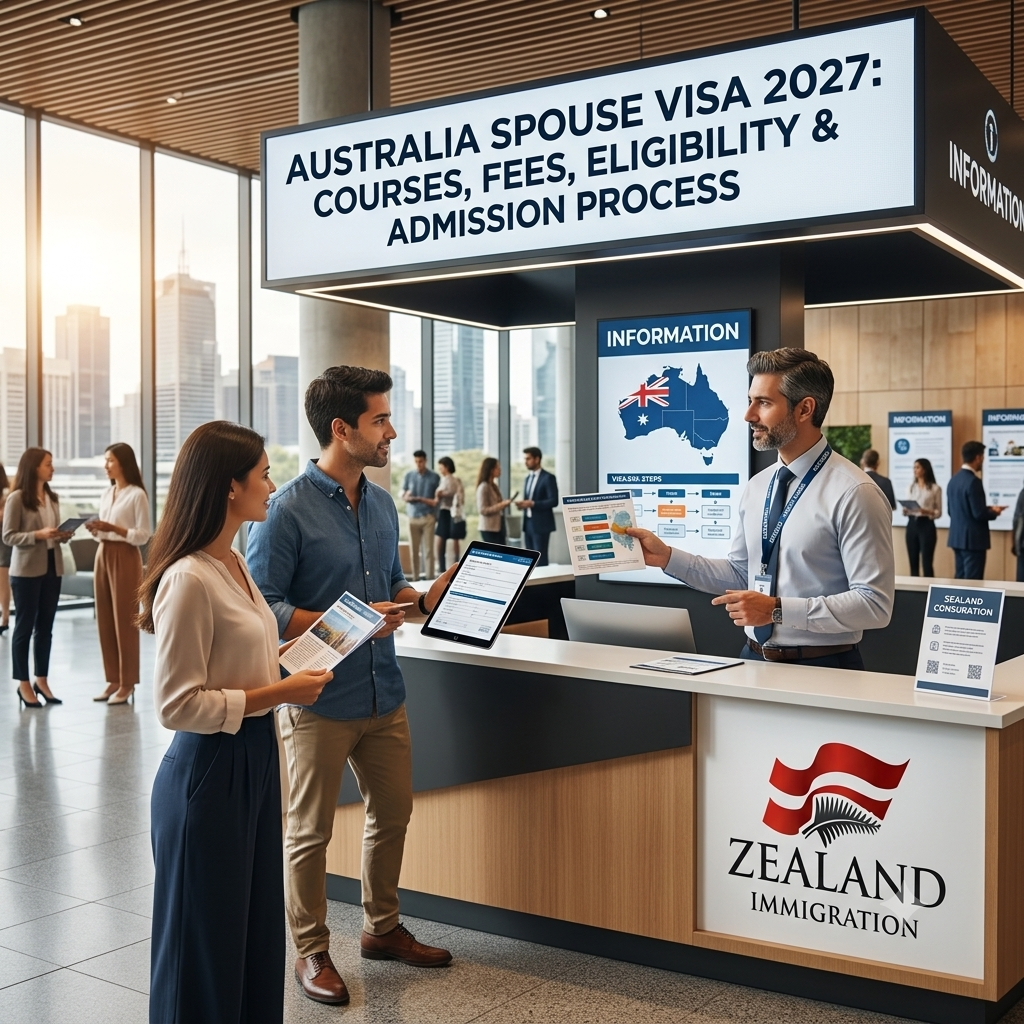
Australia is a popular country for people who want to live with their husband, wife, or partner. The Australian Partner visa system provides different options for spouses and de facto partners of Australian citizens, Australian permanent residents, and eligible New Zealand citizens. The correct visa depends on whether the applicant is inside or outside Australia and on the type of relationship.
If you are planning to join your partner in Australia in 2027, the Australia spouse visa process is an important step. Applicants need to show that their relationship is genuine and meets the required rules. They may also need to provide identity, relationship, health, and character documents. Understanding the visa type, eligibility, documents, cost, and application process can make the journey easier.
Types of Partner Visas in Australia
Australia has different partner visa options. The correct option depends mainly on where you are when you apply.
1. Partner Visa Subclass 820 and 801
The subclass 820 is a temporary Partner visa for people who apply while they are in Australia. It is the first step towards the permanent subclass 801 Partner visa.
The applicant must generally be the spouse or de facto partner of an Australian citizen, permanent resident, or eligible New Zealand citizen. The temporary and permanent applications are made together.
2. Partner Visa Subclass 309 and 100
The subclass 309 is a temporary or provisional Partner visa for people who apply from outside Australia. It is the first step towards the permanent subclass 100 Partner visa.
The applicant must generally be in a genuine relationship with an Australian citizen, permanent resident, or eligible New Zealand citizen.
3. Prospective Marriage Visa Subclass 300
This visa is for people who plan to travel to Australia to marry their prospective spouse. After marriage, the applicant may be able to apply for a Partner visa if they meet the requirements.
Eligibility Requirements
To apply for a partner visa, you need to meet the relationship requirements. Your partner must generally be an Australian citizen, Australian permanent resident, or eligible New Zealand citizen.
Depending on your situation, you may need to show that:
-
You are legally married to your partner, or
-
You are in a genuine de facto relationship
-
Your relationship is continuing and genuine
-
You share a commitment to a life together
-
You provide correct personal information
-
You meet health requirements
-
You meet character requirements
The Department of Home Affairs checks applications individually. The exact evidence needed can depend on your relationship and personal situation.
Documents Required
Good document preparation is very important. Applicants should provide clear and genuine evidence with their application.
Common documents may include:
-
Valid passport
-
Birth certificate
-
Marriage certificate, if married
-
Relationship evidence
-
Photographs with your partner
-
Travel records
-
Communication records
-
Joint bank account evidence, where applicable
-
Joint bills or property documents
-
Police certificates
-
Health examination documents
-
Evidence of shared living arrangements
-
Statements from the applicant and sponsor
If your documents are not in English, they may need to be translated according to Australian requirements. The Department can also ask for additional documents during processing.
Relationship Evidence
Relationship evidence is one of the important parts of a Partner visa application. The purpose is to show that the relationship is real and ongoing.
Evidence can include information about your financial relationship, household arrangements, social activities, and commitment to each other.
For example, couples may provide evidence of shared expenses, trips together, family events, messages, photographs, and other documents that explain their relationship history.
It is better to provide honest and useful evidence rather than sending a large number of unrelated documents.
Application Process
The application process normally includes several steps.
Step 1: Check your visa option
First, understand whether you should apply for an onshore or offshore Partner visa.
Step 2: Prepare your documents
Collect identity, relationship, health, and character documents.
Step 3: Create an ImmiAccount
Most Partner visa applications are lodged online through ImmiAccount.
Step 4: Submit the application
Complete the application carefully and upload the required documents.
Step 5: Pay the visa application charge
The applicable visa fee must be paid when lodging the application.
Step 6: Complete health and character checks
You may be asked to complete medical examinations and provide police certificates.
Step 7: Wait for the decision
Processing times can vary. The Department advises applicants to use its processing-time guide because processing can take longer depending on individual circumstances.
Partner Visa Cost
The visa application charge can change, so applicants should check the current amount before applying. As of 2026, the Department of Home Affairs lists the Partner visa application cost from AUD 11,710 for most applicants, with additional charges possible for family members and other services.
Other expenses may include:
-
Medical examination
-
Police certificates
-
Translation
-
Document preparation
-
Biometrics, if required
-
Professional immigration assistance, if used
Visa fees can change over time, so the official Visa Pricing Estimator should be checked before submitting an application.
How Registered MARA agents Can Help
Applicants who want professional immigration assistance should check whether the person is legally authorised to provide immigration assistance in Australia. Registered MARA agents are registered migration agents who can provide immigration assistance under Australian rules.
A professional can help applicants understand the visa pathway, prepare documents, organise relationship evidence, and submit information correctly. However, applicants should still provide truthful information and genuine documents.
What Happens After the Temporary Partner Visa?
The temporary Partner visa is normally the first stage before the permanent Partner visa. In many cases, the permanent stage becomes available for assessment two years after the temporary and permanent applications were first submitted.
For example, subclass 820 leads to subclass 801, while subclass 309 leads to subclass 100. Applicants must continue to meet the relevant relationship requirements.
The permanent Partner visa allows eligible applicants to live in Australia permanently and can provide rights to live, work, and study in Australia.
How Can Australia Education Consultants Help?
Moving to Australia can involve many important decisions. Applicants may need help understanding their visa options, document requirements, and future plans. Australia education consultants can also help students and families understand education pathways when study planning is part of their wider Australia journey.
For immigration matters, applicants should make sure that any person providing immigration assistance is properly authorised under Australian law.
Frequently Asked Questions
Q1. Who can sponsor a Partner visa?
Generally, the sponsor must be an Australian citizen, Australian permanent resident, or eligible New Zealand citizen.
Q2. Can I apply from India?
Yes. Applicants outside Australia may be eligible for the subclass 309 and 100 pathway if they meet the requirements.
Q3. Can I apply while I am in Australia?
Eligible applicants in Australia may apply through the subclass 820 and 801 pathway.
Q4. How long does the Partner visa take?
Processing times vary from case to case. The Department recommends using its current processing-time guide rather than relying on a fixed timeframe.
Q5. Can I work in Australia on a permanent Partner visa?
Yes. The permanent Partner visa allows eligible holders to live, work, and study in Australia.
Final Thoughts
A Partner visa application needs careful preparation. Applicants should choose the correct visa pathway, provide genuine relationship evidence, prepare the required documents, and follow the latest Australian immigration rules.
Visa costs, requirements, and processing arrangements can change. Always check the latest information from the Australian Department of Home Affairs before submitting your application.

 English
 Arabic
 French
 Spanish
 Portuguese
 Deutsch
 Turkish
 Dutch
Dutch
 Russian
 Romaian
 Portuguese (Brazil)
 Greek
Greek