


From Rental to Fixed: LIGHTALL's Versatile Range as a Custom LED Screen Manufacturer
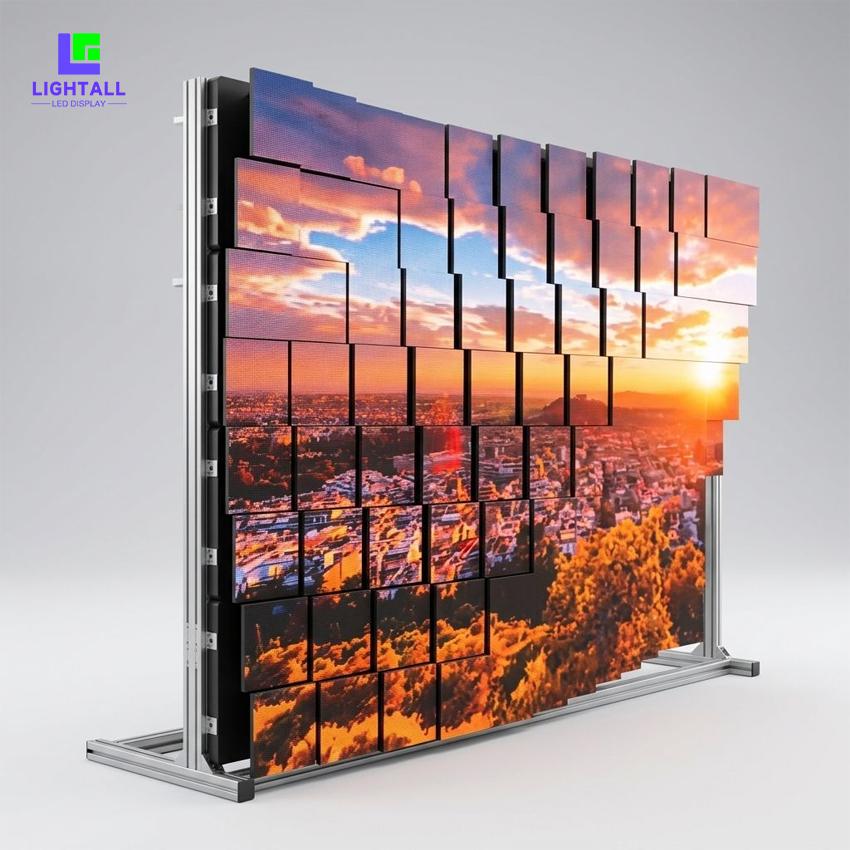
LED screens come in two broad families that behave very differently. Rental screens are built for movement. They travel in cases, go up in hours, come down at night, and do it again at the next venue. Fixed screens are built for permanence, bolted to walls and structures, expected to run daily for years in all weather. Each family has its own priorities, from weight and quick-locking systems to sealing and cooling. Few manufacturers handle both well. LIGHTALL, a Shenzhen company established in 2013, lists indoor and outdoor rental displays and fixed installation screens among its products. Here is how the two categories differ, and what buyers should consider when choosing between them.
What Defines a Rental Screen
Rental screens must survive repeated handling. Cabinets are light, rigid, and fitted with quick locks so crews can assemble walls quickly. Corners are protected, connectors are robust, and cases are designed for efficient transport. Image quality must be consistent from one event to the next, even when cabinets are mixed from different batches. Rental displays serve concerts, trade shows, corporate events, and productions where setups change constantly. Buyers should ask about cabinet weight, locking mechanisms, case options, and replacement module availability. Reliability during assembly matters as much as image quality, because a screen that is difficult to build wastes crew time and increases the risk of errors during live events.
What Defines a Fixed Installation Screen
Fixed screens are permanent assets. They are installed in shopping centers, conference centers, monitoring rooms, churches, museums, and building facades, where they may run for many hours daily. Priorities include thermal management, serviceability, structural integrity, and long-term color stability. Outdoor installations require weather sealing; the company mentions IP65 and IP68 for specific models, and buyers should confirm ratings for the exact product. Maintenance access is crucial, since a screen that cannot be serviced easily becomes a liability. Fixed screens reward careful planning, as mistakes in structure, power, or ventilation can be costly to correct once the wall is in place.

Indoor and Outdoor Variations
Within each family, indoor and outdoor versions diverge. Indoor screens focus on fine pixel pitch, smooth image quality, and quiet operation, because viewers are close. Outdoor screens prioritize brightness, weather resistance, and cooling, because they compete with sunlight and must endure rain and dust. Choosing the wrong type leads to disappointment: an indoor panel outdoors will fail, while an outdoor panel indoors will look overly bright and cost more than necessary. A flexible custom led screen manufacturer can offer both, along with advice on the right specification for semi-outdoor spaces such as covered entrances, where conditions fall somewhere between the two extremes.
Specialized Options Beyond the Basics
Some projects need something different. The company's range also includes small-pixel video walls for close viewing, transparent displays that let light pass through glass, stadium screens for large venues, XR LED displays for virtual production, COB displays for improved durability, LED modules for custom builds, and poster displays. Each solves a particular problem. Transparent screens suit storefronts and glass facades, XR screens suit studios and broadcast, and stadium screens need large size and high brightness. Buyers should be clear about what they need and ask for demonstrations, because specialized displays often involve trade-offs between transparency, brightness, resolution, and cost.
Choosing Between Rental and Fixed
To decide, consider how often the screen will move and how long it must last. If the screen travels or is used for occasional events, a rental design is likely best. If it will be installed permanently, a fixed design is more economical and robust. Some organizations buy rental screens for flexibility but use them in semi-permanent ways, which can shorten their life. Others install fixed screens where portability would have been more useful. Discuss your real usage with the supplier, check certifications such as CE, FCC, RoHS, and SGS, and request written specifications. A clear understanding of use is the best guide to the right product.

 English
 Arabic
 French
 Spanish
 Portuguese
 Deutsch
 Turkish
 Dutch
Dutch
 Italiano
 Romaian
 Portuguese (Brazil)
 Greek
Greek