


Is It Better to Sell a Car Before or After Major Repairs?
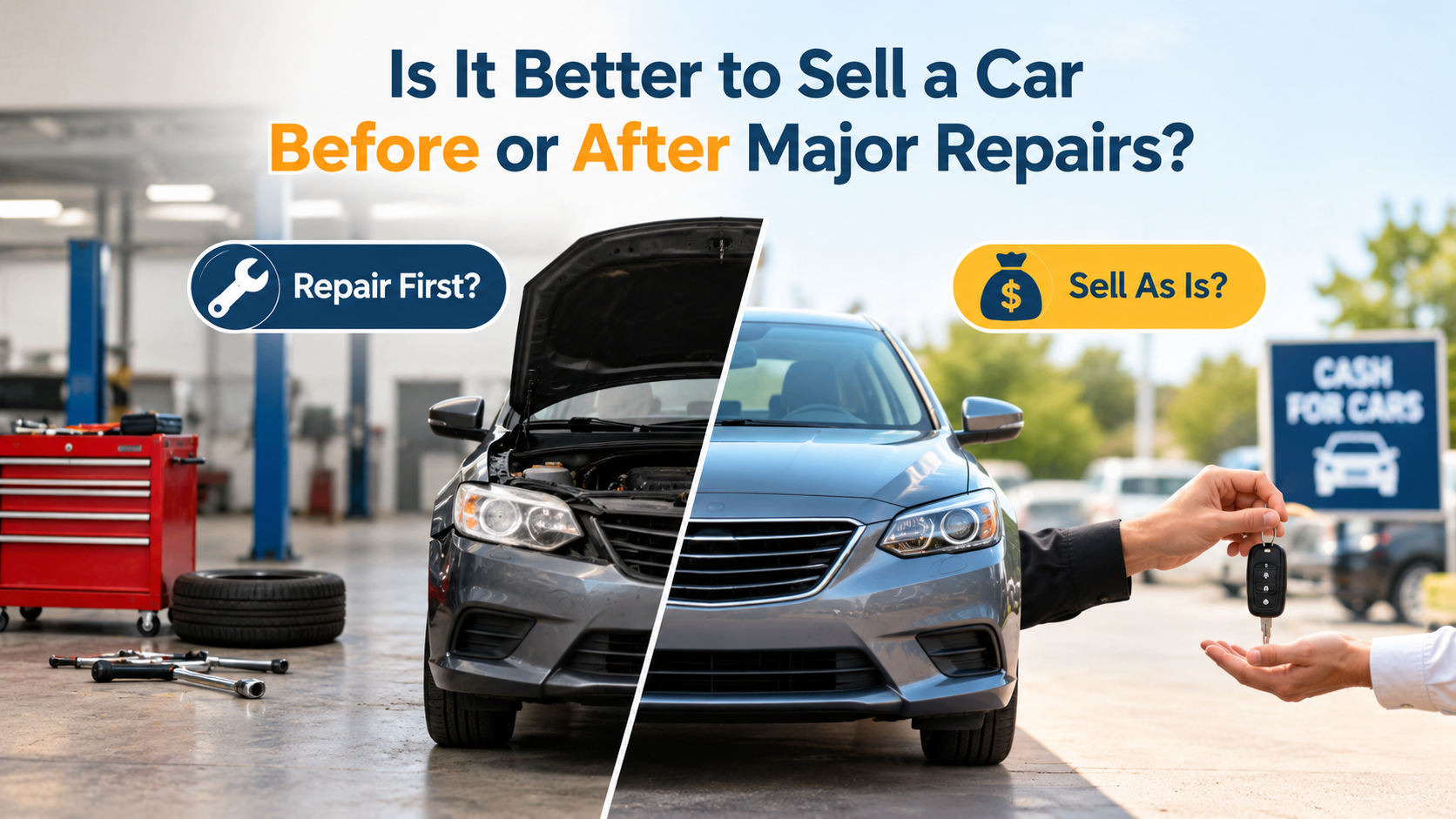
Selling a car that needs major repairs can be a difficult decision. When a vehicle develops a serious mechanical problem, owners often wonder whether they should spend money fixing it before selling or accept the vehicle in its current condition. There is no single answer because the better choice depends on the repair cost, the vehicles market value, its age, condition, and how much longer you plan to keep it.
Understanding these factors can help you avoid spending money on repairs that may not provide a worthwhile return. In many situations, selling a vehicle before completing expensive repairs can make more financial sense, especially when the cost of repairs is close to or greater than the increase in the cars resale value.
Consider the Cost of the Repairs
The first thing to calculate is the estimated repair cost. Ask a trusted mechanic for a detailed inspection and written estimate. Major repairs can include engine replacement, transmission work, suspension repairs, electrical problems, or extensive body damage.
Once you know the expected cost, compare it with the current market value of your vehicle. If your car is worth $8,000 in its current condition and requires $5,000 in repairs, spending the full repair amount may not make financial sense. Even after the repair, you may not recover the money when you sell it.
Minor repairs are different. Replacing worn tyres, fixing a broken light, repairing a small windscreen issue, or addressing inexpensive cosmetic problems may improve the vehicles appeal without requiring a major investment.
Compare the Cars Value After Repairs
Think about how much the vehicle could realistically sell for after the repair rather than focusing only on its current value. Research similar vehicles with comparable age, mileage, model, and condition.
For example, imagine a ten year old car is currently worth $4,000 because it has a failed transmission. After spending $4,500 on a replacement transmission, its market value may only increase to $6,000. In this situation, the owner could spend thousands on the repair but still lose money overall.
On the other hand, if a relatively newer vehicle needs a repair costing $1,500 and its value could increase by $4,000 after the work, repairing it may be worthwhile.
Think About the Cars Age and Mileage
Age and mileage are important when deciding whether to repair a vehicle before selling. Older cars often have several components approaching the end of their useful life. Fixing one major problem does not necessarily mean other expensive issues will not appear later.
A high mileage vehicle may need additional work involving the cooling system, brakes, suspension, steering, electrical components, or engine. If several systems are showing signs of wear, investing heavily in one repair may not be the best financial decision.
Newer cars with lower mileage generally have more value to preserve, so major repairs can sometimes be justified. Always consider the vehicles overall condition instead of looking at one problem in isolation.
Get More Than One Repair Estimate
A single repair quote should not determine your decision. Get estimates from at least two reputable mechanics when possible. Prices can vary depending on labour rates, replacement parts, and the extent of the damage.
A second opinion can also reveal whether the recommended repair is essential or whether there is a less expensive solution. Ask the mechanic about the expected lifespan of the repair and whether other problems are likely to appear soon.
This information gives you a clearer picture of the potential return on your investment.
Consider What Buyers Are Likely to Pay
A private buyer may be willing to pay more for a vehicle that is mechanically sound, but that does not automatically mean repairing it is financially sensible. Private buyers can also be cautious about cars with a history of major mechanical problems.
If you decide to sell the vehicle privately after repairs, keep invoices, inspection reports, and maintenance records. Documentation can help demonstrate that the work was completed properly.
Alternatively, a professional buyer may evaluate the vehicle based on its current condition and potential resale or recycling value. For example, someone searching for a Used Car Buyer in Sydney may consider the vehicles age, condition, repair requirements, and overall market demand before making an offer.
When Selling Before Repairs Makes Sense
Selling before major repairs can be a practical option when the repair cost is high compared with the vehicles value. It can also make sense when you no longer want to deal with ongoing maintenance or when several major problems are developing at the same time.
Vehicles that are damaged, non running, unregistered, or expensive to repair can still have value. Depending on their condition, they may be purchased for parts, recycling, refurbishment, or resale.
Some sellers also prefer this option because it avoids the time and stress involved in arranging repairs, waiting for parts, and dealing with unexpected costs. A direct sale can provide a simpler way to move on from a vehicle that has become financially impractical to maintain.
When Repairing Before Selling Can Be Better
Repairing a car before selling can be worthwhile when the repair is relatively affordable and has a clear effect on its market value. It may also be a good choice when the vehicle is otherwise in excellent condition.
For example, if a car needs a relatively inexpensive repair that prevents it from passing inspection, completing that repair could make the vehicle much easier to sell. Likewise, addressing simple maintenance problems can improve buyer confidence.
However, avoid repairing a vehicle simply because you have already invested a lot of money in it. Previous spending is a sunk cost. The decision should be based on what makes financial sense from today onward.
Consider Selling to a Specialist Buyer
If a vehicle has major mechanical damage, selling it through traditional private advertising can be challenging. Many private buyers want cars that are ready to drive and may negotiate heavily when they discover expensive problems.
Specialist vehicle buyers may be more familiar with damaged, unwanted, non running, and older vehicles. This can make the selling process easier for owners who do not want to repair a vehicle before putting it on the market. For owners dealing with severely damaged or unwanted vehicles, services offering cash for junk cars Sydney may provide another option worth comparing with the cost of repairs.
Do the Numbers Before Making a Decision
The best decision is usually the one based on actual numbers rather than emotion. Calculate the cars current value, estimated repair cost, expected value after repairs, selling costs, and the amount of time involved.
If repairing the vehicle costs $4,000 but increases its value by only $2,000, selling it in its current condition may be the better financial choice. If a $1,000 repair can significantly improve the vehicles selling price and condition, completing the work may be worthwhile.
Also consider how urgently you need to sell. A quick sale may be more valuable than spending several weeks arranging repairs and finding a private buyer.
Conclusion
There is no universal rule about whether you should repair a car before selling it. The right choice depends on the vehicles current value, repair costs, age, mileage, overall condition, and likely selling price after repairs.
Before spending money, get a professional inspection and compare multiple repair estimates with the cars realistic market value. If the repair cost is high and the vehicle has several other problems, selling it as it stands may save money and reduce unnecessary stress. If the repair is affordable and substantially improves the vehicles value, fixing it first may produce a better return.
The most important step is to compare your options objectively. A repair should only be completed when the expected increase in value and ease of sale justify the money you are putting into the vehicle.

 English
 Arabic
 French
 Spanish
 Portuguese
 Deutsch
 Turkish
 Italiano
 Russian
 Romaian
 Portuguese (Brazil)
 Greek
Greek