


TMS vs Antidepressants: How Are They Different?
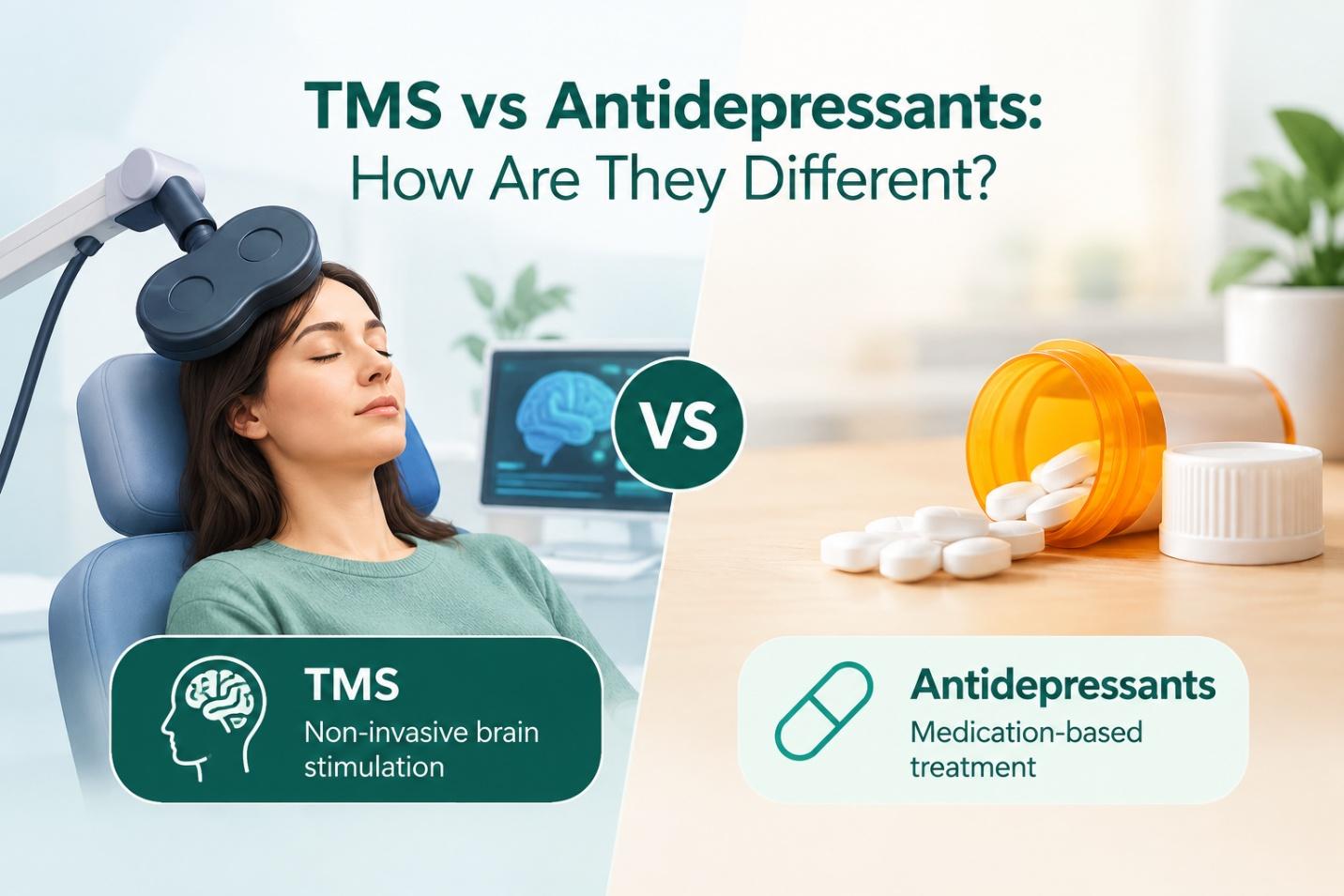
When depression symptoms continue despite treatment, people may wonder whether another approach could help. Two options that may come up during a discussion with a mental health professional are antidepressant medication and transcranial magnetic stimulation (TMS).
Understanding TMS vs antidepressants can help you have a more informed conversation with your psychiatrist about treatment options. The two approaches work differently, have different treatment schedules, and may have different side-effect considerations.
Antidepressants are medications that affect chemical signaling in the brain and are commonly used to treat depression. TMS is a noninvasive brain stimulation treatment that uses magnetic pulses to stimulate specific areas of the brain involved in mood regulation. Treatment decisions depend on a person's symptoms, medical history, previous treatment response, preferences, and clinical needs.
What Is TMS Therapy?
TMS, or transcranial magnetic stimulation, is a noninvasive treatment that uses a specialized coil placed against the scalp. The device delivers repeated magnetic pulses that stimulate nerve cells in targeted areas of the brain.
Unlike medication, TMS does not require a drug to travel through the body. A person remains awake during treatment, and the procedure does not require surgery or general anesthesia. Most people can return to their usual activities after a session.
For people considering TMS therapy in NYC, an evaluation with a qualified mental health professional can help determine whether TMS is clinically appropriate. TMS is commonly considered when depression has not improved enough with other treatments or when medication has not been well tolerated.
The U.S. Food and Drug Administration has cleared repetitive TMS for specific conditions, including treatment-resistant depression, and additional TMS indications have been cleared over time.
What Are Antidepressants?
Antidepressants are prescription medications commonly used to treat depression. Several classes are available, including selective serotonin reuptake inhibitors (SSRIs), serotonin-norepinephrine reuptake inhibitors (SNRIs), and other types of antidepressants.
These medications work by influencing chemical signaling involved in mood and other brain functions. The response can vary from person to person, and finding an effective medication may sometimes involve adjusting the dose or trying another medication under medical supervision.
Antidepressants generally do not provide immediate results. NIMH notes that they often take about four to eight weeks to work, although some symptoms may improve sooner than others.
If you are already taking an antidepressant, do not stop or change the medication without speaking with your prescribing healthcare professional.
TMS vs Antidepressants: Key Differences
The main difference in TMS vs antidepressants is how each treatment is delivered and how it acts on the body.
|
Factor |
TMS |
Antidepressants |
|
Treatment type |
Noninvasive brain stimulation |
Prescription medication |
|
Delivery |
Magnetic pulses applied to the scalp |
Oral or other medication forms |
|
Frequency |
Usually a series of treatment sessions |
Usually taken on a regular schedule |
|
Anesthesia |
Not typically required |
Not applicable |
|
Whole-body medication exposure |
No medication is administered during TMS |
Medication affects the body systemically |
|
Common considerations |
Time commitment and scalp discomfort/headache |
Side effects, interactions, and individual response |
|
Clinical use |
Often considered when other treatments have not helped enough |
Common treatment for depression |
Neither option is appropriate for every person. A psychiatrist or other qualified clinician can review your diagnosis, symptoms, medical history, previous treatments, and treatment goals before recommending an approach.
How Does TMS Compare With Antidepressant Side Effects?
One reason some patients consider providers offering TMS therapy in New York is concern about medication side effects.
Antidepressants can cause side effects that vary depending on the medication and the individual. Common examples may include nausea, headache, sleep changes, appetite changes, and sexual side effects. Some side effects may improve over time, while others may require a medication change or dose adjustment.
TMS has a different side-effect profile because it does not involve taking a medication. Common TMS side effects can include headache or discomfort around the treatment area. Mild facial muscle twitching may also occur. Serious complications, such as seizures, are considered rare.
A clinical evaluation is important because medical history and individual risk factors can affect whether TMS or a particular medication is appropriate.
How Many TMS Sessions Are Usually Needed?
One of the most common questions about TMS is how many TMS sessions a person may need.
A typical TMS course for depression may involve treatment five days per week for approximately four to six weeks. Cleveland Clinic notes that common depression protocols often involve about 30 to 36 sessions, although the exact schedule can vary based on the device, treatment protocol, diagnosis, and individual circumstances.
Some newer accelerated TMS protocols use multiple sessions in a day and may shorten the overall treatment period. These approaches are not identical to standard TMS schedules, so the appropriate protocol should be determined by a qualified treatment team.
The number of sessions should therefore not be viewed as a fixed number for everyone. Your provider can explain the recommended schedule after completing an evaluation.
Is TMS Treatment Different From Taking Medication Every Day?
Yes. TMS is delivered during scheduled appointments rather than being taken as a daily medication.
During a standard TMS session, a treatment coil is positioned against the scalp, and the device delivers repeated magnetic pulses. The person remains awake and can generally resume normal activities afterward. Depending on the TMS system and protocol, individual sessions may last from several minutes to around 40 minutes.
Antidepressants, by comparison, are usually taken according to a prescribed schedule. Their effects develop over time, and regular follow-up may be needed to evaluate symptom improvement, side effects, dosage, and medication interactions.
This difference in treatment format can be an important practical consideration when discussing TMS treatment NYC options with a healthcare provider.
Can TMS and Antidepressants Be Used Together?
In some cases, yes. TMS does not necessarily mean that a person must stop taking antidepressants.
NIMH explains that brain stimulation treatments are often used alongside medication or psychotherapy, depending on the person's individual treatment plan. Patients should not stop an existing treatment unless their healthcare provider specifically recommends a change.
For some people, the discussion may therefore be less about choosing TMS instead of medication and more about whether TMS could be incorporated into a broader treatment plan.
Your psychiatrist can consider previous medication response, current symptoms, side effects, other medical conditions, and treatment goals when discussing available options.
When Might Someone Consider TMS?
TMS may be considered when depression symptoms continue despite previous treatment. It can be particularly relevant for people who have not experienced sufficient improvement from antidepressants or who have difficulty tolerating medication.
NIMH describes brain stimulation therapies, including repetitive TMS, as treatment options that may be considered when other depression treatments have not worked sufficiently.
However, TMS is not simply a replacement for antidepressants. Treatment selection depends on the individual. A complete psychiatric assessment can help determine whether symptoms are related to depression and whether TMS is an appropriate treatment option.
If you are searching for TMS treatment near me, consider looking beyond location alone. Ask about the provider's qualifications, the specific TMS protocol used, the conditions treated, the expected treatment schedule, follow-up care, and how your response will be monitored.
Finding TMS Treatment in New York
People researching TMS New York services may find different treatment centers offering different protocols and treatment approaches.
When considering a TMS provider, it can be helpful to ask:
- Is TMS appropriate for my diagnosis and treatment history?
- What type of TMS device and protocol do you use?
- How many TMS sessions are typically recommended for my situation?
- How long does each appointment take?
- What side effects should I expect?
- How will my progress be monitored?
- Can TMS be used alongside my current medication or therapy?
- What follow-up care is available after the initial treatment course?
For someone specifically searching for TMS therapy in NYC, these questions can provide more useful information than simply comparing treatment locations.
TMS vs Antidepressants: Which Should You Discuss With Your Psychiatrist?
The question of TMS vs antidepressants does not have one answer that applies to everyone.
Antidepressants remain an established treatment for depression and may be appropriate as part of an initial treatment plan. TMS provides a noninvasive brain stimulation option that may be considered when depression has not improved sufficiently with other treatments or when medication is not well tolerated.
A psychiatrist can review your symptoms, diagnosis, treatment history, medications, medical conditions, and personal preferences before discussing whether medication, TMS, psychotherapy, or a combination of treatments may be appropriate.
If you are exploring TMS therapy in NYC, a professional evaluation is an important first step. It allows the treatment team to determine whether TMS fits your clinical needs and to explain what the treatment process may look like.
Final Thoughts
Understanding TMS vs antidepressants can make it easier to discuss treatment options with a qualified mental health professional. Antidepressants work through medication, while TMS uses targeted magnetic stimulation to influence brain activity.
For some people, medication may remain an appropriate treatment. For others, TMS may be considered when previous treatments have not provided enough improvement or have not been well tolerated. In some treatment plans, TMS, medication, and psychotherapy may be used together.
If you are researching TMS therapy in NYC or TMS therapy in New York options, resources from established psychiatric practices such as Cordial Psychiatry can provide additional context about TMS and what treatment may involve. A thorough evaluation can help you understand whether TMS is appropriate for your needs, along with the expected treatment schedule, potential benefits, risks, and follow-up care.
Frequently Asked Questions
Is TMS better than antidepressants?
TMS and antidepressants are different treatment approaches, and neither is universally better for every person. The appropriate option depends on factors such as diagnosis, previous treatment response, medication tolerance, medical history, and individual treatment goals.
How many TMS sessions are needed for depression?
A common course involves approximately 30 to 36 sessions delivered five days per week over four to six weeks, although the schedule can vary. Some accelerated protocols use a different treatment schedule.
Can I take antidepressants while receiving TMS?
Some people receive TMS while continuing antidepressant medication. However, medication decisions should be made with the prescribing healthcare professional. Do not stop or change medication without medical guidance.
Does TMS have side effects?
TMS is generally associated with mild side effects such as headache or scalp discomfort. Some people may experience facial muscle twitching. Serious side effects, including seizures, are rare.
How long does a TMS session take?
Depending on the device and treatment protocol, a TMS session may last from several minutes to around 40 minutes. Your treatment provider can explain the expected appointment length for your specific protocol.
Is TMS treatment available in NYC?
TMS is offered by qualified treatment centers in New York City and other locations. When considering TMS treatment in NYC or elsewhere in New York, verify that the provider offers the appropriate treatment for your condition and provides a clinical evaluation before treatment.
How do I know if TMS is right for me?
A psychiatric evaluation is the best way to determine whether TMS may be appropriate. Your provider can review your diagnosis, symptoms, previous treatments, medications, medical history, and treatment goals before recommending an approach.

 English
 Arabic
 French
 Spanish
 Portuguese
 Deutsch
 Turkish
 Dutch
Dutch
 Italiano
 Russian
 Romaian
 Portuguese (Brazil)