


How Does Facial Shape Influence Sideburn Hair Transplant Design?
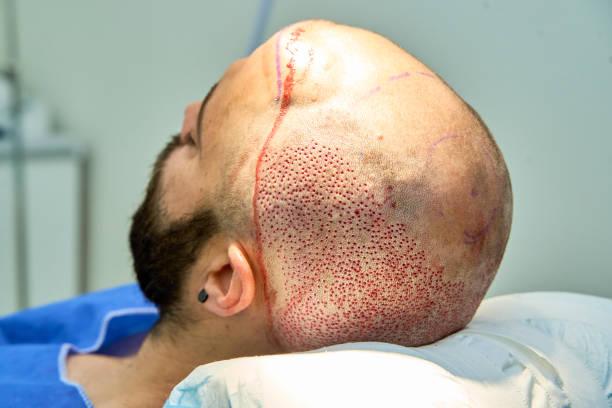
Facial shape can significantly influence the design of Sideburn Hair Transplant in Dubai because sideburns sit along the sides of the face and visually connect the temples, ears, cheeks, and jawline. The same sideburn length or density can produce different visual effects depending on the patient's facial proportions.
A well-planned restoration therefore considers facial anatomy rather than treating sideburns as isolated areas of missing hair.
Sideburns and Facial Proportions
The sideburn creates a vertical visual element along the side of the face.
Its length, thickness, and position can influence how wide, long, narrow, or angular the face appears.
This does not mean sideburns should be used to artificially change facial shape. Instead, their design should harmonize with the proportions that already exist.
Why Small Changes Can Be Noticeable
The sideburn sits close to several important facial landmarks.
These include:
- Temple
- Ear
- Cheek
- Jaw
- Beard line
- Hairline
Because these areas interact visually, a small change in sideburn placement can affect the overall appearance.
Sideburn Design for Longer Facial Shapes
Patients with a longer facial appearance may prefer a sideburn design that creates a balanced transition between the temple and lower face.
An excessively short sideburn can sometimes leave a large visual gap between scalp hair and facial hair.
However, there is no universal "correct" length for a particular face shape.
The design must also account for hairstyle, beard growth, and personal preference.
Sideburn Design for Broader Facial Shapes
A broader face may require a different visual approach.
The objective is not necessarily to make the face appear narrower. Instead, the sideburn should connect naturally with surrounding hair without adding an unnecessarily heavy vertical block.
Moderate density and appropriate hair direction can help maintain a natural appearance.
Angular Jawlines and Sideburn Transitions
A pronounced jawline can make facial-hair transitions particularly visible.
If the sideburn is too dense or ends abruptly, the transition may appear artificial.
Careful tapering and appropriate graft selection can create a softer relationship between the sideburn and surrounding beard or cheek hair.
The Role of the Beard
A sideburn that connects into a beard should be designed as part of the broader facial-hair pattern.
The density does not need to be identical throughout.
Instead, the transition should follow the patient's existing growth characteristics.
Rounded Facial Features
For patients with softer or rounded facial contours, a sideburn can provide a natural structural frame.
However, excessive length or density may create an appearance that feels heavier than intended.
The clinician can consider the relationship between sideburn width, hair length, and facial proportions during planning.
Hair Direction Changes With Facial Anatomy
Hair does not grow at one uniform angle around the side of the face.
Near the temple, the direction may differ from the lower sideburn. As the hair approaches the ear and cheek, its orientation can change again.
This makes angle control especially important during transplantation.
Why Incorrect Angles Stand Out
If a graft is placed too upright, the hair may project away from the skin.
If the angle is too flat or points in the wrong direction, the hair may not blend with surrounding growth.
A natural result depends on reproducing the existing growth pattern as closely as possible.
Facial Asymmetry Should Be Considered
Most faces are not perfectly symmetrical.
The two temples may differ slightly. Ear position, cheek contours, hair density, and jaw structure can also vary between sides.
A transplant design that simply mirrors one side onto the other may not produce the most natural visual balance.
Visual Symmetry Versus Exact Symmetry
The objective is to make the face appear balanced.
That may require subtle differences in graft placement between the left and right sideburn.
Natural-looking restoration is based on visual harmony rather than mathematical duplication.
How Density Interacts With Facial Shape
Density affects how strongly the sideburn appears.
A dense sideburn can create a stronger visual frame, while a softer density can produce a more subtle transition.
The correct choice depends on the patient's existing facial hair and desired style.
Using maximum density everywhere is rarely the most natural approach.
The Influence of Hairstyle
Your haircut can change how your facial shape and sideburns are perceived.
Short fades expose the sideburn more clearly. Longer hairstyles may partially conceal the transition.
Patients should therefore tell their clinician about their typical haircut rather than showing only a hairstyle they rarely wear.
Why Consultation Is More Important Than a Face-Shape Chart
Online face-shape categories can be useful for general education, but they cannot replace an in-person assessment.
A person's face rarely fits perfectly into one category.
The clinician can evaluate the actual anatomy, hair pattern, donor availability, and aesthetic preferences before recommending a design.
Clinic note: Facial shape is one planning factor, not a formula. Sideburn design should be based on the patient's actual anatomy, existing hair pattern, grooming preferences, and realistic donor availability.
Can the Sideburn Design Change Facial Appearance?
Yes, sideburns can influence the visual framing of the face.
But the purpose of transplantation is restoration, not creating an artificial facial contour.
The most convincing results generally look as though the hair naturally belongs there.
Frequently Asked Questions
Does Face Shape Affect Sideburn Transplant Design?
Yes. Facial proportions can influence appropriate sideburn length, density, shape, and transition.
Should Sideburns Be the Same Length on Both Sides?
Not necessarily. Small anatomical differences may require subtle adjustments for visual balance.
Does a Beard Affect Sideburn Design?
Yes. If the sideburn connects with a beard, the density and direction should be planned to create a natural transition.
Does a Fade Change Sideburn Planning?
It can. Very short hairstyles expose the sideburn border and make graft direction and density particularly important.
Can Sideburns Change How the Face Looks?
They can influence facial framing, which is why placement and proportion matter.
Design the Sideburn Around Your Face
There is no single sideburn shape that works for every patient. Facial proportions, temple anatomy, hair direction, beard density, hairstyle, and personal preferences all contribute to the final design.
For an individualized evaluation of Sideburn Hair Transplant in Dubai, consult Tajmeels Clinic and discuss how the restoration can be planned around your facial structure.

 English
 Arabic
 French
 Spanish
 Portuguese
 Deutsch
 Turkish
 Dutch
Dutch
 Italiano
 Russian
 Romaian
 Portuguese (Brazil)