


Solar Panels Perth: The Complete Guide to Choosing, Installing & Saving with Solar
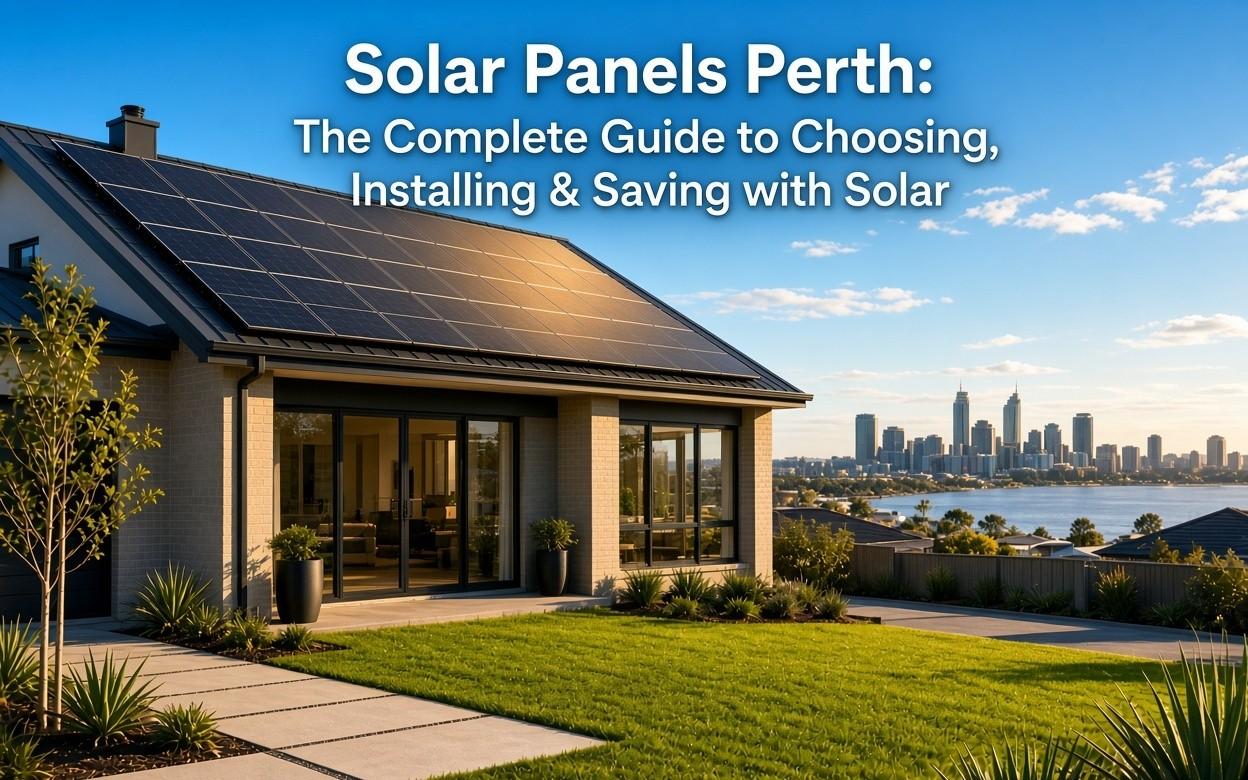
Why Solar Panels Make Sense in Perth
Perth is blessed with abundant sunshine, making solar energy an increasingly practical option for homeowners and businesses looking to take greater control of their electricity costs. But choosing a solar system is about more than simply putting panels on your roof. The right combination of solar panels, inverter, battery storage and professional installation can make a significant difference to how much energy your system produces and how much value you get from it.
For Perth homeowners, the key questions are simple:
- How many solar panels do I need?
- Which solar panel and inverter should I choose?
- Is my roof suitable for solar?
- How much can solar reduce my electricity bills?
- Should I install a battery?
- What rebates or incentives may be available?
- How do I choose a reliable solar installer in Perth?
This guide answers those questions and explains the solar journey from choosing a system to installation and long-term savings.
Solar 365 reports that it has installed 4,000+ solar systems in Perth and provides residential, commercial, battery and inverter solutions. Its Perth service page highlights system options ranging from residential systems such as 6.6kW and 7.7kW through to larger commercial installations.
The important thing to remember is that there is no single “best” solar system for every Perth property. Your ideal system depends on your electricity consumption, roof, budget, lifestyle and future energy requirements.
Choosing Solar Panels for Your Perth Home
Choosing solar panels is one of the most important decisions in your solar investment. While panel price matters, it should not be the only factor you consider.
1. Start With Your Electricity Usage
Before comparing solar panel brands, look at your electricity bills.
Check:
- Your average daily electricity consumption
- Your monthly and annual electricity use
- When your household uses the most electricity
- Whether your electricity consumption is increasing
- Whether you plan to purchase an electric vehicle or battery
A family that uses air conditioning heavily during Perth summers may have very different requirements from a smaller household with relatively low electricity consumption.
The goal is not necessarily to install the largest system possible. The goal is to install a properly sized solar system that matches your energy requirements and roof conditions.
Solar 365 currently presents examples including 6.6kW, 7.7kW and 10kW residential systems, while larger 30kW, 50kW and 100kW systems are available for commercial applications.
2. Consider Solar Panel Efficiency
Solar panel efficiency refers to how effectively a panel converts available sunlight into electricity.
Higher-efficiency panels can be particularly useful when roof space is limited because they can produce more electricity from a smaller area.
However, don't automatically assume that the panel with the highest efficiency rating is the best choice.
Also compare:
- Product warranty
- Performance warranty
- Manufacturer reputation
- Temperature performance
- Panel degradation
- Certification and Australian suitability
- Installer experience
- Overall system value
Solar 365 lists panel options from manufacturers including Jinko, LONGi, Risen Solar, REC Group and JA Solar.
3. Don't Forget the Inverter
Solar panels generate DC electricity, while most household appliances use AC electricity. The inverter converts the electricity into a form your home can use.
A good solar system therefore requires more than quality panels.
Your installer should consider:
- Inverter capacity
- Panel-to-inverter ratio
- Monitoring features
- Battery compatibility
- Roof configuration
- Future expansion
- Electrical requirements
A cheap panel paired with an unsuitable inverter can compromise the performance of the overall system.
4. Think About Battery Storage
Solar panels produce electricity during daylight hours, but many households consume a significant amount of electricity in the morning and evening.
A solar battery can store surplus solar energy during the day and make it available later.
This can help you:
- Increase self-consumption
- Reduce reliance on grid electricity
- Make better use of excess solar generation
- Potentially reduce electricity costs
- Improve energy resilience, depending on the system configuration
Solar 365 currently lists battery options including FoxESS, GROWATT and Tesla Powerwall 3, with different capacities and features.
A battery isn't automatically necessary for every household. Its value depends on your electricity usage, solar generation, tariff structure, battery cost and available incentives.
Installing Solar Panels in Perth
Once you've selected a suitable solar system, the next step is professional installation.
A quality installation is just as important as choosing quality equipment.
Step 1: Property and Energy Assessment
A reputable installer should first understand your property and energy requirements.
The assessment may consider:
- Roof size
- Roof orientation
- Roof pitch
- Shading
- Roof condition
- Existing electrical infrastructure
- Household electricity consumption
- Future energy requirements
For example, trees or nearby buildings can cast shadows across panels and reduce generation during certain periods.
Your installer should therefore assess the actual property rather than recommending the same system to every customer.
Step 2: System Design
The installer then designs a system around your property.
The design should determine:
- Number of panels
- Panel placement
- Inverter size
- Cable routing
- Mounting system
- Electrical protection
- Battery requirements
- Monitoring arrangements
Solar 365 states that its team handles the process from system selection and paperwork through to professional installation.
Step 3: Approvals and Rebate Checks
Depending on the system and property, approvals and documentation may be required before the system can be connected.
It's also important to check incentives before signing a contract.
The Australian Government's Cheaper Home Batteries Program currently provides a discount of around 30% on eligible small-scale battery systems between 5kWh and 100kWh, subject to program rules and eligibility.
Western Australian households may also be eligible for the WA Residential Battery Scheme. Current WA Government information states that eligible Synergy customers can receive up to $1,300 and Horizon Power customers up to $3,800 under the state scheme, with additional federal support potentially available.
Because government programs can change, always confirm current eligibility, approved products and rebate conditions before making a purchasing decision.
Step 4: Professional Installation
During installation, qualified professionals mount the panels, install the inverter, complete electrical connections and configure the system.
Good workmanship matters because solar equipment is exposed to Perth's outdoor conditions for many years.
Ask your installer about:
- Electrical safety
- Mounting quality
- Cable management
- Waterproofing
- Surge protection
- System monitoring
- Workmanship warranties
- Post-installation support
Solar 365 says its Perth installation team includes designers, installers and licensed electricians and that it manages installations without subcontractors.
Step 5: Commissioning and Monitoring
After installation, the system needs to be commissioned and connected appropriately.
Once operational, monitoring can help you understand:
- Daily solar production
- Household consumption
- Grid imports
- Solar exports
- Battery charging and discharging
This information is useful because the biggest savings often come from changing how and when you use electricity.
Saving With Solar in Perth
Saving money is one of the biggest reasons homeowners consider solar panels in Perth.
However, it's important to understand that solar savings are not a guaranteed fixed dollar amount. They depend on your individual circumstances.
How Solar Reduces Electricity Costs
Solar panels generate electricity that can be used directly by your household.
For example, during a sunny afternoon, your panels may produce electricity while your home is operating appliances, cooling systems or other equipment.
If your solar production exceeds your immediate consumption, surplus electricity may be exported to the grid, subject to your retailer's arrangements.
A battery provides another option by storing some excess generation for later use.
The more of your solar electricity you can use effectively, the more valuable your solar generation can become.
What Determines Your Solar Savings?
Your potential savings depend on factors such as:
- Solar system size
- Household electricity consumption
- Roof orientation
- Shading
- Solar generation
- Electricity prices
- Export rates
- Battery capacity and efficiency
- When you use electricity
- System maintenance and performance
Solar 365 provides indicative annual savings examples for solar-and-battery combinations, including approximately $2,208 for a 6.6kW system with a 10kWh battery and approximately $3,156 for a 10kW system with a 15kWh battery. These are estimates, not guaranteed savings, and actual results depend on energy usage, electricity rates and system performance.
Solar Batteries Can Increase Energy Independence
One challenge with solar-only systems is that electricity generation generally peaks during daylight hours.
If your household is empty during the day, you may export more solar electricity instead of using it directly.
A battery can help shift some of that energy into the evening.
For eligible WA households, government support is also making battery storage more accessible. The WA Government reports that more than 20,000 WA families had benefited from the Residential Battery Scheme by May 2026, with participating households potentially saving up to $1,500 per year through solar and battery use.
Use More Solar During the Day
You don't necessarily need a battery to improve your solar savings.
One simple strategy is to shift electricity consumption into daylight hours.
For example:
- Run the washing machine during the day.
- Use dishwashers when solar production is high.
- Schedule pool pumps for daylight hours.
- Charge an EV during peak solar production.
- Run energy-intensive appliances when your system is generating strongly.
This can increase the amount of your solar electricity that you consume directly.
Consider the Long-Term Value
Solar panels are a long-term investment.
Instead of looking only at the upfront price, consider the overall value of the system over its operating life.
A useful comparison should include:
Upfront cost − applicable incentives + expected energy savings + potential export income + long-term system performance
This is why choosing the cheapest quote isn't always the best approach.
A slightly more expensive system may offer better equipment, installation quality, monitoring, warranties or long-term support.
How to Choose a Solar Installer in Perth
Your installer can have a major impact on the quality and performance of your solar investment.
Before signing a contract, ask:
Is the installer properly accredited?
Check relevant Australian accreditation and product requirements. For eligible government programs, approved installers and products may be mandatory.
Does the company have local experience?
A Perth-based installer can have practical knowledge of local roof types, climate conditions, network requirements and common installation challenges.
What is included in the quote?
Don't compare only the headline price.
Check whether the quote includes:
- Solar panels
- Inverter
- Mounting equipment
- Electrical protection
- Cabling
- Installation
- Commissioning
- Monitoring
- Applicable paperwork
- Warranties
Does the company provide after-sales support?
Solar is a long-term investment. You want a company that can assist if your system needs troubleshooting or servicing later.
Solar 365 states that it provides after-sales support and aims to respond to customer queries within 24–48 hours.
A Simple Solar Buying Checklist
Before purchasing solar panels in Perth, use this checklist:
- Review your electricity bills
- Assess your roof and shading
- Determine an appropriate system size
- Compare panel efficiency and warranties
- Choose a compatible inverter
- Consider whether a battery makes sense
- Check current government incentives
- Get multiple quotes
- Check installer credentials
- Review exactly what is included
- Understand warranties and after-sales support
- Ask about monitoring and future upgrades
Most importantly, don't make your decision based solely on the lowest upfront price.
Why Perth Homeowners Should Think Beyond Solar Panels
Solar panels are only one part of a modern home energy system.
A well-designed setup can combine:
Solar Panels + Inverter + Battery + Smart Energy Management
This approach can help homeowners use more renewable energy, reduce grid dependence and better manage electricity consumption.
For households considering future upgrades, it can also be useful to discuss battery readiness, EV charging and additional energy loads with the installer before finalising the system.
Solar 365 provides residential and commercial solar solutions across Perth and offers customised solar packages based on energy and property requirements.
Conclusion: Is Solar Worth It in Perth?
For many Perth homeowners, solar panels can be a practical way to reduce electricity costs, make better use of abundant sunlight and move towards cleaner energy.
But the best results come from choosing the right-sized system, not simply the biggest or cheapest one.
Before installing solar, consider your electricity consumption, roof orientation, available space, shading, panel quality, inverter, battery requirements, rebates and installer experience.
Key Takeaways
- Perth's sunny climate makes it well suited to solar energy.
- The right solar system depends on your home's energy consumption and roof characteristics.
- Panel efficiency, warranties and manufacturer reputation all matter.
- A quality inverter is essential for converting solar electricity efficiently.
- Solar batteries can help households use more of their own solar energy.
- Government incentives may reduce the upfront cost of eligible solar and battery systems.
- Professional installation is essential for safety, performance and long-term reliability.
- The cheapest quote isn't necessarily the best value.
- Monitoring your system and changing energy-use habits can increase the benefits of solar.
If you're considering solar panels in Perth, the next step is to understand what your property actually needs.
Get a professional assessment, compare your options and choose a solar system designed around your home's energy requirements rather than a one-size-fits-all package.
Ready to explore solar for your Perth property? Contact Solar 365 to discuss your energy needs and request a tailored solar solution.

 English
 Arabic
 French
 Spanish
 Portuguese
 Deutsch
 Turkish
 Italiano
 Russian
 Romaian
 Portuguese (Brazil)
 Greek
Greek