


The Science Behind Techemer’s Water-Lubricated Vertical Shaft Bearings for Submerged Pumps
Submerged pumps work in places where nobody wants to carry out repairs: deep wells, sumps, intake structures, and harbor basins. The shaft bearings in these machines must work quietly for years while surrounded by water, sand, and sometimes salt. That is why material science matters so much. Water-lubricated polymer bearings are not simply plastic sleeves; they are engineered materials with carefully balanced properties. This article explains what happens inside a water-lubricated bearing, why polymer formulations suit submerged service, and how Techemer approaches the design of bearings that must survive in challenging underwater conditions.
How a Water Film Supports the Shaft
When a shaft turns inside a bearing, water is drawn into the narrow gap between the two surfaces. At sufficient speed, this water forms a thin film that separates the shaft from the bearing, which keeps friction low and wear minimal. This is called hydrodynamic lubrication. At very low speeds, such as during start-up, the film is incomplete, and brief contact occurs. The material must tolerate this moment without damage. Designers therefore pay attention to surface finish, groove geometry, and clearance, all of which influence how quickly and reliably the water film forms during every start of the pump.
Why Polymers Behave Well Underwater
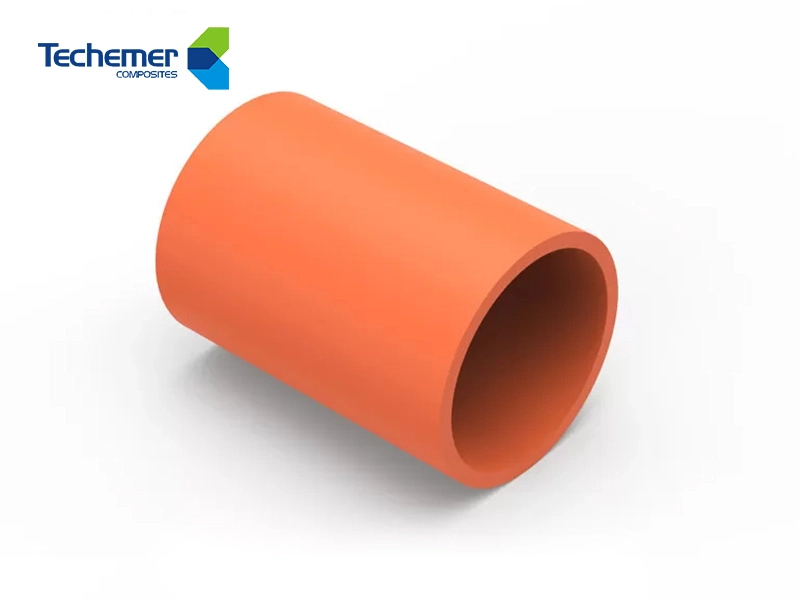
Many metals corrode or galvanically react in water, while polymers do not rust and remain stable in most natural waters. Their elastic surface can absorb small misalignments and shock loads, and hard particles can embed rather than scratch the shaft. Low friction in a wet environment further reduces heat. Techemer's elastomeric polymer alloys are formulated to resist wear while keeping dimensions stable after long immersion. This combination is what allows a polymer bearing to run for long periods without lubrication systems, particularly in vertical machines where regular access to the bearing is simply not practical.
Choosing Between Different Operating Conditions
Not every submerged pump faces the same environment. Freshwater, seawater, and wastewater all create different challenges. Seawater adds salt and marine growth, while wastewater can contain fibers and abrasive solids. Temperature also influences material behavior and film formation. When comparing vertical shaft bearings, engineers should ask how the material responds to their specific liquid and whether supporting test or field data exists. Techemer's team can discuss these conditions and recommend an appropriate design. Matching the material to the liquid is more important than relying on a single general-purpose solution for every installation.
Load, Clearance, and Geometry
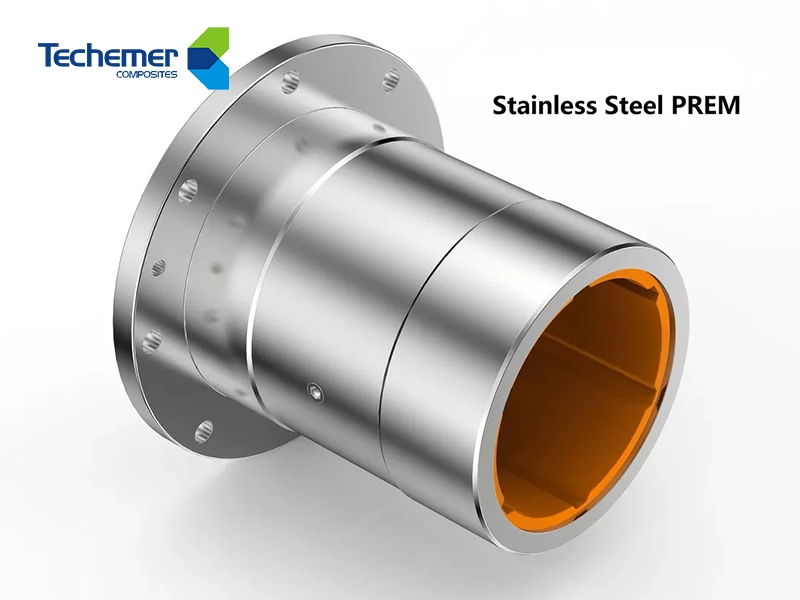
Even the best polymer needs the right geometry. Projected bearing pressure must remain within a safe range, or the water film may fail. Clearance must be large enough to allow water flow and thermal expansion but small enough to control shaft movement. Grooves help deliver fresh water and flush out particles. Engineers calculate these parameters from shaft size, speed, and load. Because vertical shafts are long, they may also consider critical speeds and the spacing of bearings along the column. Good design combines material knowledge with sound mechanical judgment so the system behaves smoothly across the full operating range.
From Laboratory to Field
Laboratory tests measure friction, wear rate, and load capacity under controlled conditions, which makes comparison possible. However, real pumps experience sudden silt surges, temperature swings, and irregular starts. Field experience therefore completes the picture. Techemer has supplied water-lubricated bearings to industrial customers for years and uses feedback to refine its formulations. Buyers should ask for evidence from similar installations, including hours of operation and measured wear. When science, testing, and field results agree, plant owners can specify polymer bearings with confidence, knowing they are based on proven behavior rather than marketing language.

 English
 Arabic
 French
 Spanish
 Portuguese
 Deutsch
 Turkish
 Italiano
 Russian
 Romaian
 Portuguese (Brazil)
 Greek
Greek