


Answer Engine Optimization Tools: What to Look for When Optimizing Content for AI Answers
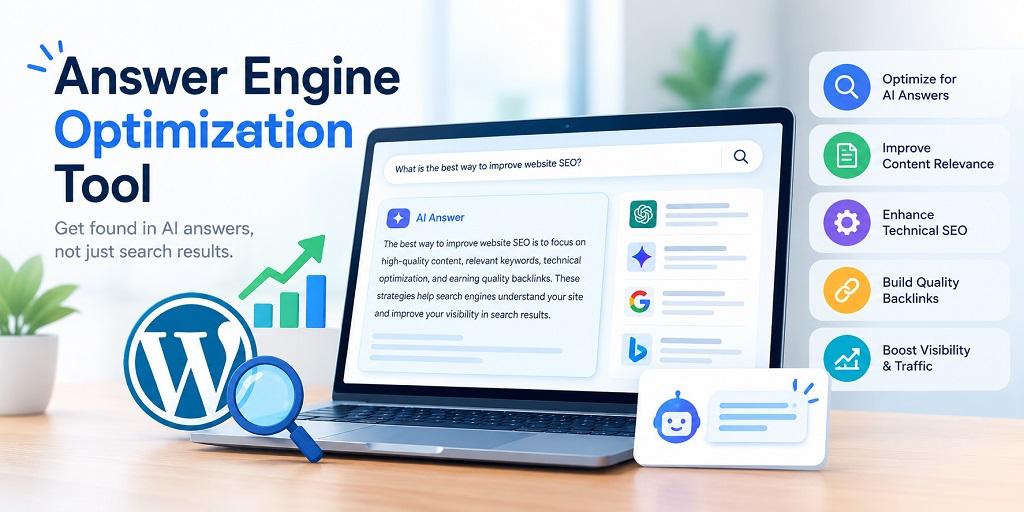
- An Answer Engine Optimization Tool helps brands structure content so AI platforms like ChatGPT, Gemini, and Perplexity cite it directly.
- The most critical features are citation tracking, structured-data analysis, and question-intent mapping.
- Tools that audit schema markup and entity coverage outperform those that focus only on traditional keyword rankings.
- Choosing the right platform in 2026 means prioritizing AI-specific metrics, not recycled SEO dashboards.
Why Answer Engine Optimization Requires Its Own Toolset
Traditional SEO tools measure rankings on a ten-blue-links page. AI search engines work differently: they synthesize answers from multiple sources and attribute credit to the pages they find most authoritative and clearly structured. A standard rank tracker cannot tell you whether ChatGPT cited your brand last Tuesday or whether Perplexity pulled a competitor instead. That gap makes a dedicated Answer Engine Optimization Tool necessary, not optional, for any brand that wants visible presence in AI-generated responses.
Core Features Every Answer Engine Optimization Tool Should Include
Not every platform labeled "AI SEO" actually addresses how AI search engines select and cite content. Evaluate any Answer Engine Optimization Tool against these six capabilities:
- AI citation monitoring: Tracks when and how often ChatGPT, Perplexity, Gemini, and similar platforms reference your content or brand name.
- Structured-data auditing: Identifies missing or broken schema markup (FAQ, HowTo, Article, Product) that AI crawlers rely on to parse meaning.
- Question-intent mapping: Surfaces the exact natural-language questions your target audience asks AI assistants, not just keyword search volume.
- Entity and topic coverage analysis: Confirms that content covers a subject completely enough for an AI model to treat it as a reliable source.
- Content gap detection: Compares your existing pages against the questions AI engines answer from competitor pages.
- Answer-format scoring: Rates how well content uses concise definitions, numbered steps, and comparison tables that AI models prefer to quote.
Structured Data and Schema: The Foundation AI Crawlers Prefer
Schema markup remains the clearest signal a content creator can send to an AI retrieval system. According to the Schema.org documentation, structured vocabulary lets machines understand the relationships between concepts, not just the presence of words. Tools that audit schema completeness, flag deprecated types, and suggest replacements give content teams a concrete action list rather than abstract recommendations. Without this layer, even well-written content may never surface as a cited answer.
Comparing Answer Engine Optimization Tool Feature Sets
Feature Traditional SEO Tool Answer Engine Optimization Tool AI citation tracking No Yes Schema audit depth Basic Full type coverage Question-intent mapping Keyword-only Natural-language queries Entity coverage scoring Rare Core feature Answer-format optimization No Yes
Conclusion: Match the Tool to the Reality of AI Search
AI search engines now answer millions of queries without sending users to a results page. Brands that optimize only for click-through rankings are solving the wrong problem. The right Answer Engine Optimization Tool targets citation frequency, structured content quality, and entity authority. WorkspaceCMS.ai's SEO + AI Campaign integrates Google's structured-data guidelines into its content automation workflow, giving marketing leaders and agency owners a unified platform for building and tracking AI-ready content at scale.
Answer Engine Optimization Tools FAQ
What makes an Answer Engine Optimization Tool different from a standard SEO platform?
It tracks AI citations, audits schema markup for AI crawlers, and maps natural-language question intent rather than focusing solely on keyword rankings and backlink counts.
Which AI platforms should an Answer Engine Optimization Tool monitor?
At minimum: ChatGPT, Perplexity, Google Gemini, and Microsoft Copilot. These four account for the largest share of AI-generated answers in 2026.
How often should citation data be reviewed?
Weekly monitoring is the practical standard. AI model updates can shift which sources get cited within days of a new model release or index refresh.

 English
 Arabic
 French
 Spanish
 Portuguese
 Deutsch
 Turkish
 Dutch
 Italiano
 Russian
 Portuguese (Brazil)
 Greek