


What Should Buyers Check Before Choosing Die-Cast Aluminum Cookware?
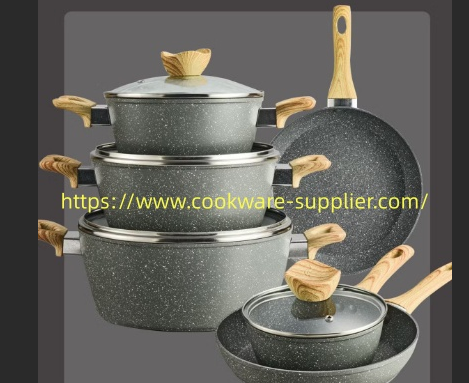
Die-Cast Aluminum Cookware should be assessed according to the intended application, construction, dimensions, surface treatment, cooking system, handling requirements, and target market. For importers, wholesalers, retailers, and private-label businesses, product selection involves more than visual appearance or quoted price. A detailed specification can give both buyer and manufacturer a clearer reference throughout development and production.
Begin With the Target Market
Before discussing a specific model, buyers should determine who the intended users are and how the product will be positioned. Household customers, hospitality businesses, restaurants, and retail programs may have different expectations regarding size, weight, appearance, accessories, and packaging.
Market requirements can also influence the preferred product configuration. A compact item may suit smaller households, while larger formats may be considered for family kitchens or food-service applications.
Buyers should prepare basic information about target users, expected cooking habits, preferred dimensions, price range, packaging style, and destination market before requesting a quotation.
Examine Body Construction
The main body deserves close attention because its structure affects weight, stability, handling, and appearance. Buyers should request information about alloy specifications, wall thickness, base thickness, dimensional tolerances, and weight ranges.
Thickness should be reviewed together with the overall design rather than treated as an isolated number. Different areas may require different structural characteristics depending on their function.
For example, the base may need a particular configuration for stability, while the sidewall can follow a different profile to balance weight and handling.
When several sizes are required, buyers can request technical drawings for each model. This makes it easier to compare proportions and maintain a consistent product family.
Review the Surface System
The surface deserves careful evaluation because it has a direct effect on appearance, maintenance, and product positioning.
Ask the manufacturer about the selected treatment, application process, available colors, finish options, and relevant inspection requirements.
During sample approval, inspect the surface for color consistency, smoothness, visible marks, scratches, edge treatment, and other noticeable irregularities.
If several colors are planned, approve physical samples rather than relying only on digital images. Screen displays can differ from actual production results, so physical references provide a clearer standard.
Check the Bottom Structure
The bottom structure should correspond with the cooking systems used by the intended customers. Buyers should specify whether the product is designed for gas, electric, ceramic, induction, or multiple stove types.
Induction requirements deserve separate discussion. The manufacturer should explain the magnetic component, attachment method, dimensions, thickness, flatness, and applicable testing procedure.
Buyers should also check the contact area. Overall diameter does not necessarily indicate the actual area that sits against a stove, so both measurements should be included in the product specification.
Consider Weight and Balance
Weight can affect customer handling, transportation costs, packaging, and overall product positioning. Buyers should therefore establish an appropriate weight range instead of simply requesting a heavier structure.
Balance is equally important. A product with a suitable center of gravity can be easier to move, especially when it contains food.
Handle dimensions should correspond with the body size. Larger models may require additional support for easier lifting and movement.
When reviewing samples, buyers should hold the item in a normal position and assess whether the overall balance matches the intended application.
Evaluate Handle Construction
The handle is an important functional component and should not be selected only for appearance.
Buyers should check its length, shape, material, attachment method, position, clearance, and finish. The connection between the handle and body should also be reviewed during sample approval.
For larger models, a secondary handle can be considered when additional support is useful.
A consistent handle design across several sizes can also create a more coordinated appearance for a private-label collection.
Check Lids and Accessories
If a lid is included, buyers should confirm its diameter, fit, material, handle, ventilation requirements, and storage considerations.
Other accessories should also be listed individually in the purchasing specification. This may include knobs, helper handles, protective components, packaging inserts, or other supplied parts.
For a multi-piece set, clearly identify every included item. This helps prevent differences between the quotation, approved sample, and final shipment.
Accessories should be approved together with the main product whenever possible.
Discuss Customization Before Production
Private-label buyers may require customized dimensions, colors, logos, handles, accessories, packaging, or product combinations.
These requirements should be discussed before production begins. Buyers can provide logo files, artwork, color references, dimensional drawings, packaging layouts, and other available information.
cookware-supplier can communicate with buyers regarding product specifications and customized manufacturing requirements. Early discussion allows both sides to establish a clearer reference before sampling and production.
Customization should also include any requirements for labels, cartons, instruction materials, barcodes, or other market-specific packaging information.
Approve a Physical Sample
A physical sample provides a useful reference for details that are difficult to communicate through text alone.
Before confirming a bulk order, inspect dimensions, weight, finish, handle position, bottom structure, lid fit, accessories, color, and packaging.
Once the sample is approved, record the model number, revision, date, and important specifications. This creates a reference for later production.
If any modification is requested after approval, the change should be documented before mass production begins.
Establish Inspection Requirements
A clear inspection checklist can reduce misunderstandings between buyers and manufacturers.
Important checkpoints may include dimensions, weight, surface condition, flatness, handle attachment, accessory quantities, packaging condition, and visible appearance.
Buyers should distinguish between critical functional requirements and minor cosmetic details. This makes inspection criteria easier to apply consistently.
Inspection methods and sampling arrangements should be agreed before shipment rather than discussed only after the goods have been completed.
Review Packaging and Shipping
Packaging should protect the product during handling, storage, and transportation. Buyers should consider individual protection, inner boxes, master cartons, separators, labels, and stacking requirements.
Retail programs may require customized packaging artwork, product information, barcode placement, or market-specific labeling.
Packaging dimensions can also influence shipping efficiency. Therefore, buyers should review carton size and packing quantities before finalizing the order.
Compare Manufacturers Using Matching Specifications
A price comparison is more meaningful when every supplier is quoting against the same requirements.
Buyers should compare dimensions, weight, body structure, surface treatment, base configuration, handles, lids, accessories, packaging, customization, inspection requirements, and order quantities.
If a manufacturer proposes a different specification, the difference should be clearly identified rather than comparing the two quotations as though they were identical.
This approach helps buyers understand what each quotation actually includes and can make supplier discussions more straightforward.
Keep a Complete Production Reference
After product approval, buyers should keep drawings, approved samples, color references, packaging artwork, inspection standards, and component specifications together.Future changes should be documented before production. This is particularly useful for repeat orders or product ranges containing several related sizes.For businesses reviewing manufacturing options, cookware-supplier provides product information and manufacturing-related details at https://www.cookware-supplier.com/product/ Buyers can use these resources as a starting point when developing specifications, planning private-label products, or preparing requirements for a new market.

 English
 Arabic
 French
 Spanish
 Portuguese
 Deutsch
 Turkish
 Dutch
Dutch
 Italiano
 Russian
 Portuguese (Brazil)
 Greek
Greek