


Which Details Should Buyers Ask ballvalveballs Before Ordering?
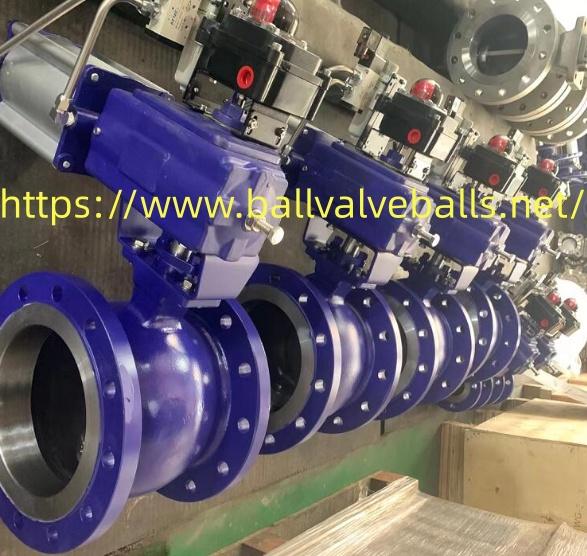
Hard Seal Ball selection should start with the actual valve design and operating conditions rather than appearance or price alone. For valve manufacturers, distributors, and industrial purchasing teams, important points can include material grade, dimensions, roundness, surface condition, machining tolerance, coating, seat compatibility, and inspection requirements. A clear technical specification gives both buyer and manufacturer a practical reference before production begins.
Begin With the Valve Drawing
A detailed drawing is one of the most useful references when purchasing a valve component. Buyers should provide outside diameter, bore dimensions, stem connection details, grooves, sealing areas, tolerances, and other critical measurements whenever available.
A general diameter is not enough for many engineered components. Small differences in geometry can affect assembly and contact with the mating seat.
For replacement orders, an original drawing or qualified physical sample can help the manufacturer confirm the required configuration. For new valve designs, buyers should identify critical dimensions and tolerances before requesting a quotation.
Describe the Actual Working Conditions
The operating environment should be communicated before material and surface options are confirmed. Buyers can provide information about the working medium, temperature, pressure, particle content, corrosion conditions, and operating frequency.
Different materials can behave differently under different service conditions. Therefore, buyers should avoid selecting a material only because it has been used in another project.
When the application involves abrasive particles, corrosive media, elevated temperatures, or frequent operation, these conditions should be included in the technical inquiry. They can influence the base material, surface treatment, and finishing process.
Check the Mating Seat
The spherical component should be evaluated together with its mating seat. Contact between the two parts can influence assembly, movement, and sealing performance.
Buyers should provide information about seat material, seat configuration, surface condition, and any existing coating. For replacement components, details about the original seat can be particularly useful.
For new valve projects, discussing both components together can help establish compatible dimensions and surface requirements. This can also reduce the possibility of selecting two individually suitable parts that are not properly matched.
Review Dimensional Requirements
Buyers should identify which dimensions are critical and which have greater flexibility. These may include outside diameter, bore size, stem-related features, grooves, contact areas, and overall geometry.
Roundness should receive attention when the part is designed to work against a mating surface. Instead of using general descriptions such as precision machining, buyers can provide measurable tolerance requirements on the drawing.
A shared dimensional reference also makes it easier to compare quotations from different manufacturers without mixing different specifications.
Examine Surface Treatment Options
Surface treatment should be selected according to the actual service environment. Depending on the application, possible options can include electroless nickel plating, carbide-based coatings, nickel-based treatments, thermal spray, welded overlays, or precision polishing.
Buyers should ask about the purpose of the proposed treatment rather than comparing coating names alone. Important questions may include coating thickness, surface roughness, hardness where applicable, finishing method, and compatibility with the mating seat.
The final surface condition can be especially important for sealing contact areas, so the required roughness should be specified numerically when it is part of the design.
Understand the Machining Process
A buyer does not necessarily need every production detail, but understanding the main processing route can help clarify how the required geometry is achieved.
Depending on the design, manufacturing may involve forging, casting, welding, heat treatment, CNC machining, grinding, polishing, coating, and final finishing.
The sequence can vary according to material and construction. Buyers can ask which processes are used for critical dimensions and how those dimensions are verified after machining.
For customized components, this information can also help buyers understand why certain specifications require additional processing steps.
Set Inspection Criteria in Advance
Inspection requirements should be agreed before production rather than after the products are completed.
Possible inspection items include material verification, dimensional measurement, roundness, surface roughness, hardness, coating thickness, appearance, and other project-specific requirements.
If material certificates or inspection reports are needed, buyers should mention this during the quotation stage. This gives the manufacturer time to prepare the appropriate documentation.
For repeat orders, keeping the same inspection reference can also help maintain consistency between different production batches.
Ask About Custom Manufacturing
Industrial valve projects often involve customized configurations. Requirements may include non-standard diameters, special bore sizes, stem connections, grooves, materials, coatings, or surface finishes.
The more complete the technical information, the easier it is for a manufacturer to evaluate the request. Drawings should identify critical dimensions, tolerances, materials, treatment requirements, and inspection standards.
ballvalveballs supports buyers who need drawing-based manufacturing and customized valve components. Technical details can be reviewed before production so the requested configuration is clearly defined.
Compare Offers Using the Same Specification
A quotation should not be judged by price alone. Different offers may contain different materials, coatings, tolerances, inspection procedures, packaging arrangements, or customization conditions.
Buyers can prepare a comparison sheet covering material, dimensions, tolerance, treatment, inspection, quantity, packaging, and delivery requirements.
This makes technical differences easier to identify and helps prevent a lower quotation from being compared directly with a product that has a different specification.
Confirm Everything Before Production
Before production starts, buyers should confirm the final drawing, approved sample if applicable, material grade, dimensions, tolerances, surface treatment, inspection requirements, quantity, and packaging.
For repeat purchases, keeping an approved drawing and sample reference can simplify future communication. If a specification changes, the revised document should have a clear version number so everyone works from the same information.For valve manufacturers, distributors, and industrial buyers looking for customized spherical components, ballvalveballs provides a product-focused manufacturing platform covering drawing review, material selection, machining, surface treatment, inspection, and order coordination. Buyers can visit https://www.ballvalveballs.net/ to review available products and discuss specific project requirements.

 English
 Arabic
 French
 Spanish
 Portuguese
 Deutsch
 Turkish
 Dutch
Dutch
 Italiano
 Russian
 Romaian
 Portuguese (Brazil)