


A Practical Guide to Choosing a High Frequency Transformer Factory
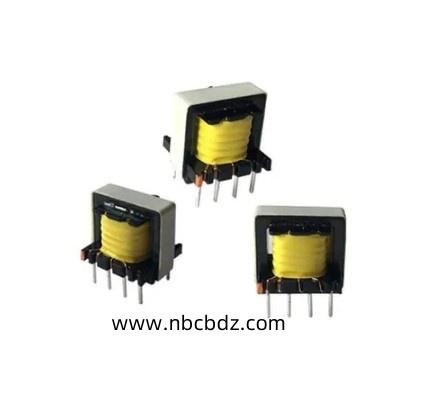
For buyers evaluating a High Frequency Transformer Factory, the most useful approach is to look at how magnetic materials, winding methods, insulation, and circuit requirements are coordinated during development. Unlike traditional line-frequency transformer designs, high frequency transformers are commonly integrated into switching power supplies and other power-electronic systems where the magnetic component must work closely with rapidly changing electrical signals. Ningbo Chuangbiao Electronic Technology Co., Ltd. develops high frequency transformers as part of its broader electronic transformer product range.
Material selection begins with the magnetic core. Ferrite is commonly used in high frequency transformer construction because its magnetic characteristics are suitable for switching applications. The core provides the path for magnetic flux, while the winding system transfers electrical energy between isolated circuits. Choosing a suitable core material therefore requires consideration of the switching environment, magnetic behavior, thermal conditions, and intended circuit topology rather than simply selecting a familiar transformer material.
The winding material is another important consideration. Copper is widely used because of its electrical conductivity and established processing characteristics. At higher operating frequencies, however, the arrangement of the conductor becomes particularly relevant. Depending on the design, manufacturers may use specialized winding approaches or carefully arranged conductor layers to manage effects associated with high frequency current distribution. This makes winding design an important part of transformer engineering rather than merely a production step.
Insulation materials also need to work together with the magnetic and winding structure. Primary and secondary windings may need to remain electrically separated while maintaining an efficient magnetic relationship. Bobbins, insulating layers, protective materials, and winding arrangements all contribute to this structure. Buyers should therefore discuss isolation requirements and the surrounding circuit with the transformer manufacturer before selecting a product.
The purchasing process should begin with the application rather than the transformer alone. High frequency transformers may be used in switching power supplies, DC-DC converters, charging equipment, LED-related power systems, embedded electronic modules, and other power-conversion applications. The appropriate design depends on how the transformer interacts with the switching circuit, required isolation, output arrangement, thermal environment, and available installation space.
Circuit compatibility is particularly important. A transformer designed for one switching topology may not automatically be suitable for another because winding arrangement, magnetic behavior, leakage characteristics, and insulation requirements can vary. Buyers can provide information about the intended circuit during the early design stage so the manufacturer can evaluate the magnetic component as part of the complete power-conversion system.
Function and technology are closely connected with winding arrangement. High frequency transformers need to transfer energy efficiently while controlling unwanted electrical effects that can influence the surrounding circuit. Winding placement, spacing, interleaving, shielding, and insulation can all affect the relationship between the primary and secondary sides. A carefully developed structure can help balance energy transfer with isolation and electromagnetic compatibility requirements.
Thermal behavior is another part of the engineering process. Core losses and winding losses generate heat during operation, so the transformer should be considered together with the surrounding enclosure, circuit board, airflow, and operating environment. Buyers can discuss thermal conditions during product development rather than treating heat management as an issue that begins only after installation.
Manufacturing consistency can have a direct effect on electronic equipment. Small differences in winding placement, insulation treatment, core assembly, or soldering connections may influence how a transformer behaves within a circuit. Ningbo Chuangbiao states that its production process includes supplier material control, incoming material inspection, CNC equipment, automated testing systems, and comprehensive quality inspection before products leave the factory.
User experience is especially relevant for equipment manufacturers and technicians. A transformer that is clearly identified, securely assembled, and designed for straightforward installation can make the production and maintenance process easier. Appropriate terminals, mounting arrangements, and orderly winding structures can also help technicians understand how the component should be integrated into the surrounding electronic assembly.
Compact physical design is another advantage associated with many high frequency transformer applications. Because high frequency magnetic designs can use ferrite cores and optimized winding structures, manufacturers can develop components suitable for space-conscious electronic equipment. This makes physical layout an important part of the selection process, particularly when the transformer must fit within a tightly organized power module or circuit assembly.
Appearance may not be the primary concern for an internal electronic component, but manufacturing finish still contributes to product quality perception. Neat winding, clean insulation, orderly terminals, consistent encapsulation, and an appropriate protective structure can make the component easier to handle and integrate. For equipment manufacturers, consistent transformer construction can also support a more organized internal product layout.
Customization is particularly relevant when a standard transformer does not fully match the circuit design. Buyers may require different winding arrangements, multiple secondary outputs, insulation structures, mounting approaches, or protective treatments. Ningbo Chuangbiao describes project-based customization and technical support for high frequency transformer applications, allowing the magnetic component to be considered alongside the customer's power-electronic design.
For engineers, purchasing teams, power-supply manufacturers, and electronic equipment developers, supplier discussions can therefore cover ferrite materials, winding construction, insulation, switching topology, thermal conditions, electromagnetic considerations, installation, and physical design. Ningbo Chuangbiao Electronic Technology Co., Ltd. develops high frequency transformers alongside a broader range of electronic transformer products and provides design, manufacturing, quality, and technical support. More information about its transformer products is available at https://www.nbcbdz.com/product/

 English
 Arabic
 French
 Spanish
 Portuguese
 Deutsch
 Turkish
 Italiano
 Russian
 Romaian
 Portuguese (Brazil)
 Greek
Greek