


Standards and Selection of Gaskets
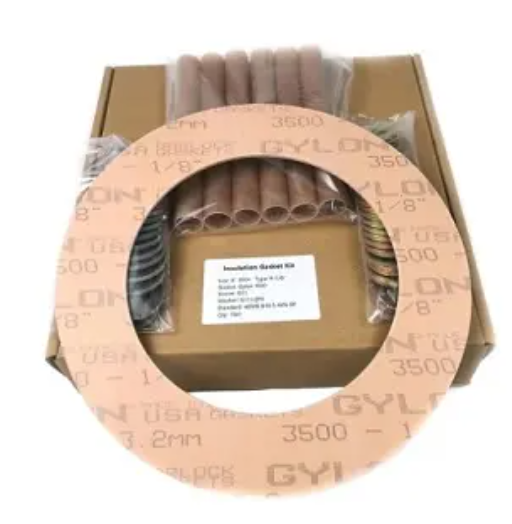
Standards and Selection of Gaskets
This article provides a comprehensive overview of gasket standards, manufacturer selection criteria, and selection methodologies. It outlines key gasket standards used in the chemical and petrochemical industries, specifies requirements for gasket manufacturers, and discusses critical factors in gasket selection, including pressure, temperature, and medium compatibility. Various gasket types—such as asbestos-rubber, PTFE, and spiral-wound gaskets—are examined in terms of their properties and application ranges.
Part I: Gasket Standards
The following standards are commonly applied in the chemical and petrochemical industries:
HG/T Standards (China)
HG/T 20606-2009: Non-metallic flat gaskets for steel pipe flanges
HG/T 20607-2009: Polytetrafluoroethylene (PTFE)-covered gaskets for steel pipe flanges
HG/T 20609-2009: Metal-covered gaskets for steel pipe flanges
HG/T 20610-2009: Spiral-wound gaskets for steel pipe flanges
HG/T 20611-2009: Toothed composite gaskets with a covering layer for steel pipe flanges
HG/T 20612-2009: Metal ring gaskets for steel pipe flanges
HG/T 20614-2009: Matching regulations for steel pipe flanges, gaskets, and fasteners (PN series)
HG/T 20627-2009: Non-metallic flat gaskets for steel pipe flanges (Class series)
HG/T 20628-2009: PTFE-covered gaskets for steel pipe flanges (Class series)
HG/T 20630-2009: Metal-covered gaskets for steel pipe flanges (Class series)
HG/T 20631-2009: Spiral-wound gaskets for steel pipe flanges (Class series)
HG/T 20632-2009: Toothed composite gaskets with a covering layer for steel pipe flanges (Class series)
HG/T 20633-2009: Metal ring gaskets for steel pipe flanges (Class series)
SH Standards (Petrochemical Industry, China)
SH 3401-2013: Non-metallic flat gaskets for petrochemical steel pipe flanges
SH 3402-2013: PTFE-covered gaskets for petrochemical steel pipe flanges
SH 3403-2013: Metal ring gaskets for petrochemical steel pipe flanges
SH 3407-2013: Spiral-wound gaskets for petrochemical steel pipe flanges
Note: Due to limited usage in the chemical and petrochemical sectors, JB and GB standard gaskets are not listed in this article.
Part II: Requirements for Selecting Gasket Manufacturers
Manufacturers of gaskets for pressure vessels and piping must meet the following criteria:
Obtain a Special Equipment Manufacturing License issued by the State Administration for Market Regulation.
Maintain robust manufacturing and inspection capabilities.
Hold ISO 9000 series certification for quality management.
Demonstrate a strong track record in the petroleum and petrochemical industries.
Quality Control Measures
The material procurement department must inspect gaskets upon receipt, verifying:
Certificates of conformity
Material test reports
Compliance with specifications and models
For critical equipment or gaskets with special material requirements, manufacturers must specify re-inspection protocols.
Re-inspection must follow applicable manufacturing standards, with at least one sample per batch tested for acceptance.
Part III: Gasket Selection
General Principles
Compliance with Standards: Gasket type and application must align with design documents, national standards, and industry regulations. Any deviation requires formal approval.
Cost and Practicality: Where safety permits, prioritize cost-effective, easy-to-install, and replaceable gaskets.
Thickness Considerations:
Thin gaskets are suitable for well-machined surfaces and low-pressure applications.
Thicker gaskets are recommended under high pressure to ensure sufficient rebound and prevent leakage.
Standardization: Minimize variations in specifications and materials to ensure interchangeability.
Restrictions:
Non-reinforced graphite gaskets are prohibited for gaseous media under high pressure.
Serrated gaskets must not be used on tongue-and-groove flanges.
Special Considerations
Fiber Contamination Risk: Avoid asbestos-rubber gaskets if the medium prohibits fiber contamination.
Vibration Resistance: For high-vibration environments, use high-resilience gaskets (e.g., spiral-wound or serrated composite gaskets).
Toxic/Corrosive Media: Asbestos-rubber gaskets are banned for highly toxic, explosive, or corrosive substances.
Liquefied Gas Tanks: Spiral-wound gaskets with metal protection rings are mandatory for bottom nozzle valves and flanges.
Material-Specific Guidelines
1. Asbestos-Rubber Gaskets
Applications: Low-pressure, non-critical systems.
Limitations:
Unsuitable for highly hazardous media or high-vacuum sealing.
Recommended thickness: 1.5–3 mm (thicker gaskets offer better resilience but may extrude under high pressure).
2. PTFE Gaskets
Advantages:
Excellent chemical resistance (acids, alkalis, solvents).
Non-contaminating, ideal for clean processes.
Limitations:
Pure PTFE gaskets: Limited to ≤4.0 MPa and ≤150°C due to cold flow and creep.
PTFE-covered gaskets: Avoid in vacuum or corrosive environments where the backing material may degrade.
3. Metal Gaskets
Must be used in a fully annealed state.
Select softer metals with hardness 30–40 HB below the flange sealing surface.
Flange Compatibility
For flanges ≤1.6 MPa, use high-rigidity designs (e.g., weld-neck flanges) when employing semi-metallic gaskets (spiral-wound, metal-jacketed).
Ensure gasket inner diameter ≥ flange inner diameter to avoid flow obstruction.
Replacement of Imported Gaskets
Default approach: Replace with identical type/material.
Substitutions: Require formal approval if changes are necessary.
Additional Precautions
Chloride Limits: For stainless steel/nickel alloy flanges, ensure asbestos/graphite gaskets contain ≤50 ppm chloride ions.
Oxidizing Media: Flexible graphite gaskets must not exceed 450°C.
Conclusion
Proper gasket selection is critical for safety, efficiency, and longevity of piping systems. By adhering to industry standards, manufacturer qualifications, and application-specific requirements, engineers can optimize performance while minimizing risks of leakage or failure.

 English
 Arabic
 French
 Spanish
 Portuguese
 Deutsch
 Turkish
 Dutch
Dutch
 Russian
 Romaian
 Portuguese (Brazil)
 Greek
Greek