


Can Qinlang Forward Curved Centrifugal Fan Meet Your Airflow Needs
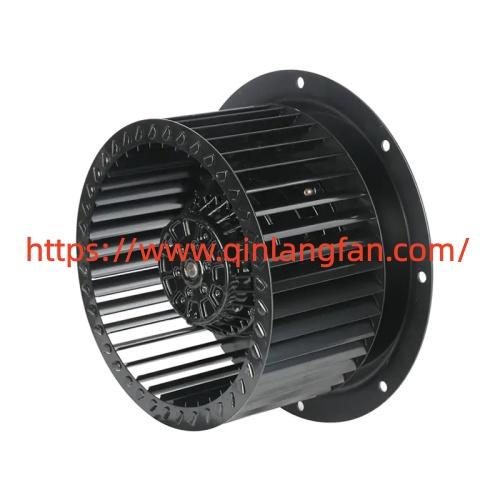
Forward Curved Centrifugal Fan selection starts with a straightforward question: what does your ventilation system actually need to do? A workshop, commercial kitchen, equipment cabinet, and production line can have very different air movement requirements. Choosing a unit based on dimensions or motor power alone may leave important details unanswered. Buyers should begin with the working environment, expected airflow, available pressure, and the way the equipment will run throughout an ordinary day.
Airflow is a useful starting point, but the number on a specification sheet needs context. A ventilation system contains resistance from ducts, bends, filters, grilles, and other components. As air travels through these parts, the system places a demand on the equipment. Buyers should compare the required operating point with the performance curve rather than treating the rated airflow as a guaranteed result in every installation. This simple check can help prevent an unsuitable purchase.
Pressure deserves equal attention. A short, open passage may create different conditions from a long duct network with several turns and filters. If the installation has considerable resistance, the selected unit must be able to work within the required pressure range while delivering the intended air volume. Sharing a layout or basic system description with the supplier makes it easier to discuss these requirements before an order is placed.
The wheel design is another detail worth examining. Forward curved wheels are commonly used in applications that call for compact equipment and substantial airflow within a suitable operating range. Their performance depends on the complete design, including wheel dimensions, rotation speed, motor selection, and the surrounding system. Buyers should ask for technical data relevant to the intended duty instead of assuming that products with similar external dimensions will behave in the same way.
Noise can also influence the final decision. In a production area, sound may be less noticeable than it would be in an office, shop, or occupied building. The result depends on rotation speed, installation quality, airflow conditions, vibration, and the surrounding structure. Ask whether sound data is available for the expected operating point. Proper mounting, balanced components, and suitable connections can also help reduce unwanted vibration and operational disturbance.
Material choice should reflect the environment. Ordinary indoor ventilation may have different requirements from equipment operating in humid areas, dusty workshops, or locations exposed to corrosive substances. Buyers should clarify the air temperature, moisture level, dust content, and any chemicals that may be present. Housing and wheel materials should match these conditions, while electrical components must suit the installation environment. If the equipment will run for extended periods, motor protection and thermal management deserve particular attention.
Installation and maintenance are easy to overlook when comparing quotations. Check the available mounting space, access for inspection, direction of airflow, electrical connections, and room for future servicing. A compact unit may fit neatly into a machine, yet still be inconvenient if technicians cannot reach the motor or remove components when needed. Confirming these practical details early can reduce installation changes and make routine maintenance easier to plan.
Operating cost should be considered alongside the purchase price. Motor efficiency, actual running hours, control methods, and the match between equipment performance and system demand all affect energy use. A unit that runs continuously may deserve a different evaluation from one used for short periods each day. Buyers can ask suppliers about suitable speed control, expected operating conditions, replacement parts, and recommended inspection intervals. These questions create a clearer picture of ownership costs without relying on assumptions.
Communication with the manufacturer can make the selection process more productive. Provide the intended application, target airflow, estimated system pressure, operating temperature, installation dimensions, power supply, and any sound restrictions. If drawings or photographs are available, they can help explain space limitations and connection arrangements. Qinlang supports buyers who need to compare equipment details against real project requirements, making technical discussion part of the purchasing process rather than an afterthought.
Before confirming an order, review the specification, performance data, delivery requirements, and service arrangements together. Check that the proposed configuration matches the actual application, not simply a general product description. Buyers planning a new ventilation system or updating existing machinery can review the available options at https://www.qinlangfan.com/product/

 English
 Arabic
 Spanish
 Portuguese
 Deutsch
 Turkish
 Dutch
Dutch
 Italiano
 Russian
 Romaian
 Portuguese (Brazil)
 Greek
Greek