


Golf Trends 2026: Why Your Driver Shaft Matters More Than Ever
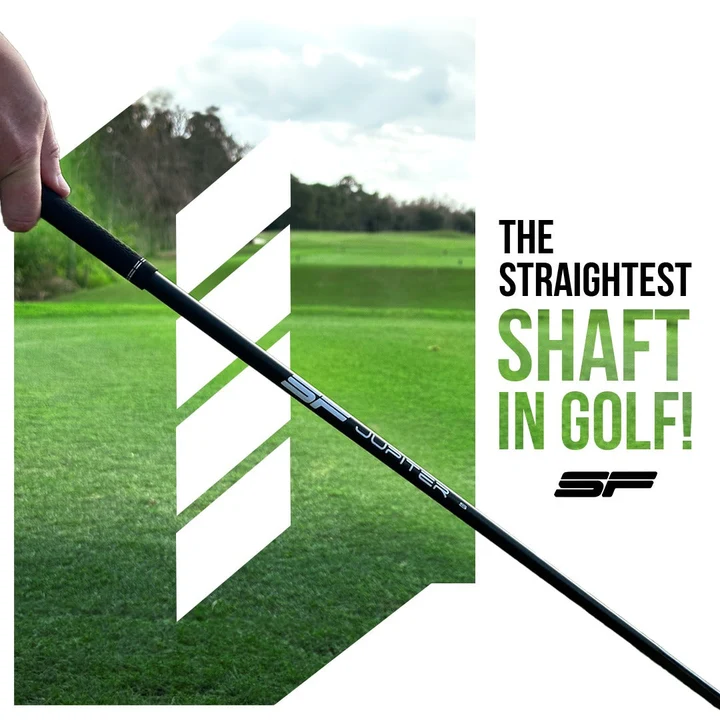
Matters More Than Ever
Golf in 2026 is changing faster than ever. From advanced launch monitors and AI-powered club designs to lightweight carbon fiber golf shafts, modern golf equipment is becoming smarter and more personalized. But one important component still deserves more attention: your driver shaft. The right shaft can help you achieve more consistent launch conditions, better control, and improved distance potential when properly matched to your swing.
Think about your last round. Did you hit a few great drives but struggle to repeat them? Did some shots fly straight while others curved unexpectedly?
Your swing technique certainly matters, but your equipment may also be influencing those results.
Today, golfers are moving beyond brand names and expensive upgrades. They're looking at real performance data and asking a better question: Is my equipment actually helping me play my best golf?
Let's explore the biggest golf trends in 2026 and why choosing the right driver shaft matters more than ever.
1. Golf Is Growing, and Players Are Making Smarter Equipment Choices
Golf continues to grow across the United States, attracting beginners, younger players, women, seniors, and experienced golfers.
According to the National Golf Foundation, 48.1 million Americans aged six and older participated in on-course or off-course golf activities in 2025.
That growing interest is creating more demand for equipment designed around different playing styles and abilities.
But something else is changing.
Golfers are becoming more interested in understanding why their equipment performs the way it does.
Instead of automatically purchasing the newest driver, players are asking questions such as:
-
Does my driver shaft match my swing speed?
-
Is my current shaft affecting my ball flight?
-
Would a lighter shaft help me generate more clubhead speed?
-
Can a different shaft improve my shot dispersion?
These questions reflect one of the biggest golf equipment trends in 2026: choosing equipment based on individual performance rather than popularity alone.
2. Custom Golf Shafts Are Becoming More Important
For years, many recreational golfers simply used whichever shaft came installed in their driver.
That approach can work well, especially when the stock shaft already matches a player's swing.
However, every golfer has different physical characteristics, swing mechanics, and preferences.
Two golfers with identical swing speeds might need completely different shaft specifications because of their tempo, transition, release, and preferred feel.
That's where custom golf shafts and professional shaft fitting become valuable.
Why Does Golf Shaft Fitting Matter?
Golf shaft fitting involves evaluating different shaft characteristics to identify a combination that works with your swing.
A fitter may examine:
-
Shaft flex: How the shaft bends under load.
-
Shaft weight: How much the shaft contributes to the club's overall weight and feel.
-
Torque: The shaft's resistance to twisting.
-
Bend profile: How stiffness is distributed along the shaft.
-
Launch characteristics: How the club and shaft combination influences ball flight.
The goal isn't simply to choose the stiffest or most expensive shaft.
It's to find a shaft that feels comfortable and helps produce repeatable results.
For example, a golfer with a moderate swing speed might benefit from testing a lighter shaft. Another player with an aggressive transition might prefer a different weight and stiffness profile.
Neither golfer should make that decision based on swing speed alone.
A properly fitted shaft helps you work with your natural swing instead of constantly adjusting to your equipment.
3. Carbon Fiber Golf Shaft Technology Is Changing Equipment Design
One of the most important developments in modern golf shaft technology is the continued refinement of carbon fiber composites.
Carbon fiber allows manufacturers to create shafts with different combinations of weight, stiffness, and structural characteristics.
Modern graphite golf shafts typically use carbon fibers embedded in a resin matrix, allowing engineers to control how different sections of the shaft respond during the swing.
What Makes Carbon Fiber Golf Shafts Different?
Carbon fiber construction offers several useful design possibilities.
Lightweight construction
Carbon fiber composites allow manufacturers to create relatively lightweight shafts while maintaining the required structural strength.
For some golfers, a lighter shaft may help improve comfort or allow greater swing speed.
Controlled stiffness
Manufacturers can adjust the orientation and placement of carbon fiber materials to influence stiffness in different areas of the shaft.
This makes it possible to develop different shaft profiles for different swing characteristics.
Torque management
Carbon fiber construction also allows engineers to influence how much the shaft twists under load.
Torque contributes to the overall feel and behavior of a shaft, although lower torque isn't automatically better for every player.
Customized feel
Different shaft constructions can produce different sensations during loading, transition, and release.
That matters because confidence and comfort can influence how naturally a golfer swings.
Can Carbon Fiber Golf Shafts Increase Distance?
Yes, a properly fitted carbon fiber golf shaft can help some golfers improve their distance.
However, the improvement doesn't come from carbon fiber alone.
Distance depends on several factors, including clubhead speed, ball speed, launch angle, spin rate, strike location, and club delivery.
A shaft that helps a golfer produce more favorable launch conditions may improve carry distance.
But there's no guarantee that switching from one graphite shaft to another will automatically add yards.
The best approach is to compare your current shaft against alternatives using real performance data.
4. Launch Monitors Are Making Golf Equipment Testing Easier
Another major golf trend in 2026 is the increasing accessibility of launch monitor technology.
In the past, detailed swing and ball-flight data was primarily associated with professional fitting studios and advanced training facilities.
Today, golfers have more affordable options for measuring their performance.
The PGA of America highlighted launch monitor technology among the innovations showcased at the 2026 PGA Show, reflecting the growing role of performance measurement in golf.
Which Golf Performance Numbers Should You Track?
When comparing driver shafts, several measurements are particularly useful.
Clubhead speed: Measures how fast the clubhead travels during the swing.
Ball speed: Shows how quickly the ball leaves the clubface after impact.
Launch angle: Measures the initial vertical angle at which the ball takes off.
Spin rate: Indicates how much backspin the golf ball generates.
Carry distance: Measures how far the ball travels through the air before landing.
Shot dispersion: Shows how closely your shots group together around your intended target.
Not every launch monitor measures all these values directly, so understanding your device's capabilities is important.
Here's a practical example.
Suppose you're testing two different driver shafts. One produces an occasional very long drive, while the other delivers slightly shorter but more consistent shots.
Which would you choose?
If your main goal is hitting more fairways, the second shaft might be the better option.
That's why finding the best driver shaft for accuracy requires looking beyond maximum distance.
5. Driver Shaft Flex, Weight, and Torque: What Really Matters?
Many golfers focus almost entirely on driver shaft flex when choosing equipment.
Flex is important, but it represents only one part of the fitting process.
How Does Driver Shaft Flex Affect Performance?
Driver shaft flex describes how much a shaft bends under an applied load.
Common categories include Senior, Regular, Stiff, and Extra Stiff.
However, these labels aren't standardized across all manufacturers.
A Stiff shaft from one company may feel or perform differently from a Stiff shaft made by another.
The correct flex depends on your swing characteristics, including speed, tempo, transition, and release.
Does Shaft Weight Affect Swing Speed?
Shaft weight can influence both swing speed and control.
Some golfers find lighter shafts easier to swing, while others prefer additional weight for rhythm and stability.
For senior golfers, lightweight graphite driver shafts may be worth exploring, especially when overall club weight becomes uncomfortable.
However, age alone shouldn't determine which shaft you use.
Is Lower Torque Always Better?
No. Lower torque means greater resistance to twisting under a specified load, but it doesn't automatically translate into straighter drives.
Torque also influences how a shaft feels during the swing.
The best torque characteristics depend on the overall shaft design and how the golfer responds to it.
6. Are You Playing With the Wrong Driver Shaft?
Have you ever felt that your driver performs beautifully on one swing but becomes difficult to control on the next?
Sometimes the problem is swing technique. Other times, equipment fit may be contributing.
Here are a few signs your current driver shaft deserves another look.
-
Your driver feels too heavy or uncomfortable during the swing.
-
You struggle to maintain your natural tempo.
-
Your ball flight remains inconsistent despite reasonably repeatable contact.
-
Your swing speed has changed since your last club fitting.
-
You consistently achieve better results when testing another shaft.
These signs don't prove that your shaft is unsuitable.
Grip, clubhead settings, strike location, and swing mechanics can also affect performance.
However, if you're experiencing several of these problems, a professional fitting session may help identify whether your shaft is contributing.
7. How Steadfast Golf Fits Into Modern Golf Shaft Technology
As golfers become more interested in performance-based equipment decisions, brands such as Steadfast Golf offer alternatives to traditional stock shaft configurations.
Steadfast Golf focuses on carbon fiber golf shaft options for golfers looking to explore different performance characteristics.
Its lineup includes the Jupiter One, Jupiter One, and Jupiter Lite.
Jupiter One: Explore a Different Driver Shaft Experience
The Jupiter One is designed for golfers interested in upgrading or comparing their current driver shaft.
When evaluating Jupiter One, focus on measurable factors such as launch conditions, carry distance, dispersion, and feel.
The most meaningful comparison is how it performs against your existing shaft under similar testing conditions.
Jupiter One: Another Option for Your Swing
The Jupiter One provides another shaft choice within the Steadfast Golf lineup.
Golfers considering this model should compare its specifications and performance characteristics with other available options.
A proper fitting or controlled comparison can help determine whether it's suitable for your playing style.
Jupiter Lite: A Lightweight Option Worth Testing
The Jupiter Lite is a 45-gram shaft option for golfers interested in lighter equipment.
Some players may find that reducing shaft weight helps them swing more comfortably or generate additional speed.
However, the ideal shaft weight still depends on the golfer's tempo, strength, and ability to control the club.
The important lesson is that the best golf shaft for distance or accuracy isn't necessarily the same for every player.
Rather than chasing someone else's results, focus on finding equipment that complements your own swing.
8. How to Choose the Best Driver Shaft in 2026
With so many shaft options available, selecting the right one can feel overwhelming.
Fortunately, the process becomes easier when you focus on a few practical steps.
Step 1: Identify Your Main Goal
Are you trying to increase carry distance, improve accuracy, or achieve more consistent contact?
Knowing your primary goal helps narrow your equipment choices.
Step 2: Understand Your Swing Characteristics
Measure your swing speed if possible, but also pay attention to tempo, transition, and release.
These characteristics influence which shaft profiles may feel and perform best.
Step 3: Test Different Shaft Options
Compare different weights, flex profiles, and designs while keeping your driver head and testing conditions consistent whenever possible.
Avoid judging performance based on a single excellent shot.
Step 4: Compare Real Performance Data
Review carry distance, ball speed, launch, spin, and dispersion.
A high-performance golf shaft should help you achieve results that align with your goals, rather than simply producing impressive specifications on paper.
Step 5: Consider Comfort and Confidence
Performance numbers matter, but so does feel.
A shaft that encourages a comfortable, repeatable swing may be more useful than one that feels difficult to control.
9. What Does the Future of Golf Equipment Look Like?
The future of golf equipment is moving toward greater personalization, better performance measurement, and continued materials innovation.
Golfers can expect manufacturers to keep refining composite shaft designs, while fitting technologies become more accessible.
AI-assisted equipment development and data analysis may also help manufacturers and fitters evaluate different design possibilities.
But even as technology improves, one principle remains unchanged.
The best equipment is the equipment that works for your swing.
You don't need to follow every new trend or replace your clubs every season.
Sometimes, understanding your current equipment and making one well-informed adjustment can be more valuable than buying an entirely new driver.
Frequently Asked Questions About Golf Shafts in 2026
1. Does a golf shaft really affect distance?
Yes. Shaft weight, stiffness, and design can influence club delivery and launch conditions. A properly fitted shaft may help some golfers improve distance, although results vary.
2. Are custom golf shafts better than stock shafts?
Not necessarily. A stock shaft can perform extremely well when it matches your swing. Custom shafts provide additional fitting options for golfers who need different specifications.
3. What is the best driver shaft for accuracy?
The best driver shaft for accuracy is one that helps you produce repeatable contact, consistent club delivery, and tighter shot dispersion. Testing is more reliable than choosing based on brand alone.
4. Are carbon fiber golf shafts worth upgrading to?
Carbon fiber golf shafts can be worthwhile when their weight, stiffness profile, and feel suit your swing. Many modern graphite shafts already use carbon fiber composites, so compare actual performance rather than material names alone.
5. Should senior golfers use lightweight driver shafts?
Some senior golfers benefit from lightweight shafts, particularly when they want to reduce overall club weight. However, swing characteristics and comfort are more important than age alone.
6. How do I know if my driver shaft is too stiff?
A shaft that feels difficult to load or disrupts your natural tempo may be worth testing against a softer alternative. Ball flight alone cannot reliably confirm that a shaft is too stiff.
7. How often should I replace my golf shaft?
Golf shafts don't have a fixed replacement schedule. Consider replacing yours if it's damaged, your swing changes significantly, or testing identifies an option that better fits your needs.
Final Thoughts: Your Shaft Matters More Than Ever
Golf trends in 2026 are changing how players approach equipment. From carbon fiber construction and advanced launch monitors to personalized shaft fitting, golfers now have more ways to understand their performance.
But better equipment doesn't always mean buying the newest or most expensive product.
It means understanding your swing, identifying what needs improvement, and choosing components that support your game.
Your driver shaft influences how the club feels and behaves during the swing. When properly matched to your mechanics, it can help you achieve more consistent performance.
Whether you're looking for better control, improved distance potential, or a lighter setup, exploring different shaft options can be a worthwhile step.
Ready to find a shaft that works with your swing?
Explore the Steadfast Golf carbon fiber shaft lineup and discover the Jupiter One, Jupiter One, and Jupiter Lite options.
Play smarter. Swing with confidence. Make every drive count

 English
 Arabic
 French
 Spanish
 Portuguese
 Deutsch
 Turkish
 Dutch
Dutch
 Italiano
 Russian
 Portuguese (Brazil)
 Greek
Greek