


ICH Q12 and Pharmaceutical Lifecycle Management: What Companies Need to Know About Post-Approval Changes
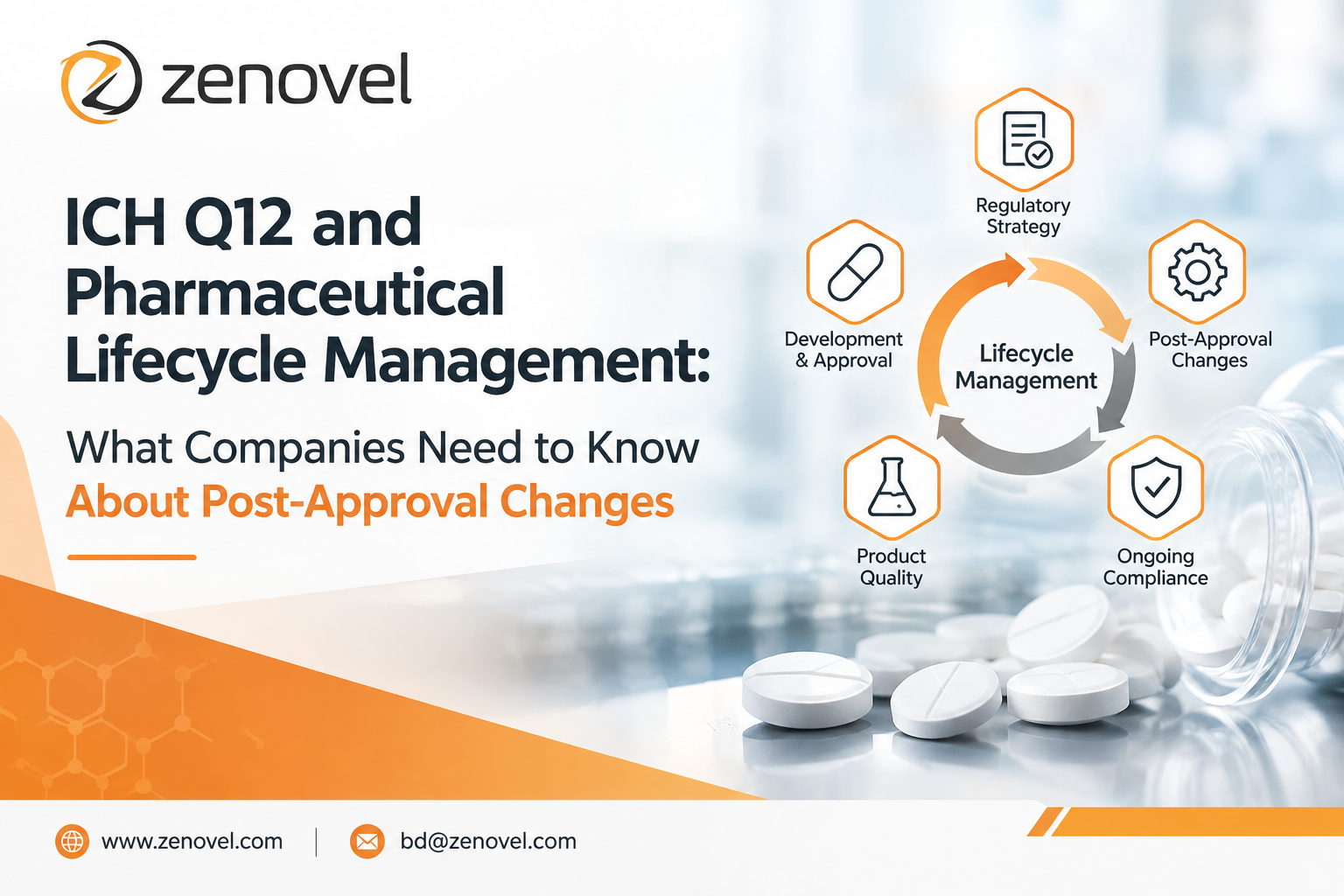
Nearly seven years after its finalization by the ICH Assembly in November 2019, ICH Q12 (Technical and Regulatory Considerations for Pharmaceutical Product Lifecycle Management) has officially moved from a forward-looking conceptual framework to an operational regulatory expectation.
With the FDA advancing its implementation, the EU clearing legal pathways through Regulation (EU) 2024/1701, and Health Canada rolling out its framework, the core question for pharmaceutical companies has shifted dramatically. It is no longer if or when to adopt ICH Q12, but how to construct a post-approval change management strategy that unlocks the regulatory flexibility the guideline was designed to provide.
The Post-Approval Challenge: Why ICH Q12 Matters
Historically, introducing post-approval changes (PACs)—such as scaling up manufacturing sites, upgrading analytical methods, or modifying equipment parameters—has been an administrative bottleneck.
Under legacy frameworks, every minor modification required a barrage of separate, uncoordinated regulatory submissions across multiple jurisdictions. Each region carried distinct requirements, disparate review timelines, and unpredictable "clock-stop" inquiries. This complexity created a powerful disincentive for manufacturers to pursue continuous process improvements, even when those changes offered clear scientific, operational, or quality-driven benefits.
ICH Q12 extends the lifecycle principles established in ICH Q8 through Q11, establishing a structured, risk-based paradigm. Its goal is simple yet transformative: to align regulatory oversight more closely with genuine product and patient risk, rather than treating every minor adjustment as a brand-new regulatory event.
The Three Core Tools of ICH Q12
Mastering ICH Q12 requires understanding three interconnected concepts that form its operational foundation:
-
Established Conditions (ECs): In the past, virtually every detail in a marketing authorization dossier was treated as equally binding. ICH Q12 promotes a science- and risk-based approach to identify what truly dictates product quality. By defining precise Established Conditions, manufacturers can separate critical elements from routine operational details, drastically reducing the volume of changes that require formal prior approval.
-
Pre-Approved Change Management Plans (PACMPs): A PACMP outlines a proactive, structured approach for managing a predictable future change—such as a planned site transfer or specification update. By detailing the change plan, supporting studies, and acceptance criteria upfront and securing regulatory agreement in advance, sponsors can execute the change later with drastically reduced reporting burdens and accelerated review pathways.
-
Product Lifecycle Management (PLCM) Document: Serving as a single, consolidated reference document, the PLCM evolves alongside the commercial life of a product. Backed by updated regulatory guidance (such as the EMA’s Q&A frameworks), it provides both manufacturers and regulators with an authoritative snapshot of Established Conditions, applicable reporting categories, and active PACMPs.
Navigating the Global Regulatory Landscape
Implementation of ICH Q12 has not happened overnight or in lockstep globally, making uniform execution challenging for multinational sponsors:
-
United States: The FDA has fully finalized the ICH Q12 framework, pairing it with implementation guidance to clarify how Established Conditions map onto existing US reporting categories.
-
European Union: Long delayed due to initial conflicts between risk-based EC concepts and legacy EU law, full implementation is now active under Regulation (EU) 2024/1701 and updated variation guidelines.
-
Canada: Health Canada has adopted a phased rollout, initially focusing on post-approval change management protocols for biologics and radiopharmaceuticals.
Because different regions move at different speeds, global organizations cannot rely on a one-size-fits-all submission strategy. Continuous regulatory intelligence is mandatory to prevent cross-border compliance mismatches.
Common Pitfalls in ICH Q12 Execution
Despite widespread industry enthusiasm, many pharmaceutical sponsors struggle to realize the practical benefits of ICH Q12 due to several recurring hurdles:
-
Overly Broad Legacy ECs: Clinging to historical habits where everything in the dossier is considered an Established Condition defeats the purpose of risk-based management.
-
Underutilized PACMPs: Failing to leverage PACMPs for highly foreseeable changes (like secondary manufacturing site additions) leaves significant time and efficiency on the table.
-
Fragmented CMC and Quality Documentation: Keeping regulatory dossiers, EHS data, and technical files in disconnected silos makes maintaining a unified PLCM document nearly impossible.
-
Weak PQS Integration: Regulators grant reduced reporting burdens under the explicit assumption that a company operates a mature, ICH Q10-aligned Pharmaceutical Quality System (PQS). If the quality system isn't robust, the flexibility vanishes.
How Zenovel Supports Your ICH Q12 Journey
Successfully transitioning to an ICH Q12-driven lifecycle management model requires a delicate blend of regulatory foresight, CMC depth, and robust quality assurance.
At Zenovel, our experts help pharmaceutical and biotech organizations move away from conservative, reactive change management:
-
AI-Powered Regulatory Intelligence: Continuously tracking shifting implementation timelines across the FDA, EMA, Health Canada, and PIC/S authorities to keep your global strategy synchronized.
-
Established Conditions & PACMP Strategy: Defining scientifically defensible ECs and authoring proactive change management protocols to secure reduced reporting categories.
-
Global Submission Coordination: Sequentially managing post-approval filings across multi-market jurisdictions to match the varying paces of regional adoption.
-
PQS & CSV Alignment: Ensuring that your computerized systems (CSV) and internal quality processes robustly support the reduced-reporting premises demanded by modern regulators.
Are you looking to optimize your post-approval change processes or integrate ICH Q12 into your regulatory strategy? Connect with our global experts today at bd@zenovel.com.

 English
 Arabic
 French
 Spanish
 Portuguese
 Deutsch
 Turkish
 Dutch
Dutch
 Italiano
 Russian
 Portuguese (Brazil)
 Greek
Greek