


How to Prepare for Business Tax Filing and Compliance
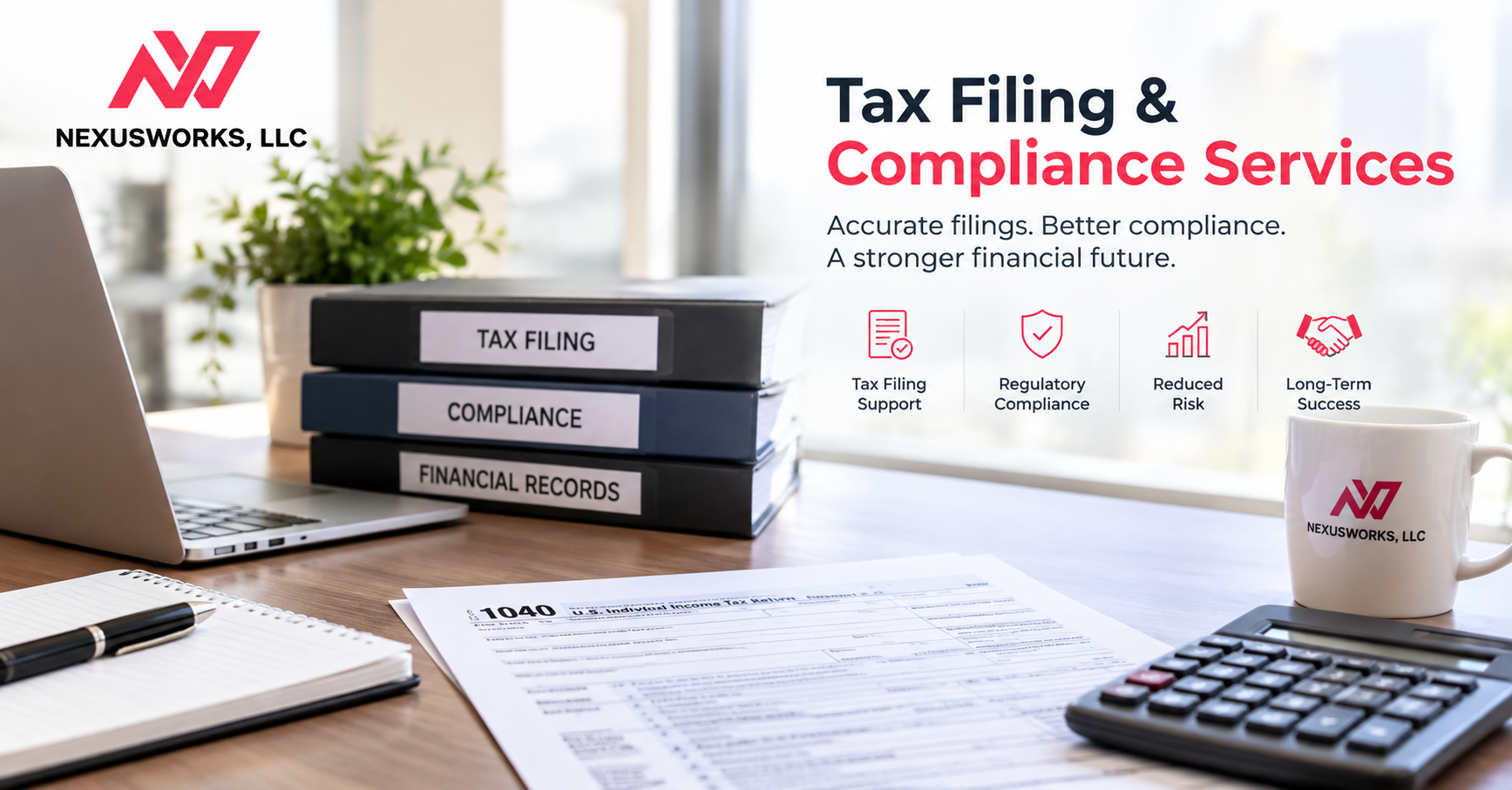
Preparing for business taxes involves more than gathering receipts and submitting forms before a deadline. Business owners need accurate financial records, a clear understanding of their tax obligations, and a reliable process for meeting federal, state, and local requirements. Without proper preparation, businesses may face filing errors, unexpected tax bills, penalties, or unnecessary stress during tax season.
Effective Tax Filing and Compliance starts with consistent bookkeeping and regular financial reviews throughout the year. Instead of waiting until the end of the tax year, businesses can benefit from a structured approach that keeps financial information organized and identifies potential issues early.
Using the right Tax Planning Strategies also helps business owners make informed decisions about expenses, cash flow, deductions, and estimated tax payments. Whether you operate a small business, a growing company, or an established corporation, preparing in advance can make tax season more manageable and support better financial decisions.
1. Organize Your Financial Records Throughout the Year
Accurate financial records are the foundation of successful business tax preparation. Your tax return depends on the quality of the information recorded in your accounting system. Missing invoices, incomplete expense records, or inconsistent bank reconciliations can lead to reporting errors and additional work during filing season.
Start by reviewing your bookkeeping records and confirming that income, expenses, payroll, and business transactions have been recorded correctly. Reconcile bank and credit card statements with your accounting software to identify missing transactions or discrepancies. Keep supporting documents for significant purchases, business expenses, contractor payments, and other reportable transactions.
Businesses should also maintain records of loans, equipment purchases, asset sales, inventory, and owner contributions or distributions, where applicable. These transactions may receive different tax treatment and should not be mixed with ordinary operating expenses.
Digital recordkeeping can make this process easier. Accounting software and secure document storage help businesses organize financial information, retrieve supporting documents, and share records with their accounting professionals.
Practical tip: Set aside time each month to review your books instead of trying to reconstruct an entire year's activity shortly before the filing deadline. Regular reviews help you catch mistakes while the details are still easy to verify.
2. Understand Your Business Tax Filing and Compliance Requirements
Every business has specific tax responsibilities based on its legal structure, location, activities, and financial circumstances. Understanding these obligations early helps you avoid missed deadlines and incomplete filings.
For businesses operating in the United States, requirements may include federal income tax returns, state income tax filings, payroll tax deposits and returns, sales tax returns, and information returns for certain payments to employees or contractors. Some businesses may also have franchise taxes, excise taxes, local business taxes, or other industry-specific obligations.
Your business structure is particularly important. Sole proprietorships, partnerships, S corporations, and C corporations generally follow different federal income tax reporting rules. For example, certain business income passes through to the owners' individual returns, while C corporations generally file separate corporate income tax returns. The applicable treatment depends on the entity's classification and circumstances.
Create a tax compliance calendar that lists each filing deadline, payment date, required form, and responsible person. Include recurring obligations throughout the year, not just the annual income tax return.
It is also important to review changes that could affect your reporting responsibilities. Hiring employees, expanding into another state, selling products online, or changing your business structure may create additional tax obligations.
A proactive approach to Tax Filing and Compliance gives business owners greater control over deadlines and reduces the risk of discovering important requirements at the last minute.
3. Review Deductions, Credits, and Tax Planning Opportunities
Tax preparation should not be limited to reporting financial activity after the year has ended. Reviewing your financial position throughout the year allows you to identify legitimate opportunities to manage your tax liability before filing.
Start by reviewing ordinary business expenses, including qualifying software costs, professional services, insurance, office expenses, rent, travel, and employee-related costs. The deductibility of an expense depends on applicable tax rules, business purpose, documentation, and any relevant limitations.
Businesses that purchase equipment, vehicles, or other long-term assets should pay particular attention to depreciation rules and potential expensing options. The timing and treatment of these purchases can influence taxable income, so it is worth evaluating the available options before making major financial commitments.
Eligible businesses may also qualify for tax credits related to particular activities, investments, employee benefits, or other circumstances. However, credits have specific eligibility requirements, and not every business will qualify.
This is where well-designed Tax Planning Strategies can make a meaningful difference. Rather than making decisions based only on the desire to reduce taxes, business owners should consider the effect on cash flow, operating costs, investment plans, and long-term growth.
For example, purchasing equipment solely to claim a deduction may not be financially sensible if the business does not need the equipment. A tax benefit should support a sound business decision, not replace one.
Work with a qualified tax professional to review potential deductions, credits, depreciation methods, and other opportunities. Keep supporting documentation for every material claim and avoid aggressive positions that cannot be justified under applicable tax law.
4. Prepare for Payroll, Estimated Taxes, and Other Payments
One of the most common tax preparation challenges is having enough cash available to meet payment obligations. A business may report a profit but still experience cash flow problems if tax payments have not been planned for properly.
Businesses with employees must pay close attention to payroll tax withholding, employer payroll taxes, required deposits, and applicable reporting deadlines. Errors in payroll records can create compliance problems even when the annual income tax return is otherwise accurate.
Depending on the business structure and tax circumstances, owners may also need to make estimated tax payments during the year. These payments help cover expected tax liabilities rather than leaving the entire amount due at filing time. The required schedule and calculation depend on the taxpayer's circumstances and applicable federal or state rules.
A practical approach is to forecast taxable income regularly and set aside funds for expected tax payments. Review revenue, expenses, payroll, and major purchases each month or quarter. Update your estimates when business performance changes significantly.
For seasonal businesses, cash flow forecasting is especially important because income may fluctuate considerably throughout the year. A business that earns most of its revenue during a few months should not assume that its tax obligations will align neatly with its income cycle.
Keep records of payments already made and confirm that they have been applied correctly. Before filing, compare your accounting records with payroll reports, estimated tax payments, and relevant tax account information.
Planning ahead helps reduce financial surprises and makes it easier to meet obligations without disrupting daily operations.
5. Work With a Tax Professional and Complete a Final Review
Even businesses with reliable bookkeeping systems can benefit from a professional review before submitting their returns. Tax rules can be complex, and the correct treatment of a transaction may depend on details that are not obvious from the accounting records alone.
A CPA or qualified tax professional can review your financial statements, identify inconsistencies, assess relevant tax elections, and help determine which filings apply to your business. They can also explain how changes in revenue, staffing, ownership, or business operations may affect your tax responsibilities.
Before your tax appointment, prepare a complete document package. Depending on your business, this may include:
- Year-end profit and loss statement and balance sheet.
- Bank and credit card reconciliations.
- Payroll reports and employee tax records.
- Contractor payment records and applicable information returns.
- Asset purchase and disposal records.
- Loan statements and interest information.
- Prior-year tax returns and details of estimated tax payments.
- Supporting documents for deductions and potential tax credits.
Once the return is prepared, review the reported income, expenses, business information, payments, and applicable schedules. Confirm that the information matches your financial records and that any unusual transactions have been explained.
Do not treat filing as the final step in your compliance process. Retain copies of submitted returns, payment confirmations, supporting documents, and relevant correspondence according to applicable recordkeeping requirements.
Professional support is often more effective than relying entirely on last-minute tax software entry, particularly when a business has multiple entities, employees, interstate operations, or complex financial transactions. Software can help organize information, but it cannot replace informed judgment when a tax issue requires interpretation.
Conclusion
Preparing for business taxes is easier when financial records, payment schedules, and compliance requirements are managed throughout the year. By maintaining accurate books, understanding your filing responsibilities, reviewing tax-saving opportunities, forecasting payments, and completing a careful final review, you can reduce avoidable errors and approach tax season with greater confidence.
The right Tax Planning Strategies also help connect tax decisions with broader business goals, including cash flow management, investment planning, and sustainable growth. Instead of treating tax filing as a once-a-year task, make it part of your regular financial management process.
If your business needs help organizing its financial records, reviewing tax obligations, or preparing for upcoming filing deadlines, professional guidance can help you build a more reliable process.
Contact NexusWorks CPA to discuss your business's tax filing, compliance, and planning needs. With the right support, you can make informed financial decisions and stay better prepared for the year ahead.
Frequently Asked Questions
1. How can I prepare my business for tax filing?
Start by reconciling your accounts, organizing income and expense records, reviewing payroll information, collecting supporting documents, and confirming which tax returns and payments apply to your business. A tax professional can help identify missing information before filing.
2. What documents are needed for business tax preparation?
Common documents include financial statements, bank statements, expense receipts, payroll reports, contractor payment records, loan statements, asset purchase details, previous tax returns, and estimated tax payment confirmations. The exact requirements depend on your business structure and activities.
3. What is the difference between tax filing and tax planning?
Tax filing involves reporting financial information and submitting the required returns to the appropriate tax authorities. Tax planning involves evaluating financial decisions and available tax treatments throughout the year to manage tax liabilities within the law. Both are important for effective business financial management.
4. How often should a business review its tax obligations?
Businesses should review their financial records monthly and reassess estimated taxes and compliance requirements at least quarterly, where appropriate. More frequent reviews may be necessary when revenue changes significantly, employees are hired, or the business expands into new locations.
5. How can tax planning strategies help a business save money?
Appropriate tax planning may help a business identify eligible deductions and credits, evaluate depreciation options, plan estimated payments, and choose suitable approaches for certain financial transactions. The benefits depend on eligibility, current tax rules, and the company's individual circumstances.
6. What happens if a business misses a tax filing deadline?
Missing a deadline can result in penalties, interest, and other compliance consequences. The impact depends on the type of return, amount owed, duration of the delay, and applicable rules. Businesses should contact a qualified tax professional promptly to determine the appropriate next steps.
7. Should a small business hire a CPA for tax filing and compliance?
A CPA can be particularly helpful when a business has employees, multiple revenue streams, complex deductions, changing ownership, or obligations in multiple states. Even smaller businesses may benefit from professional advice when they need help understanding filing requirements or planning for future tax payments.
8. Can I use accounting software instead of hiring a tax professional?
Accounting software can help organize transactions, reconcile accounts, and generate financial reports. However, it may not identify every compliance issue or resolve complex tax questions. Businesses with straightforward tax situations may be able to manage some tasks internally, while professional guidance can provide additional support for more complicated circumstances.

 English
 Arabic
 French
 Spanish
 Portuguese
 Deutsch
 Dutch
Dutch
 Italiano
 Russian
 Romaian
 Portuguese (Brazil)
 Greek
Greek