


How Can a Mini Dumper Fit Different Construction Site Needs?
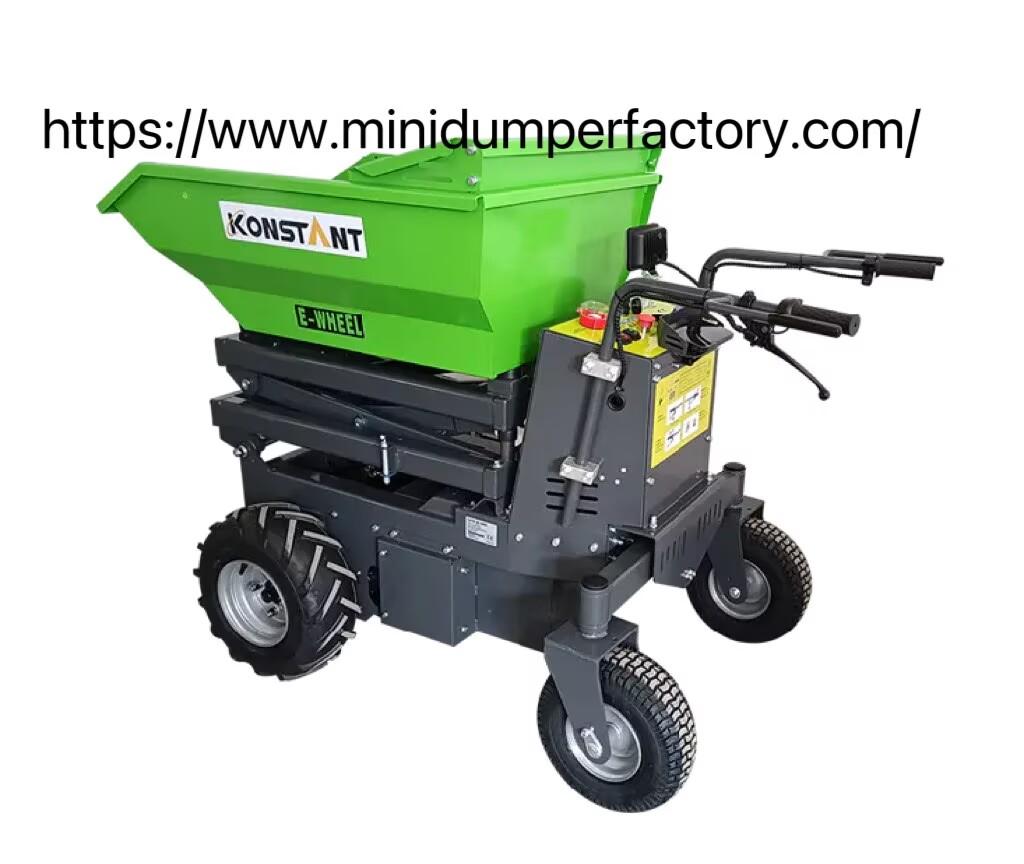
Mini Dumper selection involves more than comparing machine size or purchase price. Buyers need to consider transport requirements, site conditions, load characteristics, unloading arrangements, and maintenance expectations before choosing equipment. For contractors and distributors, a clear specification makes it easier to compare suitable configurations and communicate project needs with a manufacturer. Careful preparation can also reduce the risk of purchasing a machine that does not fit the intended working environment.
Match Load Capacity to Daily Tasks
Load capacity is an important starting point when evaluating material transport equipment. Buyers should estimate the typical weight and volume of the materials handled during daily operations. Soil, gravel, sand, bricks, and construction debris may have different weights, so selecting a machine based only on container volume can lead to inaccurate expectations.
It is also useful to consider how frequently materials need to be moved and the distance between loading and unloading points. A project with repeated short trips may require a different operating arrangement from one involving longer transport routes.
Buyers should review the rated payload in the product specifications and consider the actual working conditions. The machine should be operated within its specified limits, with attention to ground stability, slopes, and safe loading practices.
Evaluate the Working Environment
Construction and landscaping sites vary considerably. Some projects involve narrow access routes, confined renovation areas, uneven ground, or limited space around buildings. Others require movement across larger outdoor work areas.
Before choosing a configuration, measure the available passage width, turning space, loading area, and unloading location. These measurements help determine the suitable machine dimensions and maneuverability requirements.
Ground conditions should also influence the selection process. Mud, loose soil, gravel, and firm paved surfaces can affect traction and movement. Buyers should check the machine configuration and operating guidance to determine whether it is appropriate for the intended terrain.
If the equipment will be used on slopes, ask about the manufacturer's operating limits and follow the relevant safety instructions. Site conditions should always be considered when planning loads and transport routes.
Compare Power Systems and Operating Controls
The power system affects how equipment fits into a particular work environment. Buyers may need to compare available engine or drive options according to the intended workload, operating location, energy access, and expected working hours.
For indoor renovation or enclosed work areas, exhaust management and ventilation requirements deserve particular attention when considering fuel-powered equipment. Where an electric configuration is available, buyers should review charging arrangements, operating duration, and the suitability of the power system for the job.
Control layout is another practical factor. Operators should be able to understand the driving, steering, braking, and unloading functions before using the machine. Ask about the control arrangement, operator instructions, and any training requirements associated with the selected model.
Check Loading and Unloading Arrangements
The way materials enter and leave the container can influence work efficiency. Buyers should review the container dimensions, loading height, unloading direction, and available discharge space.
For projects involving soil or aggregate, consider whether the loading area can accommodate the tools or machinery used to fill the container. The unloading method should also match the destination, whether materials are discharged into a designated pile, near a trench, or within a restricted work area.
Buyers should confirm the unloading mechanism and its operating requirements in the product specifications. They should also ask how the machine should be positioned during discharge and what precautions are required to maintain stability.
These details help contractors plan material movement as part of the overall site workflow rather than treating equipment selection as an isolated purchasing decision.
Review Maintenance Access and Replacement Parts
Maintenance planning should begin before the order is placed. Buyers can ask about routine inspection points, service intervals, lubrication requirements, and access to components that need regular attention.
The availability of replacement parts is also relevant for contractors and equipment rental businesses. A maintenance plan should identify the components likely to require periodic replacement and clarify how spare parts can be requested.
For distributors, it may be useful to discuss technical documentation, parts identification, and after-sales communication with the manufacturer. These arrangements can help the business prepare for customer inquiries and routine service requirements.
Purchasing teams should also consider the practical resources available at the intended worksite. Equipment that can be inspected and maintained according to the manufacturer's instructions is easier to incorporate into an organized maintenance schedule.
Assess the Manufacturer Before Ordering
A product decision should include a review of the supplier's technical communication and manufacturing information. Buyers should request current specifications, machine dimensions, rated load details, operating instructions, and relevant inspection documentation.
It is helpful to provide the manufacturer with a description of the intended application, including materials handled, site conditions, working hours, and delivery requirements. This allows the discussion to focus on practical configuration needs instead of relying on general product descriptions.
Buyers can also clarify available customization options, packaging arrangements, production schedules, and spare parts support. Any project-specific requirements should be recorded in the quotation or order documentation to reduce misunderstandings.
minidumperfactory provides a starting point for buyers researching compact material transport equipment and comparing product specifications for different applications. Before confirming a purchase, review the machine details, prepare your operating requirements, and discuss any outstanding technical questions with the supplier. You can visit https://www.minidumperfactory.com/product/ to review available product information and identify configurations relevant to your construction, landscaping, or material handling project.

 English
 Arabic
 French
 Spanish
 Portuguese
 Deutsch
 Dutch
Dutch
 Italiano
 Russian
 Romaian
 Portuguese (Brazil)
 Greek
Greek