


Salicylic Acid Serum: A Practical Guide to Clearer, Smoother Skin
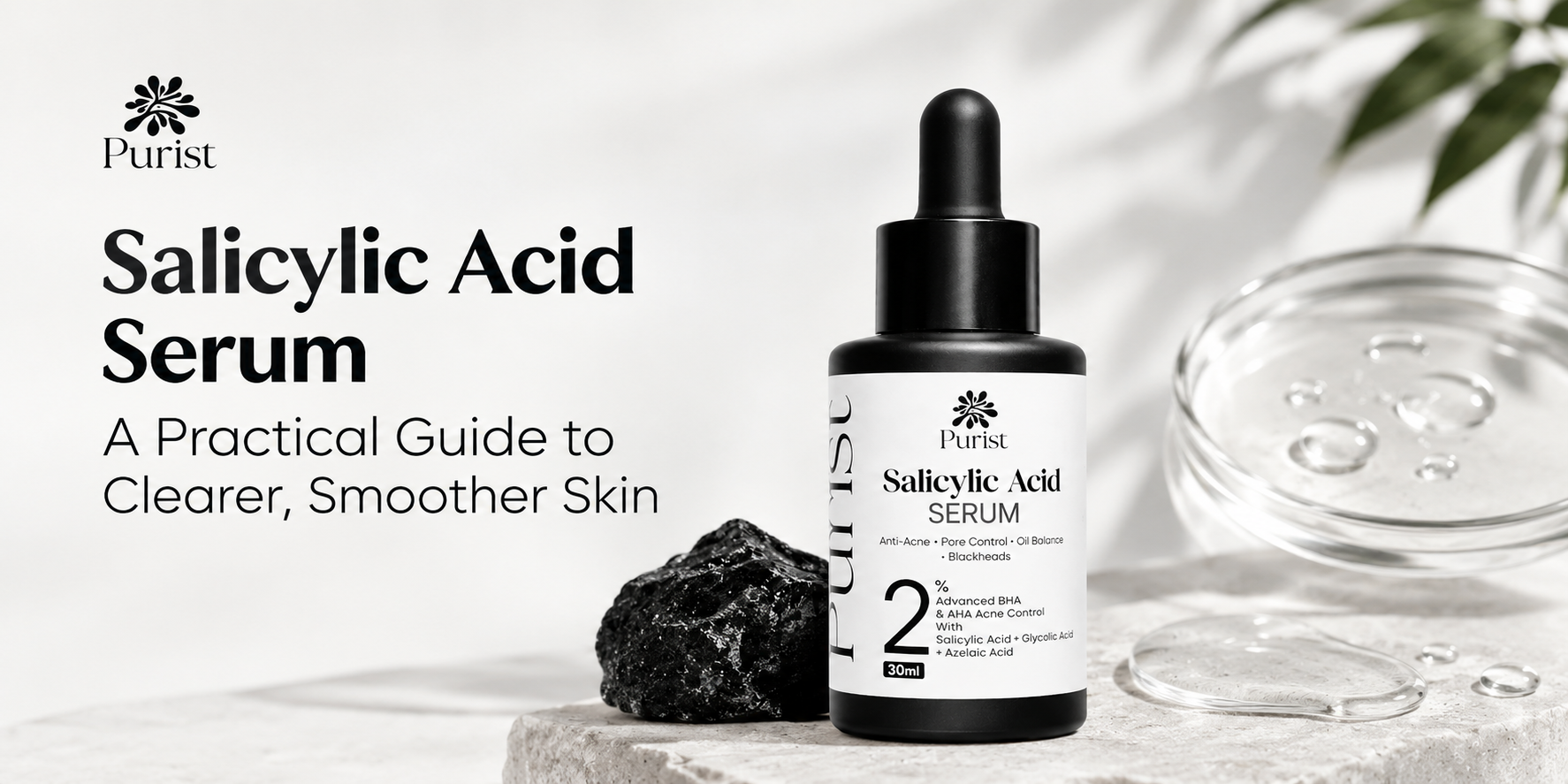
Acne-prone skin can be frustrating. One week, your skin feels balanced. The next, your forehead looks bumpy, your nose is full of blackheads, and new pimples appear just as the old ones begin to fade.
The solution is not always another cleanser or a stronger exfoliator. Sometimes, your skin needs an ingredient that targets clogged pores rather than simply removing oil from the surface.
That is where salicylic acid serum can help.
Salicylic acid is a beta hydroxy acid (BHA) used in skincare to exfoliate the skin and help clear blocked pores. It is particularly useful for people who struggle with blackheads, whiteheads and excess oil. However, results depend on the formula, how often you use it, and whether it suits your skin.
This guide explains how salicylic acid serum works, how to use it safely, and what to look for when choosing a product for your skincare routine.
What Is Salicylic Acid Serum?
Salicylic acid is an oil-soluble exfoliating ingredient. Unlike water-soluble alpha hydroxy acids, which mainly work on the skin's surface, salicylic acid can penetrate oil inside pores and help loosen the buildup of dead skin cells.
A salicylic acid serum delivers this ingredient in a leave-on formula designed to target specific skin concerns.
Think of a clogged pore as a small opening filled with oil and dead skin cells. When this material builds up, it can contribute to blackheads, whiteheads and certain types of acne. Salicylic acid helps loosen that buildup, making pores less likely to become blocked.
It is worth understanding one thing: salicylic acid does not permanently shrink pores or guarantee acne-free skin. It can make pores look less noticeable by reducing the buildup inside them.
How Does Salicylic Acid Serum Help Acne-Prone Skin?
Not every breakout has the same cause. Some pimples develop from clogged pores, while others involve inflammation and deeper changes within the skin.
Salicylic acid is particularly useful when blocked pores are a major concern.
1. Helps Unclog Pores
Dead skin cells and excess sebum can accumulate inside pores. Salicylic acid helps loosen this material and encourages the removal of dead cells.
With consistent use, it may improve the appearance of blackheads, whiteheads and small bumps caused by clogged pores.
If your skin feels rough even when you cleanse regularly, this is one reason to consider a salicylic acid product.
2. Reduces the Appearance of Blackheads
Blackheads form when a pore becomes blocked but remains open at the surface. The material inside the pore darkens through exposure to air; the dark colour is not simply dirt.
Scrubbing harder will not solve the problem. In fact, aggressive scrubbing can irritate your skin.
Salicylic acid offers a more targeted approach by helping remove the buildup associated with blackheads. It can also help with whiteheads, where a blocked pore remains closed at the surface.
3. Helps Manage Excess Oil
If your face becomes shiny a few hours after washing, excess sebum may be contributing to the problem.
Salicylic acid helps remove oil and debris from pores, making it a useful option for oily and combination skin. However, it should not be treated as a permanent solution to excess oil production.
Your skin still needs moisture. Stripping away too much oil can leave it dry, tight and irritated.
4. Improves Uneven Skin Texture
Small bumps and rough patches can develop when dead skin cells accumulate around pores.
By encouraging exfoliation, salicylic acid may help the skin feel smoother over time. This can be especially useful for people whose skin has a combination of visible pores, blackheads and uneven texture.
Persistent bumps do not always indicate clogged pores, though. If your skin does not improve, consider getting a professional assessment rather than increasing the strength or frequency of your serum.
Is Salicylic Acid Serum Suitable for Your Skin Type?
The right product depends on your skin's condition, not just its appearance.
Oily skin: Salicylic acid may help manage the buildup that contributes to clogged pores and blackheads.
Acne-prone skin: It can be useful for mild acne, particularly when blackheads and whiteheads are common.
Combination skin: You may benefit from applying it to areas that tend to become oily, provided the formula is suitable for your skin.
Dry skin: You can still experience clogged pores, but salicylic acid may worsen dryness. Start cautiously and prioritise moisturising.
Sensitive skin: Introduce it carefully, or seek advice from a dermatologist if your skin frequently stings, becomes red or reacts to skincare products.
Salicylic acid is not the right answer for every type of acne. Deep, painful lumps, cysts and acne that leaves scars often need treatments beyond an over-the-counter serum.
How to Use Salicylic Acid Serum Correctly
A good skincare routine does not need to contain numerous active ingredients. A few suitable products, used consistently, are often a better starting point.
Step 1: Cleanse Your Face
Wash with a gentle cleanser to remove sunscreen, sweat and surface impurities. Avoid harsh scrubs or cleansers that leave your skin feeling tight.
Pat your face dry before applying your serum, unless the product instructions specify otherwise.
Step 2: Apply Your Serum
Apply a small amount of salicylic acid serum according to the product label. Avoid the eyes, lips, broken skin and areas that are already irritated.
If you are new to salicylic acid, start with a few applications per week rather than immediately using it every day. Follow the recommended frequency for your particular product.
Step 3: Use a Moisturiser
Moisturiser is important even if your skin is oily.
Choose a formula that feels comfortable on your skin and is labelled non-comedogenic if you are prone to clogged pores. Ingredients such as glycerin and hyaluronic acid can help support hydration.
A moisturiser helps reduce the discomfort associated with dryness, but it cannot guarantee that irritation will not occur.
Step 4: Apply Sunscreen in the Morning
Finish your morning routine with broad-spectrum sunscreen of SPF 30 or higher.
Daily sun protection is particularly important if you are trying to prevent dark marks from becoming more noticeable after acne. Salicylic acid is not considered as strongly photosensitising as some other exfoliating ingredients, but sun protection remains an essential part of an acne-friendly skincare routine.
A Simple Routine for Beginners
Morning
-
Gentle cleanser
-
Moisturiser
-
Broad-spectrum sunscreen, SPF 30+
Evening
-
Gentle cleanser
-
Salicylic acid serum on your scheduled treatment nights
-
Moisturiser
On the other nights, keep your routine simple. Your skin does not need exfoliation every evening to benefit from a well-chosen treatment.
Which Salicylic Acid Concentration Should You Choose?
Concentration matters, but a higher percentage does not automatically mean better results.
Over-the-counter acne products commonly contain salicylic acid in concentrations ranging from 0.5% to 2%. These products can differ considerably in their formulation, pH and intended use.
A lower concentration may be a sensible starting point for someone who is new to the ingredient or prone to dryness. A 2% formula may be appropriate for some people with oily, acne-prone skin, provided they tolerate it.
Check the product label rather than assuming all salicylic acid serums work in the same way. If a formula causes persistent burning, redness, peeling or discomfort, stop using it and seek professional advice if symptoms continue.
Can You Use Salicylic Acid with Other Skincare Ingredients?
Combining ingredients can make a routine more complicated than it needs to be. Start with one active treatment and introduce additional products only when your skin is comfortable.
|
Ingredient |
How it fits into your routine |
|
Niacinamide |
Can complement an acne-focused routine by supporting the skin barrier and helping improve the appearance of uneven skin tone. |
|
Hyaluronic acid |
Helps attract and retain moisture, which can be useful when exfoliating products leave skin feeling dry. |
|
Moisturiser with ceramides |
Helps support the skin barrier and reduce moisture loss. |
|
Retinol or other retinoids |
May provide additional benefits for acne or texture, but combining treatments can increase irritation. Consider alternating nights and seek professional guidance when needed. |
|
Other exfoliating acids |
Using multiple exfoliants together can increase the risk of dryness and irritation. Introduce them cautiously rather than layering everything at once. |
You do not have to combine salicylic acid with other active ingredients to make it effective. A gentle cleanser, suitable serum, moisturiser and sunscreen are a strong foundation.
Salicylic Acid Serum in Pakistan's Climate
Heat, humidity, sweat and sunscreen can make skincare feel uncomfortable, especially if your skin already produces excess oil. However, acne is not caused by humidity alone, and oily skin does not necessarily mean your skin is properly hydrated.
If you live in Pakistan and struggle with a shiny T-zone or frequent clogged pores, a lightweight routine may be more comfortable than layering several rich products.
Consider these practical habits:
-
Wash your face gently after heavy sweating.
-
Avoid repeatedly washing or scrubbing your skin to remove oil.
-
Choose moisturisers that feel comfortable in warm weather.
-
Use sunscreen that suits your skin type so you can apply it consistently.
-
Introduce exfoliating products gradually, especially during periods of dryness or irritation.
The goal is to manage oil and clogged pores without compromising your skin barrier. A routine that feels comfortable enough to maintain is usually more useful than one that promises dramatic results but leaves your skin irritated.
How Long Does Salicylic Acid Serum Take to Work?
Salicylic acid is not an overnight acne treatment.
Some people notice changes in oiliness or skin texture before they see a meaningful reduction in breakouts. Others experience little improvement because their acne has a different underlying cause or requires a different treatment.
Give an appropriate acne treatment time to work. The American Academy of Dermatology advises that many acne treatments need around six to eight weeks before improvement becomes apparent. More substantial clearing may take longer. Source: American Academy of Dermatology
Rather than judging a product after two or three applications, look for gradual changes in the number of new breakouts, the frequency of blackheads and your skin's overall comfort.
If your acne worsens, leaves scars or fails to improve after consistent use, consult a dermatologist.
Common Mistakes to Avoid
Even a suitable serum can cause problems when used incorrectly.
Using it too often: Daily application from the beginning can overwhelm skin that has not adapted to exfoliation.
Skipping moisturiser: Oily skin still needs hydration. A damaged skin barrier can leave your face feeling tight, sensitive and uncomfortable.
Combining too many actives: Layering salicylic acid with several exfoliants and retinoids can make it difficult to identify the cause of irritation.
Expecting it to treat every pimple: Salicylic acid is especially useful for clogged pores, but deeper inflammatory acne may need a different approach.
Picking at breakouts: Squeezing pimples can increase inflammation and the risk of scarring or lingering dark marks.
Ignoring persistent irritation: Burning, swelling, significant redness or ongoing peeling are not signs that a product is working better. Stop using it if you develop a reaction and seek medical advice when appropriate.
Frequently Asked Questions About Salicylic Acid Serum
Can I use salicylic acid serum every day?
Some people tolerate daily use, while others develop dryness or irritation. Start slowly and follow the product instructions. Increase frequency only if your skin tolerates it comfortably.
Is salicylic acid serum good for blackheads?
Yes. Salicylic acid can help loosen the oil and dead skin cells that contribute to blocked pores, making it a useful option for blackheads and whiteheads.
Can salicylic acid remove acne scars?
It may help improve the appearance of mild uneven texture, but it will not reliably remove established indented or raised acne scars. Dark marks left after pimples also need a targeted approach and consistent sun protection.
Should I use salicylic acid serum on dry skin?
Dry skin can still develop clogged pores, but salicylic acid may increase dryness. Start cautiously, use a moisturiser and stop if your skin becomes persistently irritated.
Can I use salicylic acid serum with niacinamide?
These ingredients can generally be included in the same skincare routine. Introduce products gradually and monitor your skin rather than adding several new treatments at once.
Is salicylic acid better than a regular face wash?
They serve different purposes. A gentle cleanser removes surface impurities, while a salicylic acid product targets the buildup associated with clogged pores. Some cleansers also contain salicylic acid, so you may not need a separate serum if your existing treatment already meets your needs.
Final Thoughts
Salicylic acid serum can be a useful addition to an acne-prone skincare routine, particularly if blackheads, whiteheads and clogged pores are your main concerns.
The key is to use the right formula at a suitable frequency and give your skin time to respond. Do not confuse stronger exfoliation with better skincare. If your face becomes irritated, adding more product is rarely the answer.
At Purist, we believe skincare should start with understanding your skin rather than chasing every new trend. Choose ingredients for a clear reason, support your skin barrier and keep your routine consistent.
Healthy skin is not about using the most products. It is about using the right ones, in the right way.

 English
 Arabic
 French
 Portuguese
 Deutsch
 Turkish
 Dutch
Dutch
 Italiano
 Russian
 Romaian
 Portuguese (Brazil)
 Greek
Greek