


A Practical Guide to Selecting Transformers for Modern Power Electronics
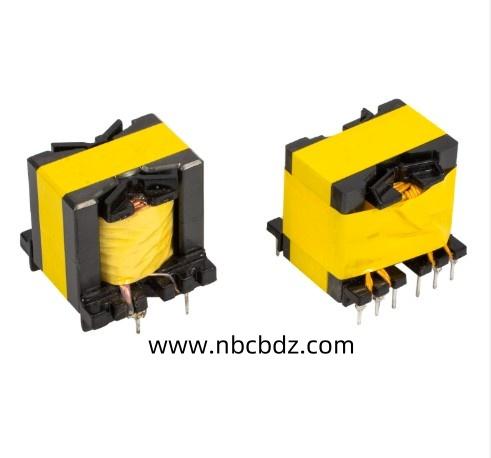
Modern electronic equipment increasingly relies on compact power conversion systems, where transformer construction must align with the demands of the surrounding circuit. When evaluating a High Frequency Transformer Factory, buyers should look beyond the external shape of the component and examine magnetic materials, winding arrangements, insulation, thermal behavior, and manufacturing control. These factors influence how effectively a transformer integrates into a power supply, converter, or electronic control assembly.
Material selection begins with the magnetic core. Ferrite is widely used in high-frequency transformer designs because its magnetic properties can help limit core losses under suitable switching conditions. The appropriate ferrite composition depends on the intended operating environment and the electrical design. Core geometry also matters, as the shape influences how the windings are arranged and how the component fits within the available equipment space.
The winding system is another essential part of the design. Copper wire is commonly used because of its electrical conductivity, while winding layout affects resistance, heat generation, leakage inductance, and coupling between windings. Depending on the application, manufacturers may use different wire arrangements or layered winding structures to manage electrical behavior. Buyers should share circuit requirements and mechanical constraints early so the winding design can be matched to the intended use.
Insulation materials help separate conductive sections and support safe operation. Bobbins, insulating films, sleeves, tapes, and other materials may be selected according to the transformer structure. Their arrangement influences electrical isolation, winding stability, and the available space for conductors. Insulation should be considered as part of the complete design rather than as an additional material chosen after the winding layout has been finalized.
Selecting a suitable transformer requires an understanding of the electronic system in which it will operate. Switching power supplies, DC-DC converters, battery-powered equipment, LED drivers, and industrial control electronics can have different electrical and mechanical requirements. Buyers should clarify the circuit topology, expected operating conditions, isolation needs, output arrangement, and installation space. Providing this information helps the manufacturer determine whether an existing design is appropriate or whether a customized component is necessary.
The operating principle differs from that of conventional mains-frequency transformers because high-frequency designs work with rapidly changing electrical signals generated by switching circuits. Alternating magnetic flux in the core transfers energy between the primary and secondary windings. The final behavior depends on the circuit, winding arrangement, core material, and associated electronic components. This relationship makes cooperation between the transformer designer and the equipment engineer especially important during product development.
Thermal behavior deserves attention even when the component is compact. Energy losses in the core and windings generate heat, and the amount of heat depends on the magnetic design, conductor arrangement, switching conditions, and surrounding environment. A transformer installed close to other heat-producing components may experience different conditions from one placed in a well-ventilated area. Engineers should therefore assess the component within the complete assembly instead of treating it as an isolated part.
Electromagnetic compatibility is another important design consideration. Winding arrangement, leakage inductance, interwinding capacitance, shielding choices, and the layout of the surrounding circuit can influence unwanted electrical noise. The appropriate design depends on the application and the behavior of the complete power conversion system. Early coordination between the transformer manufacturer and circuit designer can help identify potential interference issues before they become difficult to address during final assembly.
Manufacturing precision contributes to consistent electrical behavior. Core placement, winding tension, layer arrangement, insulation positioning, lead termination, and assembly methods all affect the finished transformer. A visually neat component does not automatically guarantee that its electrical characteristics match the design requirements. Manufacturers need suitable process controls and inspection procedures to check both construction quality and relevant electrical performance.
Quality assurance should cover incoming materials, winding operations, assembly, and finished-product evaluation. Depending on the design, inspection may include checks related to winding connections, electrical isolation, continuity, and other required characteristics. Buyers can ask how test requirements are defined, how samples are approved, and how consistency is maintained across production batches. Clear documentation and communication help ensure that the supplied component matches the requirements agreed upon during development.
Mechanical design also affects integration. Pin arrangements, mounting features, component height, lead direction, and insulation clearances can determine whether a transformer fits comfortably on a circuit board or inside an enclosure. A design that works electrically may still create assembly difficulties if its terminals interfere with neighboring components or its shape restricts airflow. Reviewing drawings and samples before production can help resolve these issues while changes are still practical.
Ningbo Chuangbiao Electronic Technology Co., Ltd. includes high-frequency transformers in its electronic transformer product range and describes customized development based on customer drawings or samples. Its manufacturing information also highlights material sourcing, production management, and product inspection. Businesses developing power conversion equipment can discuss core selection, winding structure, insulation, circuit requirements, thermal conditions, and mounting arrangements with the company. Further information about its transformer products and services is available at https://www.nbcbdz.com/product/

 English
 Arabic
 Spanish
 Portuguese
 Deutsch
 Turkish
 Dutch
Dutch
 Italiano
 Russian
 Romaian
 Portuguese (Brazil)
 Greek
Greek