


How to Become a Pilot in India: A Complete Step-by-Step Guide
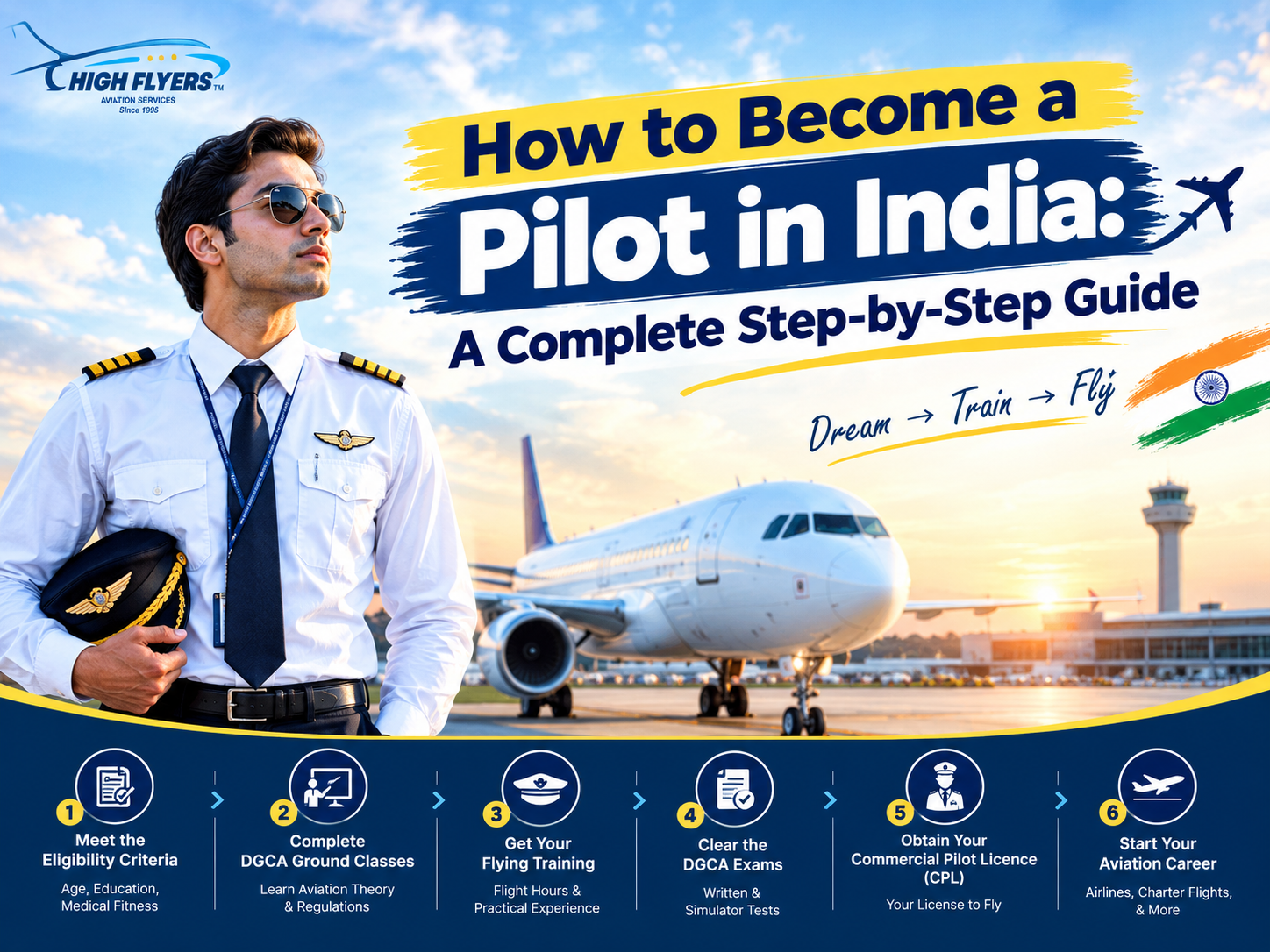
Have you ever dreamed of flying an aircraft and building a career in aviation? Understanding how to become a pilot is the first step toward turning that dream into reality. In India, aspiring pilots must meet educational and medical requirements, complete the relevant examinations, and receive approved training. With proper planning, consistent preparation, and guidance from an aviation education provider such as The High Flyers, students can better understand the journey toward becoming a professional pilot.
Step 1: Understand Your Pilot Career Options
Before choosing a training programme, decide which type of pilot you want to become. Your career goal will influence the training pathway, qualifications, and experience you need.
Common options include:
-
Commercial airline pilot: Flies passengers or cargo for an airline after meeting the required licensing and employment criteria.
-
Charter pilot: Operates aircraft for charter services, subject to the relevant qualifications.
-
Cargo pilot: Transports goods and other commercial shipments.
-
Flight instructor: Teaches student pilots after obtaining the appropriate qualifications and authorization.
Many students who want to fly for an airline choose the Commercial Pilot Licence (CPL) pathway. However, earning a CPL does not automatically guarantee an airline job. Pilots must also meet an employer's requirements and complete any additional training or assessments that apply.
Step 2: Check Your Educational Eligibility
Education is an important part of becoming a pilot in India. Students should review the current Directorate General of Civil Aviation (DGCA) requirements before beginning their training.
For the standard Indian CPL pathway, applicants generally need to have completed Class 12 with Physics and Mathematics or meet the applicable equivalent qualification requirements. Students who did not study these subjects should investigate recognized options for meeting the eligibility criteria.
It is also important to develop a strong foundation in mathematics, physics, English, and logical reasoning. These subjects help students understand aircraft performance, navigation, weather, and aviation communication.
Before paying course fees, confirm your educational eligibility through official guidance and the relevant training organization.
Step 3: Complete the Required Medical Examinations
Medical fitness is essential for a pilot career because pilots must be able to perform their duties safely. Aspiring commercial pilots should understand the applicable DGCA medical requirements and complete the required examinations through the appropriate process.
A medical assessment may evaluate factors such as vision, hearing, general physical health, and other relevant medical criteria. The exact requirements depend on the applicable medical category and regulations.
Students should investigate medical eligibility early in their planning process. Doing so can help them understand whether they meet the requirements before making a significant financial commitment to training.
Always rely on authorized aviation medical guidance rather than assuming that a general health check is sufficient.
Step 4: Prepare for DGCA Examinations
Theoretical knowledge forms a major part of professional pilot training. Students pursuing a CPL must prepare for the applicable DGCA examinations and satisfy the current licensing requirements.
Depending on the applicable syllabus, subjects may include:
-
Air regulations
-
Air navigation
-
Aviation meteorology
-
Technical general knowledge
-
Other required theoretical subjects and assessments
Create a study schedule that includes regular revision, practice questions, and time for difficult topics. Consistent preparation is usually more effective than studying everything shortly before an examination.
Students can also explore structured ground classes and aviation learning resources. The High Flyers can be considered when researching aviation preparation support; prospective students should confirm the courses and services currently available.
Step 5: Choose a Suitable Flight Training Organisation
Choosing the right training provider is one of the most important decisions in your aviation journey. Students researching a commercial pilot training institute in India should compare training quality, facilities, instructor experience, aircraft availability, costs, and support services.
Before enrolling, verify the organisation's current DGCA approval status and the scope of its approved training activities. Check whether its facilities and programme meet your requirements for the licence you intend to pursue.
Ask important questions about:
-
The training programme and expected schedule
-
Instructor qualifications and student supervision
-
Aircraft availability and maintenance arrangements
-
Total estimated fees and additional expenses
-
Accommodation and other living costs
-
Policies for delays, refunds, and withdrawal
Do not select a flight school based only on advertising or the lowest quoted price. A transparent training plan and suitable facilities are more useful indicators when comparing options.
Step 6: Complete Practical Flight Training
After meeting the relevant prerequisites, students progress through practical flight training with qualified instructors. This stage helps them develop aircraft-handling skills, follow operational procedures, and understand how pilots manage different flying situations.
Training may include pre-flight inspections, take-offs, landings, navigation, emergency procedures, and other required exercises. Students must demonstrate the necessary competence and complete the applicable flight-experience requirements.
Weather, aircraft maintenance, scheduling, and individual progress can affect the overall training timeline. Therefore, students should request realistic estimates and understand that completing training may take longer than initially expected.
Safety, discipline, and consistent practice should remain priorities throughout this stage.
Step 7: Meet the CPL Licensing Requirements
Completing flight training is not the only requirement for obtaining a Commercial Pilot Licence. Applicants must satisfy the applicable DGCA requirements, including examinations, medical fitness, flight experience, documentation, and any required assessments.
Students should maintain accurate records and follow instructions from their training organization and the relevant authority. They should also check the current requirements directly through official DGCA information because regulations and procedures may change.
Once the licence is issued, pilots can pursue appropriate opportunities based on their qualifications. Additional ratings, endorsements, training, or assessments may be necessary for particular aircraft or employers.
Step 8: Prepare for Your First Aviation Job
After obtaining the necessary qualifications, aspiring pilots can begin preparing for employment opportunities. Airlines and other aviation employers may assess technical knowledge, communication, decision-making, teamwork, and professional conduct.
Students should prepare a professional résumé, organize their training records, practise interview questions, and continue improving their aviation knowledge. They should also research the eligibility criteria for the specific roles they want to pursue.
Building a career requires patience and ongoing learning. A CPL is an important milestone, but employment depends on the opportunities available and the requirements of individual employers.
How to Choose the Best Pilot Training Institute in India
Students searching for the best pilot training institute in India should compare providers carefully rather than relying on rankings alone. Consider the quality of instruction, regulatory status, student support, facilities, transparency, and total training expenses.
The High Flyers can be explored as a source of aviation education information and guidance. Before selecting any course, confirm the exact services offered and distinguish ground preparation from practical flight training. A provider offering ground classes may not necessarily operate an approved flight training organisation.
Make a checklist of your educational eligibility, medical requirements, budget, preferred training pathway, and career goals. Comparing institutions against the same criteria can help you make a more informed decision.
Client Conversation: Starting a Pilot Career
Srija: “The High Flyers, can you guide me on how to become a pilot in India?”
The High Flyers: “Of course, Srija! Let's explore your options and plan your aviation journey.”
Frequently Asked Questions
1. How can I become a pilot in India after Class 12?
Check the applicable educational and medical requirements, prepare for the required examinations, choose a suitable approved training pathway, complete the required flight training, and satisfy the licensing criteria.
2. Can I become a commercial pilot without Physics and Mathematics?
The standard Indian CPL pathway requires Physics and Mathematics at the appropriate level or an accepted equivalent. If you did not study these subjects, check the recognized options for meeting the current eligibility requirements.
3. How long does it take to become a pilot in India?
The timeline varies with examination progress, training availability, weather, aircraft scheduling, and individual performance. Ask your chosen training organization for a realistic estimate.
4. How do I find a commercial pilot training institute in India?
Compare the provider's approval status, training scope, facilities, instructors, total fees, aircraft availability, and student support. Verify current regulatory information before making a payment.
Conclusion
Learning how to become a pilot requires careful planning, consistent study, medical eligibility, and suitable flight training. Start by understanding your career goals, checking the current DGCA requirements, preparing for examinations, and comparing training organizations.
When researching a commercial pilot training institute in India or the best pilot training institute in India, prioritize verified information, transparent fees, and appropriate training facilities. With a realistic plan and continued commitment, aspiring pilots can take informed steps toward a professional aviation career.

 English
 Arabic
 French
 Spanish
 Portuguese
 Deutsch
 Turkish
 Dutch
Dutch
 Italiano
 Russian
 Romaian
 Greek
Greek