


Data Center Liquid Cooling Suppliers: How to Choose the Right Partner
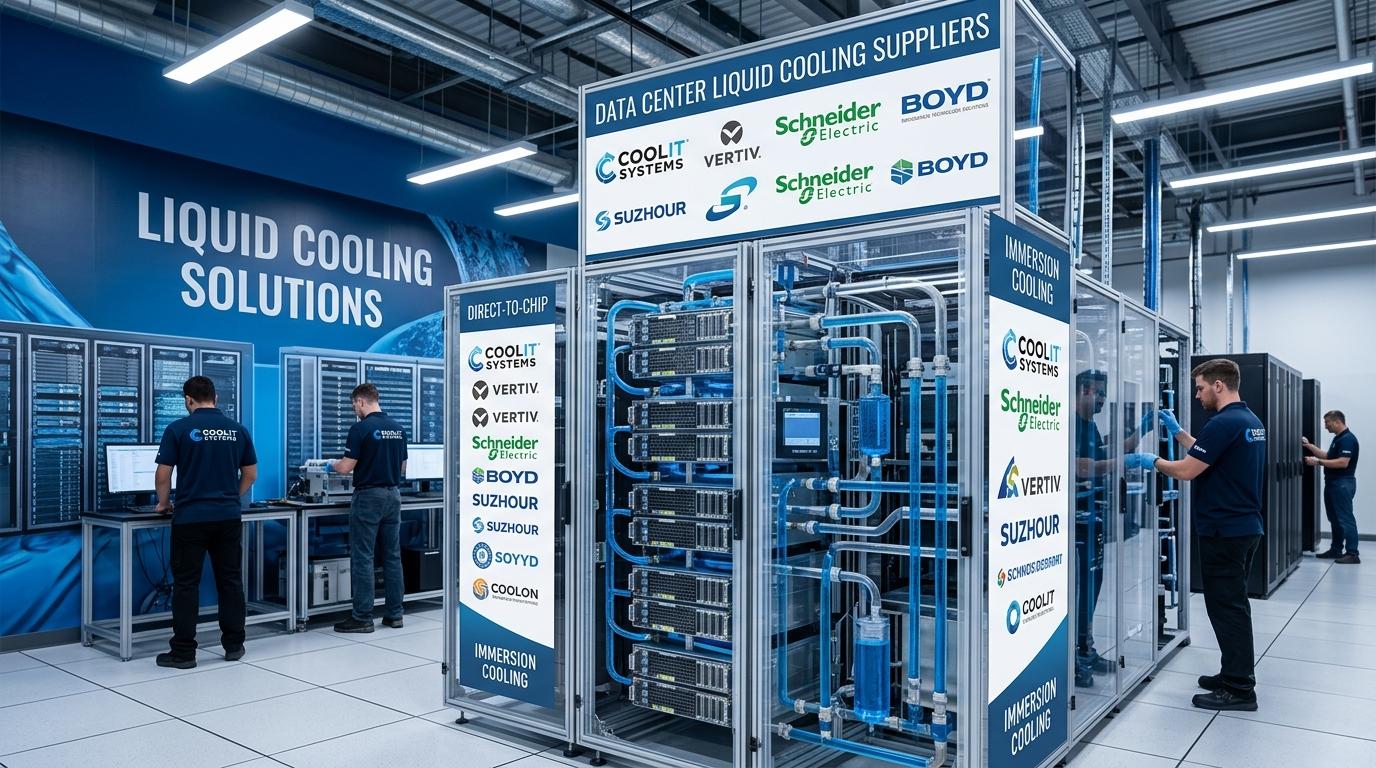
Data center liquid cooling suppliers play an important role in supporting modern computing facilities. As artificial intelligence, cloud computing, and high-performance servers continue to grow, data centers require effective ways to control heat and maintain reliable operations. Traditional air cooling can become less effective in high-density environments, making liquid cooling an important option for managing increasing thermal demands.
Choosing the right supplier involves more than comparing prices. Businesses need components and systems that match their cooling requirements, equipment specifications, installation conditions, and long-term maintenance plans. A reliable supplier can help data center operators source suitable products, improve cooling performance, and prepare their infrastructure for future expansion.
Understanding Data Center Liquid Cooling Systems
Liquid cooling systems transfer heat away from processors, servers, and other high-performance computing equipment using a circulating liquid. The coolant absorbs heat and carries it toward a heat exchanger or another heat rejection system. This approach can support high-density computing environments where managing temperatures is essential for stable performance.
Common liquid cooling technologies include direct-to-chip cooling, immersion cooling, and rear-door heat exchangers. Direct-to-chip systems use cold plates to remove heat from processors and other components. Immersion cooling places compatible server hardware in a dielectric fluid, while rear-door heat exchangers remove heat from air leaving server racks.
Each technology has different equipment requirements. Businesses should identify the most appropriate cooling architecture before contacting suppliers. This makes it easier to compare product specifications and select components that work together efficiently.
Products Offered by Data Center Liquid Cooling Suppliers
Data center liquid cooling suppliers may provide individual components, complete cooling systems, or customized solutions for specific projects. Understanding these product categories helps purchasing teams identify the equipment needed for new installations and existing infrastructure upgrades.
Cold plates are widely used in direct-to-chip cooling systems. They transfer heat from processors into the circulating coolant. Their performance depends on factors such as material selection, internal channel design, coolant flow, and thermal resistance.
Coolant distribution units (CDUs) regulate coolant circulation between the server-side cooling loop and the facility water system. Depending on the design, these units may include pumps, heat exchangers, sensors, valves, and control equipment.
Other important components include stainless steel tubing, hoses, manifolds, pumps, filters, quick-disconnect couplings, and control valves. Each component must meet the system's pressure, temperature, flow, and fluid compatibility requirements. Selecting compatible products helps reduce leakage risks and unnecessary pressure losses.
Important Factors When Selecting a Supplier
Product quality should be a primary consideration when comparing data center liquid cooling suppliers. Components must operate reliably under the expected temperature, pressure, and workload conditions. Buyers should request technical specifications, material information, dimensional drawings, and relevant test documentation before making purchasing decisions.
Engineering support is another important factor. Some data centers require standard components, while others need customized connections, manifolds, tubing assemblies, or cooling equipment. A supplier with suitable technical capabilities can help review project requirements and identify practical product configurations.
Delivery capability also matters. Delayed components can affect installation schedules, commissioning, and facility expansion. Before placing an order, confirm production lead times, minimum order quantities, packaging requirements, shipping arrangements, and spare parts availability.
Long-term support should also be considered. Access to replacement components, technical assistance, and clear product documentation can make future maintenance easier. Evaluating these factors alongside pricing helps businesses make more informed procurement decisions.
The Importance of Material Compatibility and Quality
Material compatibility is essential in liquid cooling applications because coolant comes into direct contact with internal surfaces, seals, and connecting components. An unsuitable material can contribute to corrosion, contamination, seal degradation, or other operational problems.
Stainless steel tubing and fittings may be appropriate for certain cooling loops because of their strength and corrosion resistance. However, the correct grade and finish depend on coolant chemistry, operating conditions, and the system design. Copper and aluminum are also used in cooling equipment where their properties suit the application.
Seals and quick-disconnect couplings require equal attention. Their materials must be compatible with the specified coolant and operating temperatures. Buyers should also check pressure ratings, connection dimensions, and flow performance to avoid restrictions or installation problems.
A qualified supplier should provide sufficient technical information to support engineering review. Pressure testing, leak testing, cleanliness controls, and documented inspection procedures can help verify that components meet the project's requirements.
Benefits of Working With Reliable Cooling Suppliers
Working with an experienced supplier can simplify procurement and support better coordination between engineering, purchasing, and installation teams. When components are selected according to a consistent specification, businesses can reduce compatibility issues and make system maintenance more manageable.
Efficient liquid cooling can also help data centers support high-performance computing equipment within its approved thermal operating limits. By transferring heat closer to its source, liquid cooling can reduce the cooling burden on room air systems, although additional air cooling may still be necessary for components that release heat into the surrounding environment.
Reliable sourcing is particularly valuable for projects that involve multiple racks or large-scale deployments. Standardized components, clear documentation, and dependable delivery schedules help organizations maintain consistency as their infrastructure grows.
How to Compare Data Center Liquid Cooling Suppliers
Before requesting quotations, prepare a clear list of technical and commercial requirements. Include the intended cooling technology, expected heat load, coolant type, operating temperature range, required flow rate, pressure limits, connection standards, and estimated quantities.
Ask each supplier to quote against the same specifications. This makes it easier to compare product suitability, documentation, manufacturing capabilities, delivery schedules, and total purchasing costs. A lower initial price may not provide the best value if the components require extensive modifications or lack adequate technical support.
For customized projects, request drawings and samples when appropriate. Engineering teams should review the proposed components and verify their suitability before approving larger production orders. Buyers should also establish quality acceptance criteria and clarify how product changes will be communicated.
Conclusion
Data center liquid cooling suppliers are important partners for businesses developing reliable, high-performance computing infrastructure. From cold plates and coolant distribution units to tubing, valves, pumps, and quick-disconnect fittings, every component contributes to the overall performance of the cooling system.
The best supplier is one that understands the project's technical requirements, offers suitable products, maintains consistent quality, and supports dependable delivery. By evaluating material compatibility, engineering expertise, documentation, and long-term service, data center operators can make informed sourcing decisions and build cooling systems that support their operational needs.

 English
 Arabic
 French
 Spanish
 Portuguese
 Deutsch
 Dutch
Dutch
 Italiano
 Russian
 Romaian
 Portuguese (Brazil)
 Greek
Greek