


Canada Study Programs 2027: Courses, Fees, Eligibility and Admission Guide
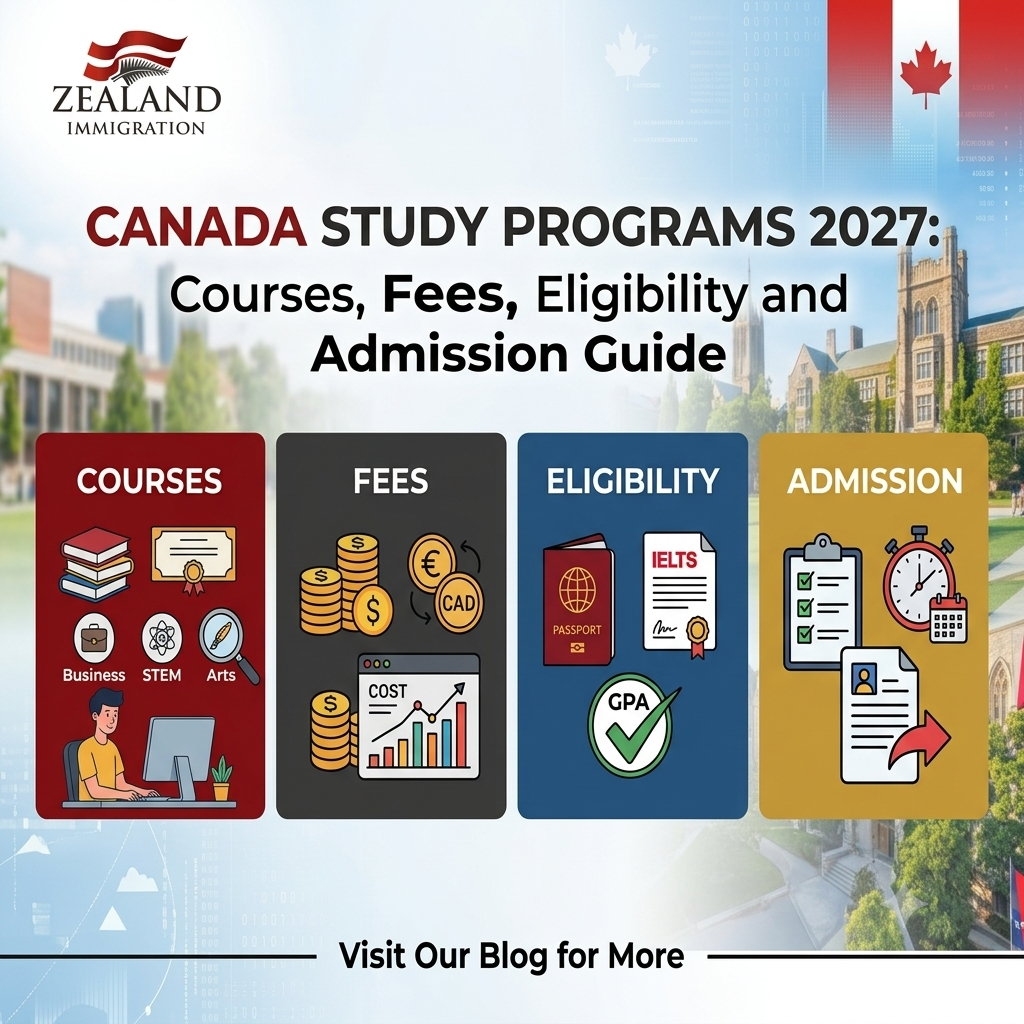
Canada is a popular destination for international students because of its respected universities, career-focused courses, multicultural environment, and opportunities to gain practical skills. Students can choose from undergraduate degrees, postgraduate programs, diplomas, certificates, and professional courses according to their education and career goals. Understanding the admission process, tuition fees, and course options can help students plan their studies with greater confidence.
Choosing the right Canada study programs is an important step for Indian students planning to study abroad. The best option depends on your previous qualifications, preferred subject, budget, and long-term career plans. Before applying, compare universities and colleges, check course eligibility, prepare the required documents, and review the latest admission and immigration requirements. Careful planning can help you avoid unnecessary expenses and make informed decisions.
Why Study in Canada?
Canadian institutions offer a wide range of academic and practical learning opportunities. Many programs include projects, laboratory work, internships, or industry-focused training, depending on the course and institution.
Key benefits of studying in Canada include:
-
Recognised qualifications: Choose institutions and programs that meet your academic and professional goals.
-
Course variety: Explore business, engineering, healthcare, information technology, hospitality, and other fields.
-
Multicultural environment: Learn alongside students from different backgrounds.
-
Practical learning: Some courses offer work-integrated learning or industry projects.
-
Career preparation: Develop skills relevant to your chosen profession.
Remember that employment opportunities depend on your qualifications, experience, labour-market conditions, and applicable work authorisation rules.
Popular Courses to Consider in Canada
Your course should match your academic background and future plans. Research the curriculum, course duration, entry requirements, and career pathways before selecting a program.
Popular study areas include:
-
Business and Management: Business administration, finance, marketing, and human resource management.
-
Information Technology: Computer science, software development, cybersecurity, and data analytics.
-
Engineering: Civil, mechanical, electrical, and other engineering disciplines.
-
Healthcare: Public health, healthcare administration, and eligible healthcare-related programs.
-
Hospitality and Tourism: Hotel management, tourism, and event management.
-
Supply Chain and Logistics: Operations, procurement, and logistics management.
Not every course is available at every institution. Check the official institution website for current course details and admission criteria.
How to Choose the Right College or University
Selecting an institution requires more than comparing rankings. Consider these factors before submitting an application:
-
Check whether the institution is a Designated Learning Institution (DLI).
-
Confirm that your chosen program is currently available.
-
Compare tuition fees, accommodation, transport, and other living expenses.
-
Review academic prerequisites and English-language requirements.
-
Check the institution's refund policy and application deadlines.
-
Understand whether the program meets your study permit and future plans.
A DLI listing alone does not guarantee that every program qualifies for a post-graduation work permit. Verify program-specific eligibility through official Canadian government information before making a decision.
Understanding Course Fees and Living Expenses
The total cost of studying in Canada varies by institution, program, city, and lifestyle. Tuition fees can differ considerably between colleges and universities, while accommodation and transport costs depend on the location.
Prepare a realistic budget that includes:
-
Tuition fees and application charges.
-
Accommodation and utilities.
-
Food, transport, and personal expenses.
-
Health insurance where required.
-
Travel costs and emergency savings.
Check the institution's official fee schedule for the relevant intake. Avoid relying on a single estimated amount for every course. Scholarships may be available, but eligibility, funding amounts, and deadlines vary. Apply early and review the scholarship conditions carefully.
Understanding the Canada Education System
The Canada education system is managed by provincial and territorial authorities, so education structures and requirements can differ across the country. After secondary school, students may pursue college diplomas, undergraduate degrees, postgraduate certificates, master's degrees, or doctoral studies. Colleges often focus on career-oriented training, while universities commonly provide academic degrees and research opportunities, although there is overlap between them. Compare program content, recognition, admission requirements, and costs rather than choosing an institution based on its name alone.
Admission Process for Indian Students
Follow these steps to prepare a strong application:
-
Shortlist programs: Select courses that match your academic background and career interests.
-
Check eligibility: Review academic grades, subject prerequisites, and language test requirements.
-
Prepare documents: Gather transcripts, certificates, passport details, a statement of purpose if required, and other requested documents.
-
Submit your application: Apply through the institution's official process and pay applicable fees.
-
Receive an offer: Review the offer letter, conditions, tuition deposit, and deadlines.
-
Prepare your finances: Arrange evidence of funds and supporting financial documents according to current requirements.
-
Review immigration rules: Confirm the latest study permit requirements before applying.
Canada Student Visa: Important Things to Know
Before travelling for your studies, check the current requirements for a Canada student visa, officially associated with a study permit. Depending on your circumstances, you may need an acceptance letter from an eligible institution, proof of sufficient funds, identity documents, and other supporting evidence. Provincial or territorial attestation requirements may also apply, subject to current exemptions and rules. Some applicants may need biometrics or a medical examination.
Approval is not automatic. Check the latest instructions on the official Immigration, Refugees and Citizenship Canada (IRCC) website and ensure your application is complete and truthful.
Why Choose Zealand Immigration India?
Zealand Immigration India provides guidance to students who need support with their study-abroad planning. Our team can help you understand the application process and organise the next steps according to your individual circumstances.
Our support includes:
-
Personalised course and institution guidance.
-
Assistance with document preparation.
-
Information about admission requirements.
-
Guidance on application procedures and relevant visa requirements.
-
Support in understanding available study options.
Requirements and outcomes depend on individual eligibility and the decisions of educational institutions and immigration authorities. Always verify important details through official sources.
Frequently Asked Questions
1. What are the popular courses for Indian students in Canada?
Business, information technology, engineering, healthcare-related fields, hospitality, and supply chain management are popular options. The right course depends on your qualifications and career goals.
2. How much does it cost to study in Canada?
Costs vary by institution, program, and city. Calculate tuition, accommodation, food, transport, insurance, and other expenses using current official estimates.
3. Can I work while studying in Canada?
Eligible international students may work during their studies if they meet the applicable conditions. Check the latest IRCC rules before accepting employment.
4. How do I select the right Canadian institution?
Compare course content, tuition, location, admission requirements, DLI status, and any relevant post-graduation work permit eligibility.
5. Where can I check official study permit requirements?
Visit the official Government of Canada immigration website at Canada.ca for current application instructions and eligibility rules.
Final Thoughts
Planning to study abroad becomes easier when you research your course options, compare institutions, prepare your budget, and understand the admission and immigration process. Start early, use official information, and choose a program that supports your academic interests and future career plans. Zealand Immigration India can help you understand the available options and prepare for the next steps in your study-abroad journey.

 English
 Arabic
 Spanish
 Portuguese
 Deutsch
 Turkish
 Dutch
Dutch
 Italiano
 Russian
 Romaian
 Portuguese (Brazil)
 Greek
Greek