


Scaffolding Manufacturing in Noida: Process, Types, Quality
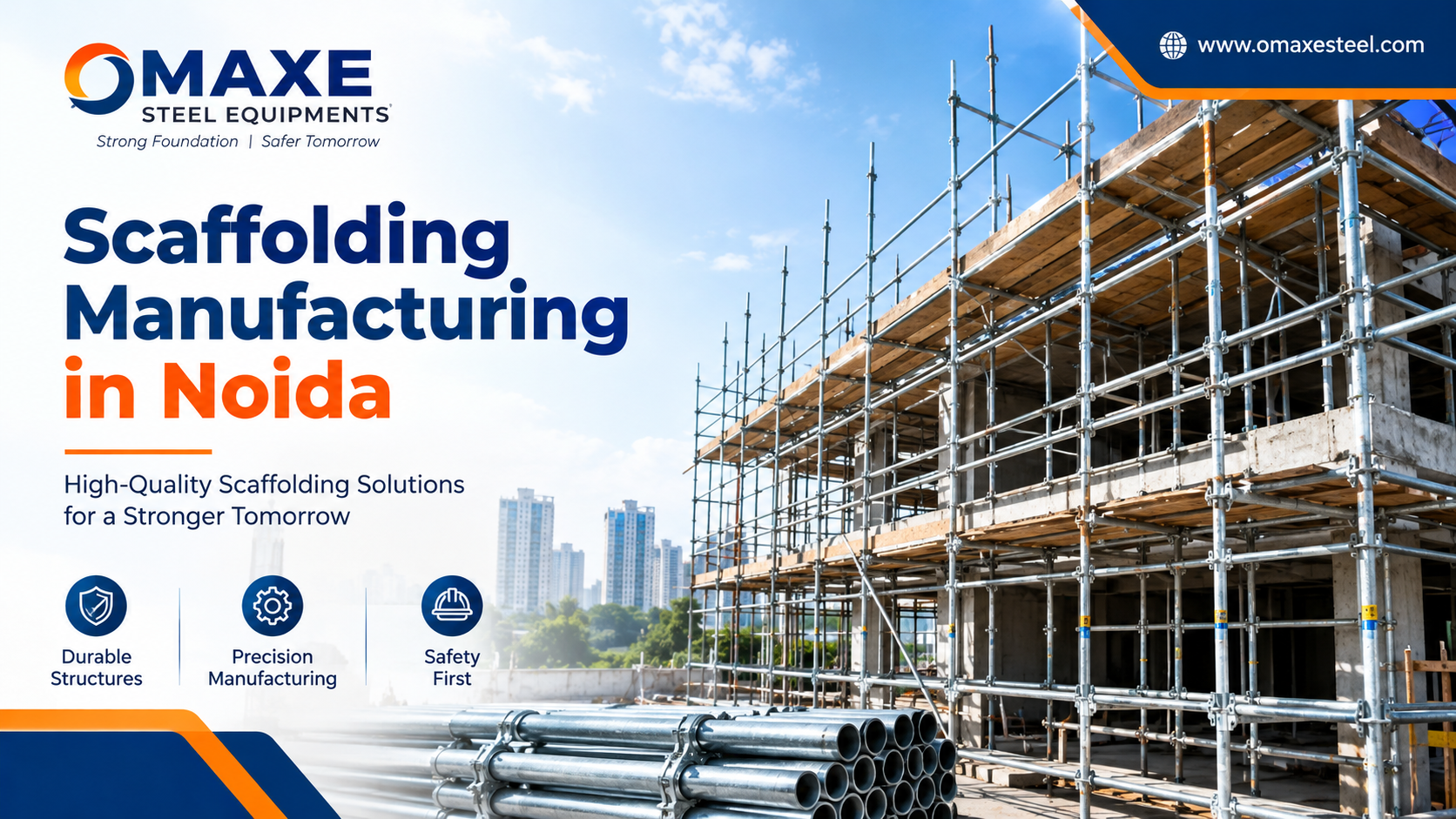
Scaffolding Manufacturing in Noida involves producing temporary structures and components that provide safe working platforms for construction, maintenance, painting, and industrial projects. The process generally includes material selection, cutting, forming, welding, surface finishing, dimensional inspection, and quality testing. Common products include cuplock scaffolding, frame scaffolding, steel tubes, adjustable props, base jacks, and scaffolding accessories. Buyers should evaluate material quality, load requirements, dimensional accuracy, weld integrity, corrosion protection, and supplier reliability before selecting scaffolding for a project.
Introduction
Construction projects require more than cement, steel, and skilled labour. They also depend on reliable access systems that allow workers to operate safely at different heights. Scaffolding plays an important role in residential buildings, commercial complexes, industrial facilities, infrastructure development, and maintenance work.
As construction activity expands across Noida and the surrounding National Capital Region, contractors and project managers need scaffolding components that meet project specifications, support planned loads, and withstand repeated use.
Understanding Scaffolding Manufacturing in Noida helps buyers make informed decisions about materials, manufacturing processes, product types, and quality checks. Rather than choosing products based on price alone, it is important to understand how scaffolding is made and what distinguishes a dependable product from an unsuitable one.
Omaxe Steel Equipments serves the scaffolding and steel equipment market. Buyers considering scaffolding products can use the following guide to understand important manufacturing considerations and prepare better questions for suppliers.
1. How Does the Scaffolding Manufacturing Process Work?
Scaffolding manufacturing involves several stages. Each stage contributes to the strength, consistency, durability, and usability of the finished components.
Step 1: Raw Material Selection
Manufacturers select steel according to the component design, required strength, dimensions, and applicable project specifications. Steel tubes, plates, pipes, and other sections may be used for standards, ledgers, braces, frames, and accessories.
Material selection should consider the specified steel grade, wall thickness, dimensional tolerances, and intended application. Using material that does not meet the design requirements can compromise the performance of the finished system.
Step 2: Cutting and Component Preparation
Steel sections are cut to the required lengths using suitable cutting equipment. Accurate cutting helps ensure that components fit together properly during installation.
Depending on the product, the manufacturer may also drill holes, prepare joints, form ends, or cut plates for connecting components.
Step 3: Forming and Fabrication
Prepared steel sections are shaped and assembled according to the product design. Manufacturing methods vary by product type.
For example, frame scaffolding requires accurately positioned vertical and horizontal members, while modular systems may require specially designed connectors and locking mechanisms.
Step 4: Welding and Assembly
Welding joins the relevant steel components and attachments. Consistent weld quality is essential because poorly executed joints can weaken the structure.
Manufacturers should follow suitable welding procedures and inspect welds according to the applicable quality requirements. Critical components may require additional inspection or testing based on their design and intended use.
Step 5: Surface Treatment
Scaffolding components may receive painting, protective coatings, or galvanizing, depending on the product specification.
Hot-dip galvanizing can provide corrosion protection when the coating is properly applied. Painting may also be suitable for certain applications, provided the coating system is appropriate for the working environment.
Surface treatment should not be considered a substitute for correct steel selection, sound fabrication, or structural design.
Step 6: Quality Inspection and Dispatch
Before dispatch, finished products should be checked for dimensions, visible defects, weld quality, component compatibility, and surface finish.
Where required, manufacturers should maintain material records, inspection reports, and relevant test documentation. Products should be packed and transported in a way that prevents avoidable damage.
2. What Are the Main Types of Scaffolding?
The right scaffolding system depends on the height of the work, building design, required load capacity, working space, installation time, and frequency of reuse.
|
Scaffolding type |
Main characteristics |
Typical applications |
|
Cuplock scaffolding |
Modular system with cup-style connections |
Building construction, slab work, and industrial projects |
|
Frame scaffolding |
Prefabricated frames connected with suitable braces |
Masonry, plastering, and exterior finishing |
|
Tube-and-coupler scaffolding |
Steel tubes connected using couplers |
Complex structures and adaptable access arrangements |
|
H-frame scaffolding |
Frame-based arrangement for repetitive work |
Construction and finishing activities |
|
Adjustable steel props |
Telescopic support components |
Temporary support for formwork and slabs, subject to design |
|
Mobile scaffolding towers |
Tower systems fitted with suitable wheels and locking mechanisms |
Maintenance and interior finishing on suitable surfaces |
How Should Buyers Choose a Scaffolding Type?
For repetitive construction work, a modular system may help standardize assembly. For irregular structures, tube-and-coupler scaffolding can offer flexibility. Frame systems may suit straightforward finishing tasks.
However, no system is automatically suitable for every project. Selection must account for the manufacturer's instructions, site conditions, intended loads, access requirements, bracing, foundation stability, and applicable safety rules.
3. What Quality Standards Matter in Scaffolding Manufacturing?
Quality is not determined by appearance alone. A well-painted component can still be unsuitable if its dimensions, connections, material properties, or structural capacity do not meet the requirements.
Material and Dimensional Accuracy
Buyers should confirm the specified steel grade and wall thickness, where applicable. Tube diameter, component length, connection dimensions, and tolerances should match the system design.
Dimensional consistency also helps reduce installation difficulties and prevents incompatible components from being mixed together.
Welding and Connection Quality
Inspect visible welds for cracks, incomplete joints, excessive spatter, and other defects. Check connectors, locking pins, couplers, and attachment points for correct fit and operation.
Visual inspection is useful, but it does not replace qualified inspection or required testing of critical components.
Load Capacity and Structural Stability
Scaffolding must be selected and erected for its intended working loads. These can include workers, tools, construction materials, and other applicable forces.
Do not assume that two scaffolding products have the same capacity simply because they look similar. Obtain the relevant design information and follow approved erection and loading instructions.
Corrosion Protection and Traceability
Inspect coatings for visible damage, uneven coverage, or exposed steel. For used components, also check corrosion, deformation, cracks, and wear.
Reliable documentation can help buyers identify material specifications, inspection status, and product batches when traceability is required.
4. How Can Buyers Evaluate a Scaffolding Manufacturer in Noida?
Choosing a supplier is an important purchasing decision because unsuitable components can create delays, increase maintenance costs, and introduce safety risks.
Before placing an order, consider the following checks:
-
Product range: Confirm whether the supplier offers the required tubes, frames, ledgers, braces, props, base plates, jacks, and compatible accessories.
-
Technical specifications: Ask for component dimensions, material details, load-related documentation, and relevant product drawings.
-
Quality assurance: Enquire about inspection procedures, welding checks, material verification, and available test reports.
-
Corrosion protection: Clarify whether components are painted, coated, or galvanized and what the specification requires.
-
Supply capacity: Confirm quantities, lead times, delivery arrangements, and the supplier's ability to maintain consistent specifications across orders.
-
After-sales support: Ask about replacement components, technical clarification, and handling of defective products.
When evaluating Scaffolding Manufacturing in Noida, compare quotations on a like-for-like basis. A lower price may not represent better value if it involves thinner material than specified, incompatible components, inadequate documentation, or a shorter useful service life.
5. Common Scaffolding Purchasing Mistakes to Avoid
Choosing on Price Alone
Compare specifications before comparing prices. A quotation should clearly identify the product type, dimensions, material requirements, finish, quantity, and included accessories.
Ignoring Site Conditions
Ground conditions, available space, building geometry, weather exposure, and the work being performed can affect the scaffolding arrangement. These factors should be assessed before installation.
Mixing Incompatible Components
Components from different systems may not connect correctly or perform as intended. Use compatible parts approved for the selected system rather than improvising connections.
Reusing Damaged Equipment
Bent tubes, cracked welds, distorted frames, damaged locking devices, and severely corroded components should be removed from service until assessed by a competent person. Unsafe components should not be repaired or reused without an appropriate procedure.
Overlooking Inspection and Erection
Even properly manufactured scaffolding can become dangerous when incorrectly erected, inadequately braced, overloaded, or installed on an unstable base. Use competent personnel and follow applicable safety requirements, manufacturer instructions, and site-specific controls.
6. Why Does Manufacturing Quality Matter for Construction Projects?
Consistent manufacturing helps components fit together correctly, simplifies inspection, and supports more predictable installation and maintenance.
For contractors, this can mean fewer avoidable fitting problems, better control over replacement requirements, and more efficient planning. Corrosion protection and appropriate storage can also help extend the service life of reusable equipment.
For example, a contractor working on a multi-storey commercial building should verify that the selected scaffolding system is designed for the intended arrangement and loads. The contractor should then check component compatibility, confirm the required bracing and foundations, and establish inspection procedures before work begins.
The key lesson is that product quality, structural design, installation, and inspection work together. No single manufacturing feature guarantees a safe scaffolding structure.
Frequently Asked Questions
1. What is scaffolding manufacturing in Noida?
Scaffolding manufacturing in Noida refers to the fabrication and production of steel scaffolding components and related access equipment for construction, maintenance, and industrial applications. Depending on the manufacturer, products may include tubes, frames, modular systems, props, braces, and accessories.
2. Which type of scaffolding is best for building construction?
The best type depends on the building design, working height, required loads, site conditions, and installation needs. Cuplock systems may suit repetitive modular work, frame systems may suit straightforward finishing activities, and tube-and-coupler systems may help with complex geometries. A competent person should confirm suitability for the specific project.
3. How can I check scaffolding quality before purchasing?
Check the specified steel grade, dimensions, wall thickness where applicable, welds, connections, surface finish, and compatibility between components. Request relevant technical specifications and inspection or test documentation. For critical applications, use qualified assessment rather than relying on appearance alone.
4. Is galvanized scaffolding better than painted scaffolding?
Galvanizing can provide effective corrosion protection, while a suitable paint system may meet the needs of other applications. The better option depends on the operating environment, coating specification, maintenance plan, and budget. Neither finish compensates for poor fabrication or incorrect structural design.
5. What should I ask a scaffolding supplier before ordering?
Ask about product specifications, material quality, dimensions, compatible accessories, load-related documentation, quality checks, surface treatment, delivery timelines, and replacement policies. Confirm that the products meet your project requirements before approving the order.
Conclusion
Scaffolding manufacturing involves much more than cutting and welding steel. Material selection, precise fabrication, reliable connections, appropriate surface treatment, and systematic quality inspection all contribute to producing components suitable for their intended applications.
When comparing manufacturers and suppliers in Noida, buyers should focus on documented specifications, product compatibility, quality assurance, and project requirements rather than price alone. Proper design, competent erection, and regular inspection remain essential for safe use on site.
Contact Omaxe Steel Equipments
Planning a construction or industrial project? Omaxe Steel Equipments can be a starting point for enquiries about scaffolding and steel equipment requirements.
Contact us today to discuss your product requirements, confirm available specifications, and identify suitable options for your project.
Visit: https://omaxesteel.com/
Before placing an order, confirm product availability, technical specifications, and suitability for your intended application directly with the supplier.

 English
 Arabic
 French
 Portuguese
 Deutsch
 Turkish
 Dutch
Dutch
 Italiano
 Russian
 Romaian
 Portuguese (Brazil)
 Greek
Greek