


How Siphon Pumps Improve Efficiency in Industrial Operations
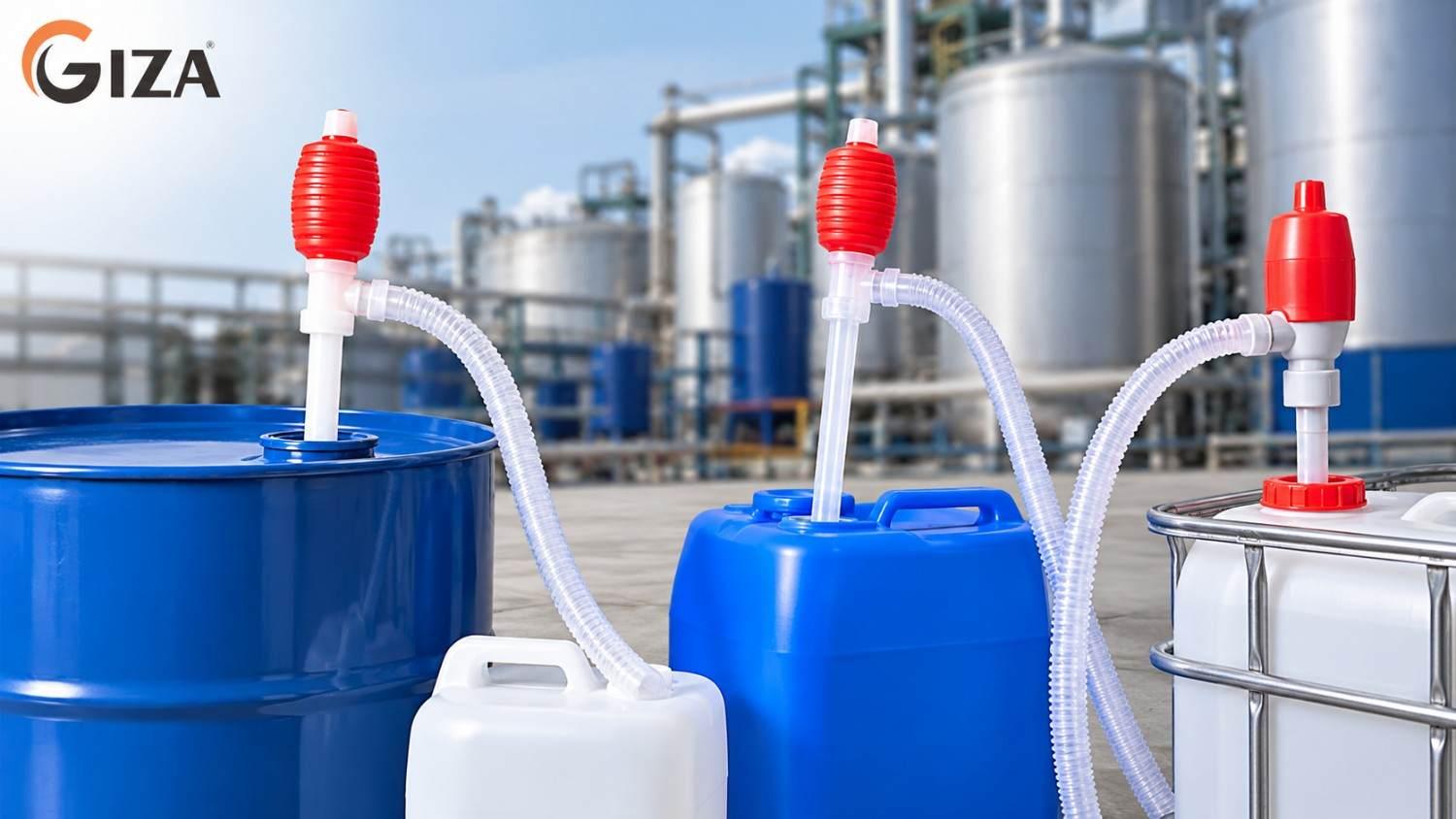
A drum is half-empty, the operator is waiting, and production needs another batch of liquid. What should take minutes becomes a messy transfer involving open containers, spilled material and repeated handling.
A Siphon Pump addresses this problem by allowing controlled liquid movement between drums, barrels and receiving containers. For chemical plants, automotive workshops and manufacturing units, it can reduce manual effort and improve everyday handling efficiency.
But buying the cheapest pump is a mistake. Poor chemical compatibility, weak tubing and inconsistent flow can cost more than the equipment itself.
Siphon Pump Specifications: What Industrial Buyers Should Check
A siphon works by moving liquid through a primed passage, normally from a higher liquid level to a lower discharge point. Manual siphon pumps can help initiate flow without an electric motor. However, gravity-fed siphoning cannot continuously move liquid to a higher final level without additional energy.
Material Compatibility Is More Important Than Appearance
Industrial models may use polypropylene, PVC and rubber tubing, depending on the application. Giza Pumps lists solutions for oils, lubricants, fuels and selected industrial chemicals, with performance and leakage checks before dispatch.
Three important considerations are:
-
Manual siphon pumps: Useful for occasional transfers and maintenance operations.
-
Drum-mounted siphon pumps: Intended for transferring liquids from barrels and storage drums.
-
Heavy-duty siphon pumps: Designed for more demanding industrial handling duties.
Here's the detail many buyers overlook: chemical compatibility applies to every wetted component, not just the pump body. A suitable plastic housing means little if the tubing or seal deteriorates after repeated exposure.
Flow rate, hose diameter, operating temperature and suction arrangement should also be checked. Actual performance depends on the liquid and installation.
Five Supplier Checks That Prevent Expensive Purchasing Mistakes
Industrial procurement isn't just about finding the lowest quotation. Evaluate these five points before issuing a purchase order.
-
Material specification: Request the pump-body, hose and seal materials. A bad answer is, "Suitable for all chemicals," without a compatibility chart.
-
Operating performance: Ask for tested flow conditions and applicable limits. "High-speed transfer" without measurable information is meaningless.
-
Quality inspection: Confirm whether leakage and output checks are performed. A supplier who cannot explain testing procedures deserves closer scrutiny.
-
Stock and delivery: Obtain written confirmation of quantity and dispatch schedule. "Ready stock" is not a delivery commitment.
-
Replacement support: Clarify how damaged or defective units are handled. "We'll sort it out later" is not a usable warranty policy.
For example, if a workshop uses 12 pumps across different workstations, even one unsuitable model can disrupt routine operations. The correct specification matters more than a small unit-price saving.
Six Ways a Siphon Pump Improves Industrial Efficiency
1. Reduces Repeated Manual Handling
Operators can transfer suitable liquids without repeatedly lifting and tilting heavy containers. This reduces unnecessary handling and helps maintain a cleaner workstation.
2. Limits Avoidable Material Loss
Controlled transfer can reduce splashing and accidental spillage. For expensive lubricants or processing chemicals, even small recurring losses affect material costs.
3. Removes the Need for Electrical Power
Manual siphon models require no electrical connection. That makes them useful for suitable remote or temporary applications, although flammable liquids still require verified equipment compatibility and appropriate safety controls.
4. Improves Routine Maintenance Work
Workshops regularly move oil, coolant and other fluids between containers. A portable pump can make these tasks more convenient without installing fixed transfer equipment.
5. Helps Protect Product Consistency
Using dedicated, compatible pumps for specific liquids can reduce cross-contamination risk. One shared pump for every chemical is poor operating practice.
6. Reduces Unplanned Replacement Costs
Choosing compatible materials and inspecting hoses, seals and connections can help extend service life. A pump that fails halfway through a drum transfer is not saving anyone money.
These benefits are operational advantages, not guaranteed percentage savings. Actual improvements should be assessed against transfer volume, labour time and material losses.
Siphon Pump Availability Across India: Why Dispatch Planning Matters
India's industrial buyers often source pumping equipment from established manufacturing centres such as Rajkot, Gujarat. Giza Pumps operates from Shapar, Rajkot, and lists nationwide supply support. For procurement managers comparing Siphon Pump Manufacturers, manufacturing capability and dispatch reliability should both influence supplier selection.
Siphon Pump Dealers can help local workshops access replacement equipment, while Siphon Pump Wholesalers support distributors handling recurring or larger-volume requirements. Buyers evaluating Siphon Pump Suppliers in India should consider transport schedules, packing quality and regional inventory availability.
For example, a consignment travelling from Rajkot to a North Indian industrial facility needs enough delivery margin for freight handling and possible transit delays. A low quotation means little if the pumps arrive after the planned maintenance shutdown.
About Giza Pumps: Manufacturing Experience and Product Testing
At Giza Pumps, we operate under Swastik Enterprise, with our business establishment dating back to 1999.
We manufacture and supply industrial fluid-transfer equipment, including manual siphon, drum-mounted and heavy-duty pump options.
We state on our product pages that we check siphon pumps for performance, pressure and leakage before dispatch. That's a practical quality-control step because an unnoticed leak can turn a routine transfer into a material-handling problem.
We focus on helping buyers select equipment according to liquid type, handling requirements and order quantity rather than treating every industrial application as identical.
At Giza Pumps, we welcome enquiries from factories, distributors and industrial procurement teams.
We aim to respond to enquiries within 48 hours, as stated on our website. We confirm minimum order quantity (MOQ), current stock and dispatch timelines with each quotation rather than assuming the same terms for every order.
Conclusion
A Siphon Pump can improve industrial efficiency by reducing manual handling, supporting controlled transfers and avoiding unnecessary electrical equipment for suitable applications. However, incorrect materials or unsuitable operating conditions can eliminate those advantages. Buyers should prioritise compatibility, verified performance and dependable supply. As industrial operations become more cost-conscious, disciplined pump selection will become increasingly valuable.
Frequently Asked Questions
1. How does a Siphon Pump work without electricity?
Once primed, a conventional siphon uses the difference in liquid levels to maintain flow. The receiving outlet generally needs to be lower than the source liquid surface. Air leaks, inadequate priming and excessive friction can interrupt operation.
2. What should buyers ask Siphon Pump Manufacturers before ordering?
Request wetted-material specifications, performance data, inspection details and dispatch commitments. Don't accept universal chemical-compatibility claims without supporting documentation.
3. Can Siphon Pump Dealers supply models for chemicals?
Some can, but suitability depends on the exact chemical, concentration, temperature and pump materials. Always verify the complete wetted assembly before using it with hazardous liquids.
4. Do Siphon Pump Wholesalers provide bulk discounts?
Many offer volume-based pricing, but discounts depend on model, quantity and commercial terms. Ask for a written quotation rather than assuming a fixed percentage reduction.
5. Can Siphon Pump Suppliers in India deliver across different states?
Yes, suppliers such as Giza advertise nationwide support. Actual delivery dates depend on stock availability, destination and freight arrangements.
6. Are manual siphon pumps suitable for continuous industrial operation?
Not automatically. Duty cycle, material resistance and transfer volume determine suitability. For frequent high-volume work, a properly selected powered transfer pump may be more appropriate.
7. What maintenance does an industrial siphon pump require?
Inspect tubing, seals and connections for wear, chemical damage and leaks. Clean the equipment according to the handled liquid's safety requirements, and replace deteriorated components before reuse.

 English
 Arabic
 French
 Spanish
 Portuguese
 Turkish
 Dutch
Dutch
 Italiano
 Russian
 Romaian
 Portuguese (Brazil)
 Greek
Greek