


IPTV on Multiple Devices: What Users Should Know Before Setup
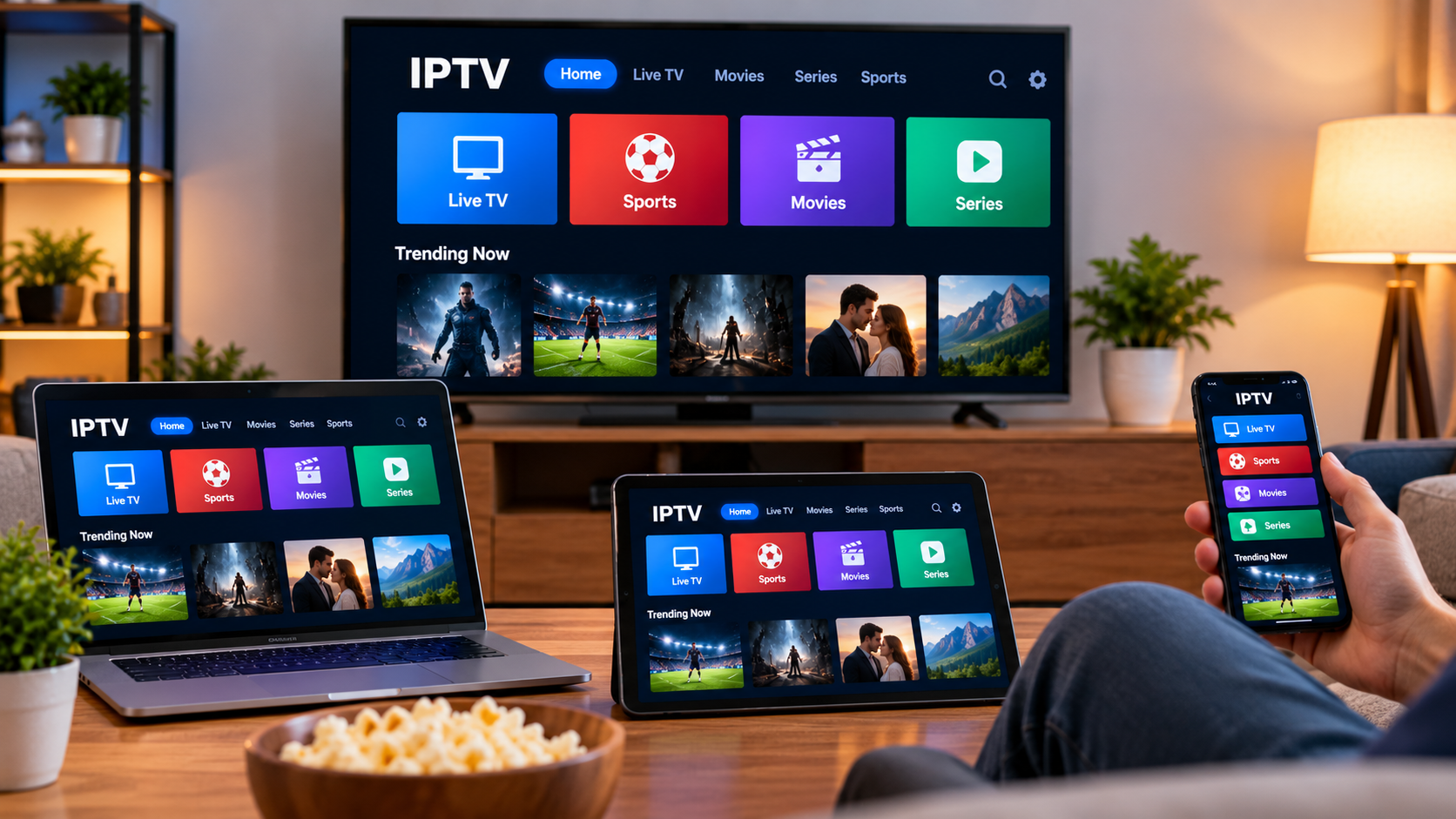
Watching television on more than one screen has become common in modern households. One person may use a Smart TV in the living room while another watches on a tablet, smartphone, computer, or streaming device.
IPTV can support this flexible viewing style, but using a service across multiple devices requires some planning. Device compatibility, internet bandwidth, application support, and subscription limitations can all affect the experience.
Understanding these factors before setup can help users avoid unnecessary connection and playback problems.
How IPTV Works Across Different Devices
IPTV delivers television content through an internet connection rather than traditional cable or satellite broadcasting.
Depending on the service and application, users may be able to access IPTV on devices such as:
-
Smart TVs
-
Android TV devices
-
Smartphones
-
Tablets
-
Windows computers
-
Mac computers
-
Streaming boxes
-
Compatible streaming sticks
Each device usually requires an IPTV player that supports the login or playlist method provided by the service.
Check Device Compatibility First
Not every IPTV application works on every operating system.
For example, an app available on Android TV may not be available on Samsung or LG Smart TVs. Similarly, an application designed for smartphones may provide a different interface on larger screens.
Before choosing an IPTV service, check which devices and applications are supported.
When reviewing providers such as Rapid IPTV, users should look at device compatibility, setup guidance, subscription options, and available support before configuring multiple screens.
Understand Simultaneous Streaming Limits
Installing an IPTV application on several devices does not always mean they can all stream at the same time.
Some subscriptions may be intended for one active connection, while others may support different usage arrangements.
Users should check the terms of their subscription before attempting simultaneous playback on several devices.
This can prevent unexpected connection problems and help households choose a plan that matches their viewing habits.
Internet Bandwidth Becomes More Important
Each active stream uses part of the available internet connection.
If one household member is watching live TV while another is streaming a movie and someone else is downloading large files, the network may become congested.
This can lead to:
-
Buffering
-
Reduced picture quality
-
Longer loading times
-
Stream interruptions
-
Slower internet on other devices
A stable connection is especially important when several screens are active at once.
Improve Wi-Fi Coverage Around the Home
Weak Wi-Fi is a common cause of IPTV problems on secondary devices.
A Smart TV close to the router may stream perfectly while a television in another room struggles because of poor signal strength.
To improve coverage:
-
Place the router in a central location
-
Keep it away from large metal objects
-
Avoid hiding it inside cabinets
-
Reduce unnecessary interference
-
Consider Ethernet for fixed devices
For larger homes, suitable networking equipment may also help extend coverage to rooms farther from the router.
Use Ethernet for Main Streaming Devices
A wired Ethernet connection is often useful for televisions and streaming boxes that remain in one location.
Ethernet is less affected by wireless interference and can provide more consistent network performance.
Mobile devices such as phones and tablets will usually rely on Wi-Fi, but connecting the main television by cable can reduce overall wireless traffic.
Choose IPTV Players Carefully
Different devices may require different IPTV players.
A household might use one application on a Smart TV and another on an Android phone. This is normal as long as both applications support the connection method supplied by the IPTV provider.
Useful player features may include:
-
Favorites
-
Search
-
Channel categories
-
EPG support
-
Playlist management
-
Parental controls
-
On-demand navigation
Choose applications based on compatibility and usability rather than simply selecting the one with the longest feature list.
Keep Login Details Secure
Using IPTV across several devices means entering subscription information more than once.
Treat these details like other account credentials.
Avoid sharing usernames, passwords, playlist URLs, or server details publicly. Private playlist links may contain information connected to the subscription.
It is also better to install IPTV applications from trusted sources whenever possible.
Keep Every Device Updated
Older software can create compatibility and performance problems.
Regularly check for updates to:
-
IPTV applications
-
Smart TV software
-
Streaming box firmware
-
Mobile operating systems
-
Computer operating systems
Updates may include security improvements, bug fixes, and better compatibility with streaming applications.
Troubleshooting One Device at a Time
If IPTV works correctly on one device but not another, the service itself may not be the problem.
Compare the two setups.
Check whether the affected device has:
-
A weaker internet connection
-
An outdated application
-
Incorrect login information
-
Different network settings
-
Limited available storage or memory
Testing each device separately makes it easier to identify the actual cause.
Consider Different Viewing Needs
Different screens are suitable for different types of viewing.
A large Smart TV may be preferable for movies and sports, while tablets and smartphones are useful for casual viewing around the home.
Computers may be convenient for users who want IPTV alongside other online activities.
Choosing the right device for each situation can make the overall setup more practical.
Final Thoughts
Using IPTV across multiple devices can provide greater flexibility, but the setup should be planned carefully.
Start by checking application and device compatibility, then review the subscription terms to understand how connections can be used. Make sure the home network has enough capacity for the number of active streams and improve Wi-Fi coverage where necessary.
Keeping applications updated, protecting login details, and troubleshooting devices individually can also help maintain a smoother streaming experience across the household.

 Arabic
 French
 Spanish
 Portuguese
 Deutsch
 Turkish
 Dutch
Dutch
 Italiano
 Russian
 Romaian
 Portuguese (Brazil)
 Greek
Greek