


TMS QLD Health: Treatment Benefits, Costs in Australia, and What to Expect
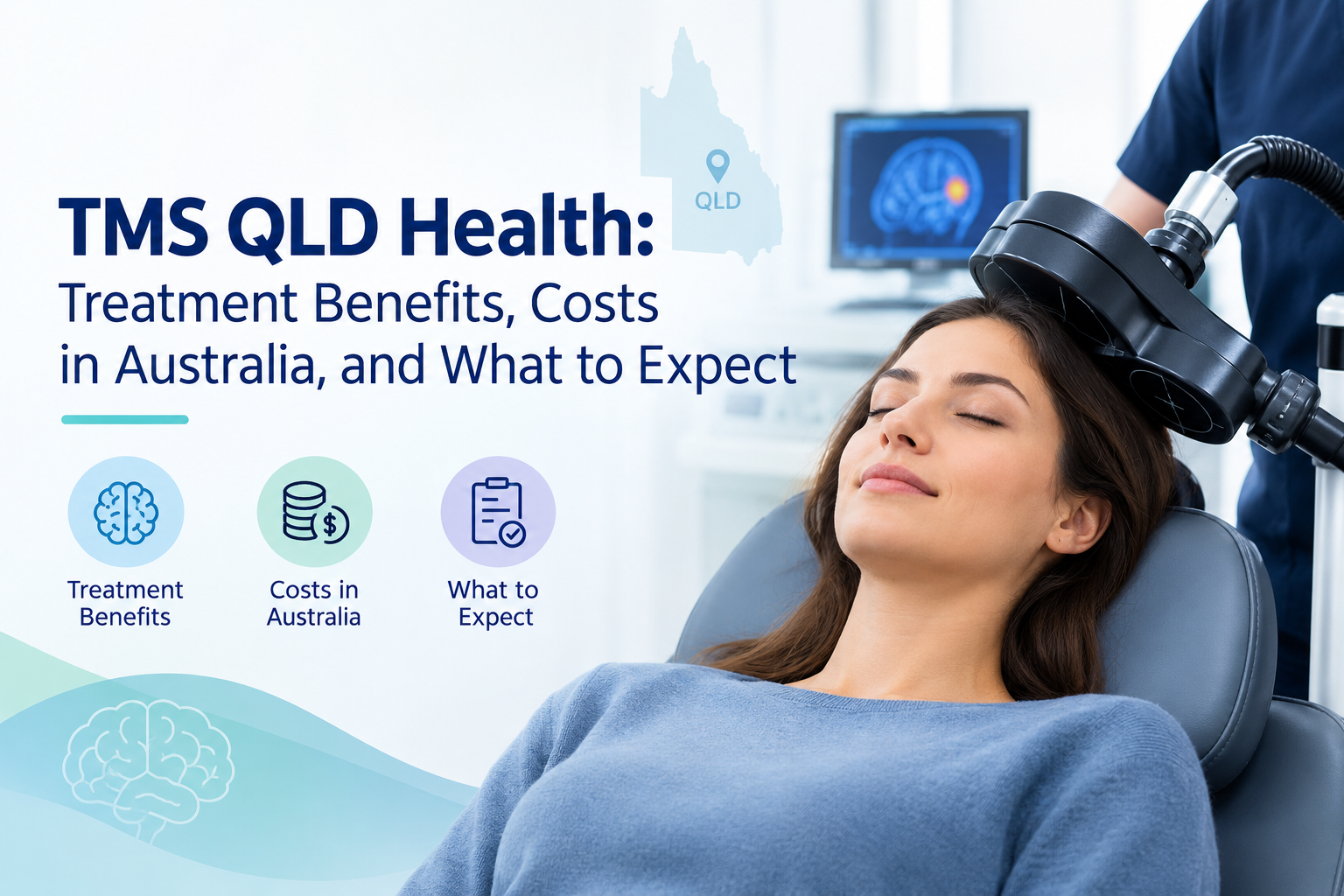
Mental health treatment is evolving, giving people more options when traditional approaches do not provide sufficient relief. Transcranial Magnetic Stimulation (TMS) is one treatment option that may be considered for people experiencing depression, particularly when previous treatments have not worked as expected. For individuals exploring TMS QLD Health services, understanding the treatment process, eligibility requirements, and potential costs is an important first step.
TMS HUBB provides repetitive Transcranial Magnetic Stimulation (rTMS) services in Queensland, with clinics in Brisbane CBD, Stones Corner, and Loganholme. Patients can discuss their circumstances with a qualified healthcare professional to determine whether TMS may be appropriate for their needs.
What Is TMS Treatment?
Transcranial Magnetic Stimulation is a non-invasive treatment that uses magnetic pulses to stimulate specific areas of the brain associated with mood regulation. Repetitive TMS delivers these pulses in a planned series of sessions.
Unlike electroconvulsive therapy, TMS does not require general anaesthesia. Patients generally remain awake during treatment and can usually return to their regular activities afterwards, subject to their clinician's advice.
TMS is most established for major depressive disorder, especially when symptoms have not improved sufficiently with other treatments. Its suitability depends on an individual's diagnosis, treatment history, medical circumstances, and specialist assessment.
Why Consider TMS QLD Health Services?
People exploring TMS QLD services often want to understand the treatment options available close to home. Access to a specialised clinic can help patients receive an assessment, understand the expected treatment schedule, and discuss practical concerns before beginning therapy.
TMS may be considered when conventional depression treatments have not delivered adequate improvement. A qualified psychiatrist can review previous treatments and explain whether rTMS is suitable or whether another approach may be more appropriate.
Potential advantages include:
-
A non-invasive treatment approach.
-
No general anaesthesia required for routine rTMS sessions.
-
An outpatient treatment setting.
-
The possibility of combining TMS with other recommended mental health treatments.
-
Access to professional assessment and ongoing clinical monitoring.
Results vary between individuals, and TMS is not guaranteed to work for everyone. Patients should discuss possible side effects, precautions, and realistic treatment expectations with their healthcare provider.
TMS Treatment Cost Australia: What Should Patients Know?
The TMS treatment cost Australia depends on several factors, including Medicare eligibility, the condition being treated, the provider's fees, and the recommended treatment course.
Eligible patients receiving rTMS for major depressive disorder may qualify for Medicare rebates under the applicable Medicare Benefits Schedule requirements. However, Medicare coverage does not automatically mean every consultation or related service will be free.
TMS HUBB publishes information about its Medicare-funded treatment pathway, including a listed $220 out-of-pocket fee for the initial psychiatrist consultation. Eligible patients may receive treatment sessions without additional out-of-pocket costs under the clinic's published arrangements, subject to eligibility and applicable requirements.
Patients should confirm current fees directly with the clinic before commencing treatment, as charges and eligibility requirements may change.
Overview of TMS Costs and Considerations
| Cost factor | What patients should know |
|---|---|
| Initial psychiatrist consultation | An assessment is required to determine suitability. TMS HUBB lists a $220 out-of-pocket consultation fee after the applicable Medicare rebate. |
| Medicare eligibility | Coverage depends on meeting the relevant clinical and Medicare requirements. |
| TMS treatment sessions | Eligible patients may receive Medicare-funded sessions under the clinic's applicable billing arrangements. |
| Treatment planning and mapping | Ask whether these services are covered under the proposed treatment plan. |
| Private treatment | Patients who do not qualify for Medicare-funded treatment should request an individual cost estimate. |
| Other funding options | DVA or WorkCover may be relevant in certain circumstances, subject to approval and eligibility. |
Note: This table summarises the published information available from TMS HUBB. Confirm current fees, eligibility, and funding arrangements with the clinic before starting treatment.
How Does the TMS Treatment Process Work?
Understanding the process can help patients feel more prepared when considering TMS QLD services.
1. Initial consultation
A GP or psychiatrist can help determine whether a specialist assessment is appropriate. The treating team reviews the patient's symptoms, medical history, previous treatments, and relevant safety considerations.
2. Eligibility assessment
The psychiatrist evaluates whether TMS is clinically suitable and whether the patient meets the applicable Medicare criteria, where funding is being considered.
3. Treatment planning
If treatment is recommended, the clinical team develops an individualised plan. This may include mapping the treatment target and determining the stimulation settings.
4. Treatment sessions
Patients attend scheduled appointments during the prescribed treatment course. The number and frequency of sessions depend on the treatment protocol and clinical recommendations.
5. Progress monitoring
The treating team monitors symptoms, response to therapy, side effects, and any need for further clinical support. Follow-up care is important for evaluating outcomes and planning the next steps.
Who May Be Suitable for TMS?
TMS may be an option for some adults with major depressive disorder who have not experienced adequate improvement with previous treatments. Eligibility for Medicare-funded treatment involves specific clinical requirements and must be assessed by an appropriately qualified psychiatrist.
TMS is not suitable for everyone. Certain implanted electronic devices, metal implants near the treatment area, and other medical circumstances may require additional assessment or make treatment inappropriate.
Although TMS may also be offered for conditions such as obsessive-compulsive disorder, post-traumatic stress disorder, or anxiety in selected clinical settings, Medicare funding rules for depression should not be assumed to apply to those conditions.
Patients should share their full medical history with their treating team and avoid making changes to prescribed medication without professional advice.
Choosing a TMS Clinic in Queensland
When comparing TMS QLD providers, consider more than the advertised treatment price. Look for qualified clinicians, clear explanations of treatment eligibility, transparent fees, appropriate safety screening, and a structured follow-up process.
Location and appointment availability also matter because treatment commonly involves repeated visits. Choosing an accessible clinic may make it easier to follow the recommended schedule.
TMS HUBB has clinic locations in Brisbane CBD, Stones Corner, and Loganholme. Patients can contact the team to discuss referral requirements, Medicare eligibility, treatment options, and expected costs before proceeding.
Frequently Asked Questions
Is TMS covered by Medicare in Australia?
Medicare may subsidise rTMS for eligible patients with major depressive disorder who meet the relevant Medicare Benefits Schedule criteria. A psychiatrist can assess whether the requirements are satisfied.
How much does TMS treatment cost in Australia?
There is no single price for every patient. Costs depend on Medicare eligibility, consultation fees, the provider's billing arrangements, and the treatment plan. TMS HUBB currently lists a $220 out-of-pocket fee for the initial psychiatrist consultation for its published Medicare pathway.
How many TMS sessions are required?
The number of sessions varies according to the prescribed protocol and individual clinical needs. Eligible Medicare patients may qualify for an initial course of up to 35 rTMS treatment sessions, subject to the applicable requirements.
Can TMS replace medication?
TMS may be used as an alternative or alongside other recommended treatments, depending on the individual's circumstances. Decisions about medication should always be made with the treating clinician.
Where can I access TMS QLD services?
TMS HUBB provides services at its Brisbane CBD, Stones Corner, and Loganholme clinics. Contact the clinic to discuss referral requirements and arrange an assessment.
Conclusion
Understanding TMS QLD Health, treatment suitability, and the TMS treatment cost in Australia can help patients make more informed decisions about mental health care. TMS offers a non-invasive option for some people whose depression has not improved adequately with previous treatments, but individual assessment remains essential.
TMS HUBB supports patients through assessment, treatment planning, and discussions about Medicare eligibility and fees. Visit TMS HUBB to learn more about available services and contact the team about your treatment options.

 English
 Arabic
 Spanish
 Portuguese
 Deutsch
 Turkish
 Dutch
Dutch
 Italiano
 Russian
 Romaian
 Portuguese (Brazil)
 Greek
Greek