


Which Eco-Friendly Vulcanizing Agents From YG-1 By DongHai Suit Food-Grade Rubber Seals
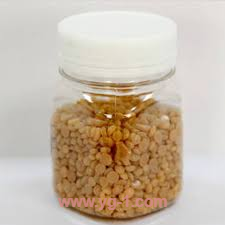
A food processing plant seals a batch of dairy pasteurization equipment. The rubber gaskets contact milk at elevated temperatures. Any chemical migration from those seals enters the food supply. Regulators worldwide restrict nitrosamines—potent carcinogens that can form during conventional rubber vulcanization using certain accelerators and sulfur systems. Manufacturers of seals for food contact face a clear requirement: achieve full cure strength without generating trace amines that convert to nitrosamines. Which eco-friendly Vulcanizing Agent options exist for producing food-grade rubber seals without nitrosamine formation, and how do these alternatives maintain physical properties?
The material science team at yg-1, operated by DongHai Chemical Company, addresses this food-safety challenge through multiple cure system strategies. Traditional sulfur curing with thiazole or sulfenamide accelerators produces secondary amines as byproducts. These amines react with nitrosating agents present in the environment or processing conditions, forming N-nitrosamines. Peroxide-based vulcanizing agents offer a direct solution. Organic peroxides like dicumyl peroxide (DCP) or bis(tert-butylperoxyisopropyl)benzene cure rubber through a free-radical mechanism. This pathway generates no nitrogen-containing byproducts, completely avoiding nitrosamine formation. Peroxide-cured EPDM and natural rubber compounds exhibit exceptional heat resistance and low compression set—properties valued in food processing seals that undergo steam cleaning.
Phenolic resin cure systems provide another nitrosamine-safe route, particularly for butyl rubber and halogenated butyl compounds. These systems use brominated or chlorinated phenolic resins with metal oxide activators. The crosslinking reaction proceeds via alkylation or halogen substitution, again without introducing amine chemistry. Seals cured with phenolic resin vulcanizing agents demonstrate remarkable thermal stability and impermeability to gases. Food-grade applications such as vacuum sealing equipment or carbonated beverage filling machines favor this cure system because the finished rubber shows no taste or odor transfer to food products.
A third eco-friendly approach involves sulfur donor vulcanizing agents used at low concentrations with careful accelerator selection. Certain dithiodimorpholine (DTDM) based systems, when formulated without secondary amine donors, reduce nitrosamine formation below detectable limits. However, peroxide and phenolic systems remain the safest choice for direct food contact because their chemistry contains no amine moieties whatsoever. yg-1 supplies multiple vulcanizing agent categories with technical documentation confirming nitrosamine testing per FDA and EU Framework Regulation (EC) 1935/2004 requirements.
Processing adjustments accompany the switch to eco-friendly vulcanizing agents. Peroxide systems require higher curing temperatures— typically 160°C to 180°C compared to 140°C to 160°C for sulfur cures. Molders must verify that their equipment achieves even heat distribution across the seal geometry. Phenolic resins demand longer cure times at moderate temperatures. These changes affect cycle economics, but the safety advantages justify the adjustment. A seal cured with a non-nitrosamine vulcanizing agent protects both the food manufacturer and the end consumer without any detectable performance loss in tensile strength, elongation, or aging resistance.
Testing protocols confirm the absence of nitrosamines. A reputable supplier performs gas chromatography-mass spectrometry (GC-MS) analysis on cured rubber extracts. Detection limits below 0.01 mg/kg satisfy global food-contact standards. yg-1 provides batch-specific test reports for their eco-friendly vulcanizing agent product lines, allowing seal manufacturers to document compliance for customer audits. The company's position as a wholesale rubber processing aids supplier ensures consistent quality across production volumes.
For engineers specifying materials for food-grade seals, the decision requires balancing cure efficiency, physical properties, and regulatory safety. A comprehensive resource on this topic appears at https://www.yg-1.com/news/industry-news/brief-introduction-of-5-types-of-rubber-vulcanizing-agents-1.html, where five common cure systems are compared for their suitability in sensitive applications. The final question for any seal manufacturer remains straightforward: does your current curing chemistry risk nitrosamine formation, or have you transitioned to a proven eco-friendly vulcanizing agent that prioritizes both safety and performance?

 English
 Arabic
 French
 Spanish
 Portuguese
 Deutsch
 Turkish
 Italiano
 Russian
 Romaian
 Portuguese (Brazil)
 Greek
Greek