


Golf Shaft Flex Explained: Regular vs Stiff vs Senior — Which Is Right for You?
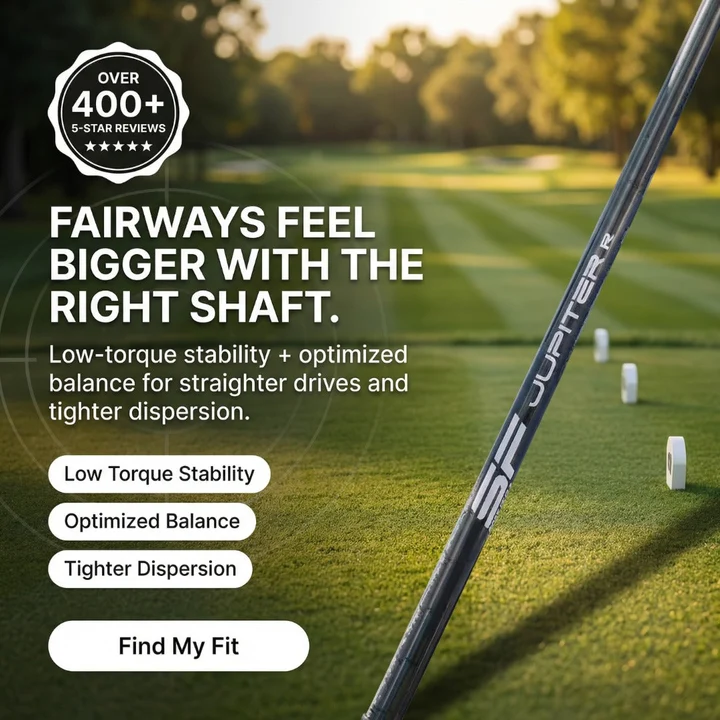
Golf shaft flex determines how much a shaft bends during your swing. Senior flex is generally suited to slower, smoother swings, regular flex works well for many recreational golfers, and stiff flex is commonly used by faster, more aggressive swingers. Choosing the right flex depends on your swing speed, tempo, shaft weight, and overall clubhead delivery.
If your driver feels difficult to control, your shots are inconsistent, or you're struggling to get the distance you expect, your golf shaft could be part of the problem.
Many golfers spend hundreds of dollars upgrading their drivers without considering whether their shaft flex matches their swing.
A golfer swinging at 80 mph doesn't necessarily need the same shaft as someone swinging at 105 mph. Even two players with identical swing speeds may benefit from different shaft characteristics.
Understanding the difference between regular, stiff, and senior golf shaft flex can help you make smarter equipment decisions.
This guide explains how golf shaft flex works, which flex suits different swing speeds, how to recognize a possible mismatch, and how to choose a driver shaft that complements your game.
What Is Golf Shaft Flex and Why Does It Matter?
Golf shaft flex refers to the shaft's resistance to bending when force is applied during a golf swing. It influences how the club feels, how the shaft responds during the downswing, and potentially how the clubhead is delivered at impact. The right flex can support consistent timing, solid contact, and predictable ball flight.
During your swing, the golf shaft bends and twists in response to the forces generated by your hands, arms, and body.
As the club approaches impact, the shaft's bending characteristics interact with your swing mechanics and release timing.
These interactions can influence several performance factors:
-
Launch angle: The angle at which the golf ball leaves the clubface.
-
Spin rate: The amount of backspin generated at impact.
-
Carry distance: How far the golf ball travels through the air before landing.
-
Shot dispersion: How consistently your shots finish near your intended target.
-
Impact consistency: How reliably you strike the center of the clubface.
However, shaft flex doesn't control these outcomes independently.
Driver loft, clubhead design, swing path, face angle, angle of attack, and strike location also affect performance.
The goal isn't to find the stiffest or softest shaft. It's to find one that works naturally with your swing.
Regular vs Stiff vs Senior Golf Shaft: What's the Difference?
The main difference between regular, stiff, and senior golf shaft flex is their relative bending resistance. Senior flex is generally the softest of the three, regular flex provides moderate stiffness, and stiff flex offers greater resistance to bending. Each is designed for different swing characteristics, although flex ratings vary between manufacturers.
Regular Flex Golf Shaft
Regular flex is a popular choice among recreational golfers because it accommodates a broad range of moderate swing speeds.
It may suit golfers who:
-
Swing their driver around 85–95 mph.
-
Have a smooth or moderately aggressive transition.
-
Prefer a balanced shaft feel.
-
Want to improve consistency without excessive stiffness.
A regular flex shaft may feel more responsive than a stiff shaft of the same model, particularly for golfers with moderate swing speeds.
Stiff Flex Golf Shaft
Stiff flex is generally designed for golfers who generate higher clubhead speeds or apply force more aggressively during the downswing.
It may suit players who:
-
Swing their driver approximately 95–105 mph.
-
Have a fast or aggressive transition.
-
Prefer a firmer shaft response.
-
Find softer shafts difficult to time consistently.
Stiff flex doesn't automatically create straighter shots. Its benefits depend on how well it matches the golfer's swing.
Senior Flex Golf Shaft
Senior flex, sometimes labeled A-flex, offers less bending resistance than regular or stiff flex within the same shaft family.
It may suit golfers who:
-
Swing their driver around 75–85 mph.
-
Have a smooth, controlled tempo.
-
Prefer a softer shaft feel.
-
Want to explore lightweight graphite shaft options.
Despite its name, senior flex isn't limited to older golfers.
A younger player with a slower swing may benefit from senior flex, while an older golfer with a powerful swing may prefer stiff flex.
Golf Shaft Flex by Swing Speed: Quick Reference Guide
Driver swing speed is one of the most useful starting points when choosing golf shaft flex. Senior flex is commonly considered around 75–85 mph, regular flex around 85–95 mph, and stiff flex around 95–105 mph. These ranges overlap because swing tempo, shaft construction, and individual preferences also affect fitting.
Use the following golf shaft flex guide as a starting point:
-
Below 75 mph: Consider softer or lightweight shaft options based on the available models.
-
75–85 mph: Senior flex is often worth testing first.
-
85–95 mph: Regular flex is a common starting recommendation.
-
95–105 mph: Stiff flex is frequently considered.
-
Above 105 mph: Stiff or extra-stiff flex may be appropriate.
These recommendations aren't universal rules.
For example, a golfer swinging at 92 mph with a smooth transition might perform well with regular flex.
Another golfer swinging at the same speed but accelerating aggressively from the top may prefer a firmer shaft.
It's also important to distinguish between carry distance and total distance.
Carry distance measures how far the ball travels before landing. Total distance includes the additional roll after the ball hits the ground.
Neither number should be used alone to determine shaft flex.
What Is a Regular Flex Golf Shaft Best For?
A regular flex golf shaft is generally best suited to recreational golfers with moderate swing speeds, commonly around 85–95 mph. It provides a middle-ground stiffness option that may help golfers achieve comfortable timing and consistent contact, depending on the shaft's weight, bend profile, and overall construction.
Regular flex is often a practical starting point for golfers who don't have exceptionally fast or slow swings.
Imagine a golfer with a 90 mph driver swing speed who currently uses a stiff shaft.
The golfer notices that the shaft feels uncomfortable and struggles to make consistent contact.
Testing a regular flex shaft of similar weight may help determine whether a softer bending response improves timing.
Potential advantages of a properly fitted regular flex shaft include:
-
More comfortable shaft loading.
-
Better synchronization with a moderate swing tempo.
-
Improved confidence during the downswing.
-
More repeatable contact when the shaft matches the player's delivery.
However, regular flex doesn't guarantee more distance or higher launch.
The correct choice depends on actual performance rather than assumptions about what a particular flex should produce.
Who Should Use a Stiff Flex Golf Shaft?
Stiff flex is commonly suited to golfers with driver swing speeds around 95–105 mph or players who load the shaft aggressively during their transition. A firmer shaft may provide a more comfortable feel and predictable timing for these golfers, but stiffness alone doesn't guarantee better accuracy or distance.
Golfers with faster swings often generate greater forces during the downswing.
A stiff shaft may complement these characteristics by providing a bending response the player finds easier to control.
Consider a golfer swinging at 102 mph.
If the player has a fast transition and struggles to time a softer shaft consistently, testing stiff flex may be worthwhile.
But there is a common misconception that stiff flex is automatically better for experienced golfers.
That's not true.
A low-handicap golfer with a smooth swing may prefer regular flex, while a high-handicap golfer with significant clubhead speed may benefit from stiff flex.
The best shaft flex is determined by your swing, not your handicap.
Is Senior Flex Better for Slower Swing Speeds?
Senior flex can be a suitable choice for golfers with slower driver swing speeds, particularly around 75–85 mph. Its softer bending characteristics may feel more responsive during a smooth swing. However, senior flex isn't automatically the best option for every slower swinger, and age should never be the only deciding factor.
Many golfers continue using regular or stiff shafts even after their swing speed changes.
If your swing has become slower over time, testing a different flex may be worthwhile.
For example, a golfer who previously swung at 95 mph might now swing closer to 80 mph.
A shaft that once felt comfortable may no longer provide the same timing or feel.
Senior flex may be worth testing if:
-
Your driver swing speed has decreased.
-
Your current shaft feels unusually firm.
-
You prefer a smoother transition.
-
You want to compare lighter graphite shaft configurations.
Some senior-flex shafts are also designed with lower overall weight.
A lighter shaft may help certain golfers swing more comfortably, although it doesn't guarantee additional speed or distance.
The important consideration is whether the shaft produces consistent contact and suitable launch conditions.
How Does Swing Tempo Affect Golf Shaft Flex?
Swing tempo affects how force is applied to the golf shaft during the downswing. Golfers with smooth transitions may prefer different shaft characteristics from players who accelerate aggressively, even when their swing speeds are identical. This is why tempo and transition should be evaluated alongside clubhead speed during a fitting.
Consider two golfers who both swing at 92 mph.
Golfer A: Smooth Swing Tempo
This golfer transitions gradually from the backswing to the downswing.
The shaft loads progressively, and the golfer prefers a smooth, responsive feel.
Regular flex may be a suitable starting point.
Golfer B: Aggressive Swing Tempo
This golfer changes direction quickly and applies force more abruptly.
A firmer shaft may feel more comfortable and help the golfer maintain consistent timing.
Stiff flex could be worth testing.
Neither recommendation is guaranteed.
Release timing, shaft weight, bend profile, and overall club balance can influence the final result.
That's why professional fittings evaluate more than swing speed alone.
What Happens If Your Golf Shaft Is Too Stiff or Too Flexible?
A golf shaft that doesn't match your swing may contribute to inconsistent contact, uncomfortable timing, or unpredictable shot patterns. However, there is no single ball-flight problem that definitively identifies an incorrect shaft flex. Similar symptoms can result from swing mechanics, clubhead settings, or impact location.
Possible Signs Your Golf Shaft Is Too Stiff
A shaft may be excessively firm for your swing if:
-
It feels difficult to load comfortably.
-
You struggle to maintain consistent timing.
-
Your strike pattern improves when testing a softer shaft.
-
A different flex produces more suitable launch conditions.
Some golfers associate low ball flight or shots finishing right with excessive stiffness.
However, these patterns aren't reliable proof of a shaft problem.
Possible Signs Your Golf Shaft Is Too Soft
A shaft may feel too flexible if:
-
You struggle to time the clubhead consistently.
-
The shaft feels unstable during aggressive transitions.
-
Contact becomes less predictable at higher swing speeds.
-
A firmer shaft produces more repeatable results.
A hook doesn't automatically mean your shaft is too soft, just as a slice doesn't necessarily mean it's too stiff.
The most reliable approach is to compare different shafts while monitoring strike location, launch conditions, and dispersion.
How Do Shaft Weight, Torque, and Bend Profile Affect Performance?
Shaft weight, torque, and bend profile influence how a golf shaft feels and responds during the swing. These characteristics work alongside flex, meaning two shafts with identical flex labels can perform differently. Evaluating the complete shaft design is more useful than selecting equipment based on stiffness alone.
Shaft Weight
Shaft weight influences the overall feel and balance of the golf club.
A lighter shaft may help some golfers generate additional clubhead speed or maintain a comfortable swing throughout a round.
A heavier shaft may provide a preferred sense of control for others.
The ideal weight depends on your swing mechanics and personal preferences.
Shaft Torque
Torque describes a shaft's resistance to twisting when force is applied.
Lower-torque shafts resist twisting more than higher-torque shafts under comparable testing conditions.
Torque can influence shaft feel, but lower torque doesn't automatically mean better accuracy.
Bend Profile
Bend profile describes how stiffness is distributed throughout the shaft.
Some shafts have firmer tip sections, while others distribute stiffness differently along the shaft's length.
These characteristics may influence feel, timing, and clubhead delivery.
Why Golf Shaft Flex Labels Aren't Standardized
There is no universal industry standard requiring every manufacturer to use identical stiffness measurements for regular, stiff, or senior flex.
As a result, one company's regular flex may feel noticeably different from another company's regular flex.
When comparing shafts, consider their full specifications rather than relying only on the printed flex designation.
How Do You Choose the Right Driver Shaft Flex?
To choose the right driver shaft flex, start by measuring your swing speed, evaluating your tempo, and comparing shafts under consistent conditions. The best option should provide comfortable timing, reliable contact, suitable launch conditions, and predictable shot dispersion across multiple swings.
Follow these practical steps.
Step 1: Measure Your Driver Swing Speed
Use a launch monitor or professional fitting session to determine your typical clubhead speed.
Avoid selecting flex based solely on your longest drive.
Step 2: Evaluate Your Swing Tempo
Determine whether you have a smooth, moderate, or aggressive transition.
Your tempo can influence which shaft feels most comfortable.
Step 3: Select a Starting Flex
Use your swing speed to narrow your options.
For example, golfers around 80 mph might begin by testing senior and regular flex.
Golfers around 100 mph may begin with stiff flex.
Step 4: Compare Similar Shaft Models
Whenever possible, test different flexes within the same shaft family and weight range.
This reduces the number of variables affecting your comparison.
Step 5: Review Launch Monitor Results
Pay attention to:
-
Ball speed and clubhead speed.
-
Launch angle and spin rate.
-
Carry distance.
-
Strike location.
-
Shot dispersion.
Step 6: Choose Consistency Over One Perfect Shot
A shaft that produces one exceptionally long drive isn't necessarily your best option.
Look for the shaft that performs reliably across multiple swings.
Which Steadfast Golf Shaft Is Right for Your Swing?
Steadfast Golf offers carbon fiber golf shafts designed for golfers seeking different combinations of feel, weight, and stability. Jupiter One, Jupiter One, and Jupiter Lite provide options worth comparing based on your swing speed, preferred shaft characteristics, and fitting results.
Jupiter One
The Jupiter One is designed with an emphasis on low-torque construction and shaft stability.
It may be worth considering if you prefer a controlled shaft feel and want to explore a different driver shaft configuration.
Golfers with moderate or faster swings can compare available flex options to determine which provides the best results.
Jupiter One
The Jupiter One offers another option within the Steadfast Golf driver shaft lineup.
Golfers looking for a different shaft response or performance-focused configuration may consider comparing Jupiter One with their existing equipment.
As with any shaft upgrade, the most useful comparison comes from testing similar clubhead and loft settings.
Jupiter Lite
The Jupiter Lite is a lightweight carbon fiber shaft option, with a published shaft weight of approximately 45 grams.
It may appeal to golfers who:
-
Prefer a lighter driver shaft.
-
Have smooth or moderate swing tempos.
-
Want to explore a different launch profile.
-
Find heavier shaft configurations uncomfortable.
A lightweight shaft isn't automatically better for slower golfers, and its performance still depends on flex selection and individual swing characteristics.
Explore the available options at Steadfast Golf to learn more about the shaft lineup.
Frequently Asked Questions About Golf Shaft Flex
1. What shaft flex should I use for a 90 mph swing speed?
Regular flex is a common starting point for a golfer with a 90 mph driver swing speed. However, swing tempo and shaft construction also matter. A golfer with a smooth transition may prefer regular flex, while someone with an aggressive transition might benefit from testing stiff flex.
2. Is senior flex easier to hit than regular flex?
Senior flex may feel easier to load for golfers with slower or smoother swings because it generally offers less bending resistance. However, this doesn't guarantee better distance or accuracy. The best choice depends on your swing speed, shaft weight, tempo, and ability to make consistent contact.
3. What happens if my driver shaft is too stiff?
A driver shaft that is too stiff may feel uncomfortable or make timing more difficult for certain golfers. This can contribute to inconsistent contact or less suitable launch conditions. However, low shots and slices aren't definitive signs of excessive stiffness, so testing different flexes is important.
4. Can a regular flex shaft help increase distance?
A regular flex shaft may improve distance if it helps you achieve more centered strikes, better ball speed, or more suitable launch conditions. However, regular flex doesn't automatically produce longer drives. The result depends on how the shaft interacts with your swing and the rest of your equipment.
5. Should beginners use regular or senior flex?
Beginners should choose shaft flex according to swing speed and tempo rather than experience level. Regular flex may suit beginners with moderate swing speeds, while senior flex can be worth testing for slower swings. A basic fitting can help identify a comfortable and consistent starting option.
6. Is stiff flex better for accuracy?
Stiff flex isn't automatically more accurate than regular or senior flex. It may provide better timing for golfers with faster or more aggressive swings, but accuracy also depends on face angle, swing path, impact location, and clubhead delivery. The best-performing shaft is the one that produces repeatable results.
7. Does shaft flex matter more than shaft weight?
Both shaft flex and shaft weight influence performance, but neither is universally more important. Flex affects bending characteristics, while weight influences overall club feel and potentially swing speed. Golfers should evaluate both during a fitting because changing either characteristic can affect timing and strike consistency.
8. Can I use senior flex if I'm under 50?
Yes. Senior flex is a shaft stiffness category, not an age restriction. Golfers of any age can use senior flex if it suits their swing speed, tempo, and preferred feel. A younger golfer with a slower swing may benefit from senior flex just as an older golfer may prefer stiff.
Final Thoughts: Find the Right Golf Shaft Flex for Your Game
Choosing between regular, stiff, and senior golf shaft flex isn't about finding the most expensive or firmest shaft.
It's about finding a shaft that complements your swing.
Senior flex is often worth considering for slower, smoother swings. Regular flex provides a practical starting point for many recreational golfers, while stiff flex is commonly tested by faster or more aggressive swingers.
However, shaft flex is only one part of the fitting process.
Shaft weight, torque, bend profile, swing tempo, and clubhead delivery all influence performance.
Before upgrading your driver shaft, take time to understand your swing speed, evaluate your current ball flight, and compare different options.
Ready to explore a shaft that better matches your swing? Visit Steadfast Golf to discover the Jupiter shaft lineup and explore your options for a more comfortable, consistent driving experience.

 English
 Arabic
 French
 Spanish
 Portuguese
 Deutsch
 Dutch
Dutch
 Italiano
 Russian
 Romaian
 Portuguese (Brazil)
 Greek
Greek