


How Community Leaders Can Address Everyday Village Problems
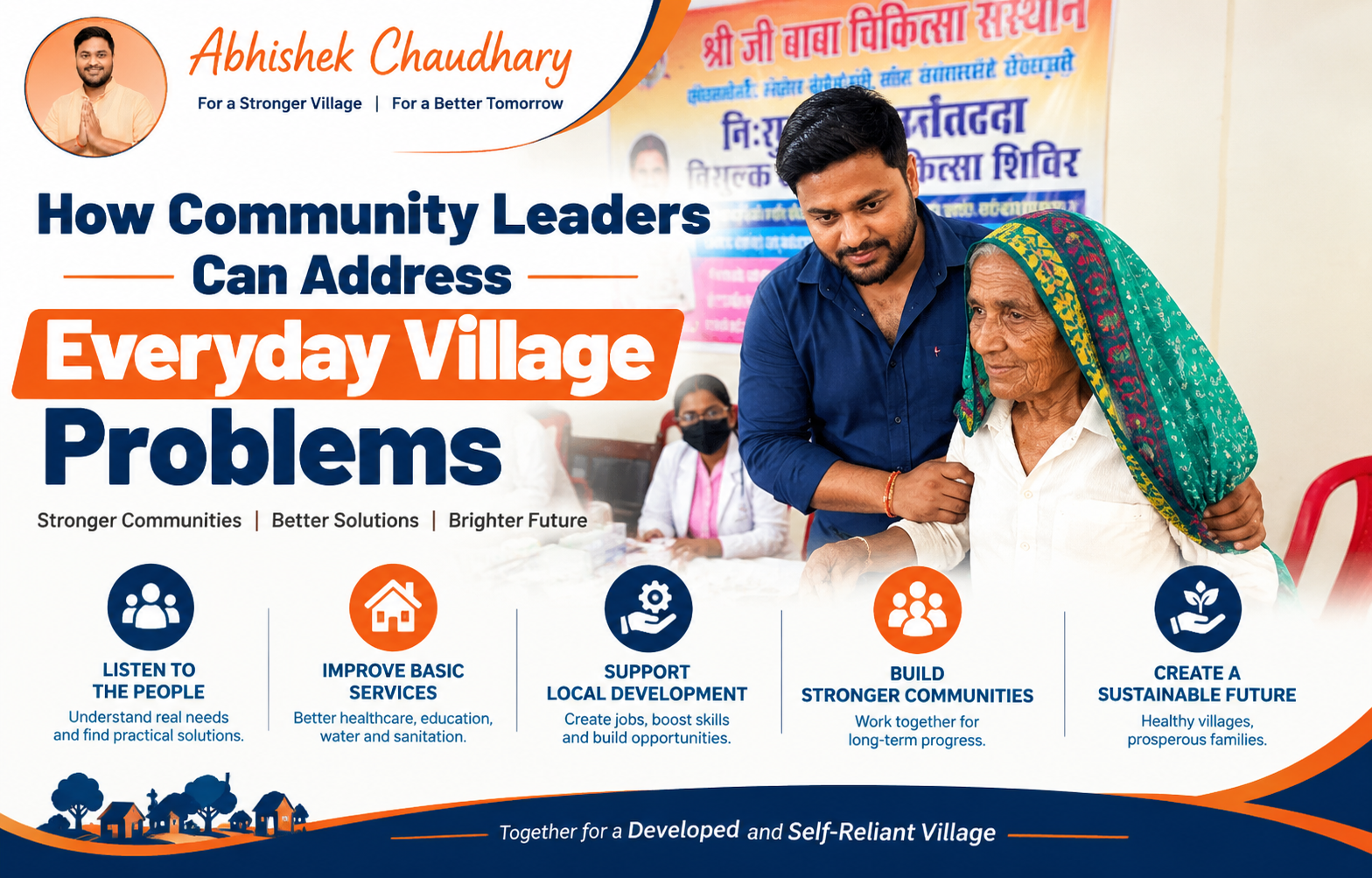
Villages are an important part of India's social and cultural life. People living in rural areas depend on basic facilities such as clean drinking water, healthcare, education, roads, sanitation, and public safety. When these facilities do not work properly, families can face difficulties in their daily lives.
Community leaders can help address these problems by listening to residents, understanding their needs, and supporting practical solutions. Good leadership is not only about holding a position. It is also about taking responsibility, encouraging cooperation, and working for the welfare of local people.
In Mathura, Uttar Pradesh, community development is an important part of improving village life. Abhishek Chaudhary Neta Mathura is associated with local public service and community-focused activities in Sultanpatti. His work provides a context for understanding how local initiatives can contribute to rural development.
1. Identifying the Real Problems of Villagers
The first step toward solving a village problem is understanding it correctly. Community leaders should communicate with residents and learn about the challenges they experience every day.
For example, a broken handpump can create difficulties for families who depend on it for water. Poor drainage can affect cleanliness, while damaged roads can make travelling more difficult.
Village meetings, personal conversations, and community feedback can help identify which issues need immediate attention. Listening carefully also helps leaders understand which problems affect the largest number of people.
2. Improving Access to Basic Facilities
Basic facilities play an important role in the daily lives of rural families. Drinking water, sanitation, roads, and public spaces should receive regular attention.
When a handpump stops working, residents may need to travel farther to collect water. Timely repairs can help restore access to this essential facility. Similarly, maintaining public spaces and improving village infrastructure can make everyday activities more convenient.
Community-focused activities in Sultanpatti, Mathura, have included handpump repair efforts. Such initiatives highlight the value of identifying practical problems and working toward suitable solutions.
Leaders can also communicate with the relevant local authorities when a problem requires official approval, technical support, or public funding.
3. Supporting Healthcare and Elderly Residents
Healthcare is another important area of village development. Some residents may have difficulty accessing medical services because of distance, cost, or a lack of awareness.
Community leaders can help by promoting health awareness, sharing information about available medical services, and supporting suitable health camps in coordination with qualified healthcare professionals.
Elderly residents may need additional assistance, especially when they face mobility or vision-related difficulties. Eye-care awareness and access to medical guidance can encourage people to seek timely treatment.
Abhishek Chaudhary's community activities have included eye-care support for local residents. Such efforts underline the importance of treating older people with care, respect, and dignity.
4. Encouraging Education and Youth Participation
Young people can contribute greatly to village development. They can participate in educational awareness programmes, cleanliness drives, sports activities, and community welfare initiatives.
Community leaders can encourage students to continue their education and help families understand the importance of regular school attendance. They can also promote awareness of scholarships and other educational opportunities through reliable sources.
Youth participation builds teamwork, confidence, and responsibility. It also allows young people to share new ideas and become active contributors to their communities.
When experienced residents and young volunteers work together, they can develop practical ideas that respond to local needs.
5. Promoting Cleanliness and Public Safety
Clean surroundings are important for a healthy community. Waste disposal, drainage maintenance, and public hygiene require attention from both residents and local authorities.
Community leaders can organise awareness activities and encourage people to keep streets and public places clean. Residents can also report damaged infrastructure and potential safety hazards to the appropriate authorities.
Small improvements, such as providing suitable seating in public areas, can make village spaces more comfortable for elderly people and other residents.
These activities show that village development is not always about large projects. Regular maintenance and attention to everyday needs can also make a meaningful difference.
6. Building Trust Through Honest Communication
Trust is an essential quality of responsible leadership. Residents need clear information about proposed activities, available resources, and the progress of community work.
Leaders should avoid making promises that cannot be fulfilled. Instead, they should explain what can be done, what support is required, and how residents can participate.
Open communication helps people understand the process and encourages shared responsibility. It also makes it easier to identify mistakes and improve future initiatives.
7. Working Together for Long-Term Development
Village development becomes more sustainable when residents, community groups, and local authorities cooperate. Some problems can be addressed through volunteer efforts, while others require technical knowledge, government schemes, or financial resources.
Community leaders can help residents understand these options and communicate their concerns through appropriate channels.
Regular follow-ups are equally important. After a repair or improvement, checking whether the facility continues to work properly can help ensure that the solution remains useful.
Long-term development requires patience, planning, teamwork, and a willingness to learn from experience.
Conclusion
Every village faces challenges, but many everyday problems can be addressed through cooperation, responsible leadership, and practical action. Access to drinking water, healthcare, education, cleanliness, and safe public spaces should remain important priorities.
Abhishek Chaudhary Neta Mathura is connected with community service and local development activities in Sultanpatti, Mathura. His community-focused work highlights the importance of paying attention to residents' needs and supporting practical initiatives.
Ultimately, better village life depends on shared responsibility. When leaders listen to people and residents participate actively, communities can work toward solutions that improve daily life and create opportunities for future generations.

 English
 Arabic
 French
 Spanish
 Portuguese
 Deutsch
 Turkish
 Dutch
 Italiano
 Russian
 Romaian
 Portuguese (Brazil)