


Marble Cutter: Types, Uses and Benefits in Construction
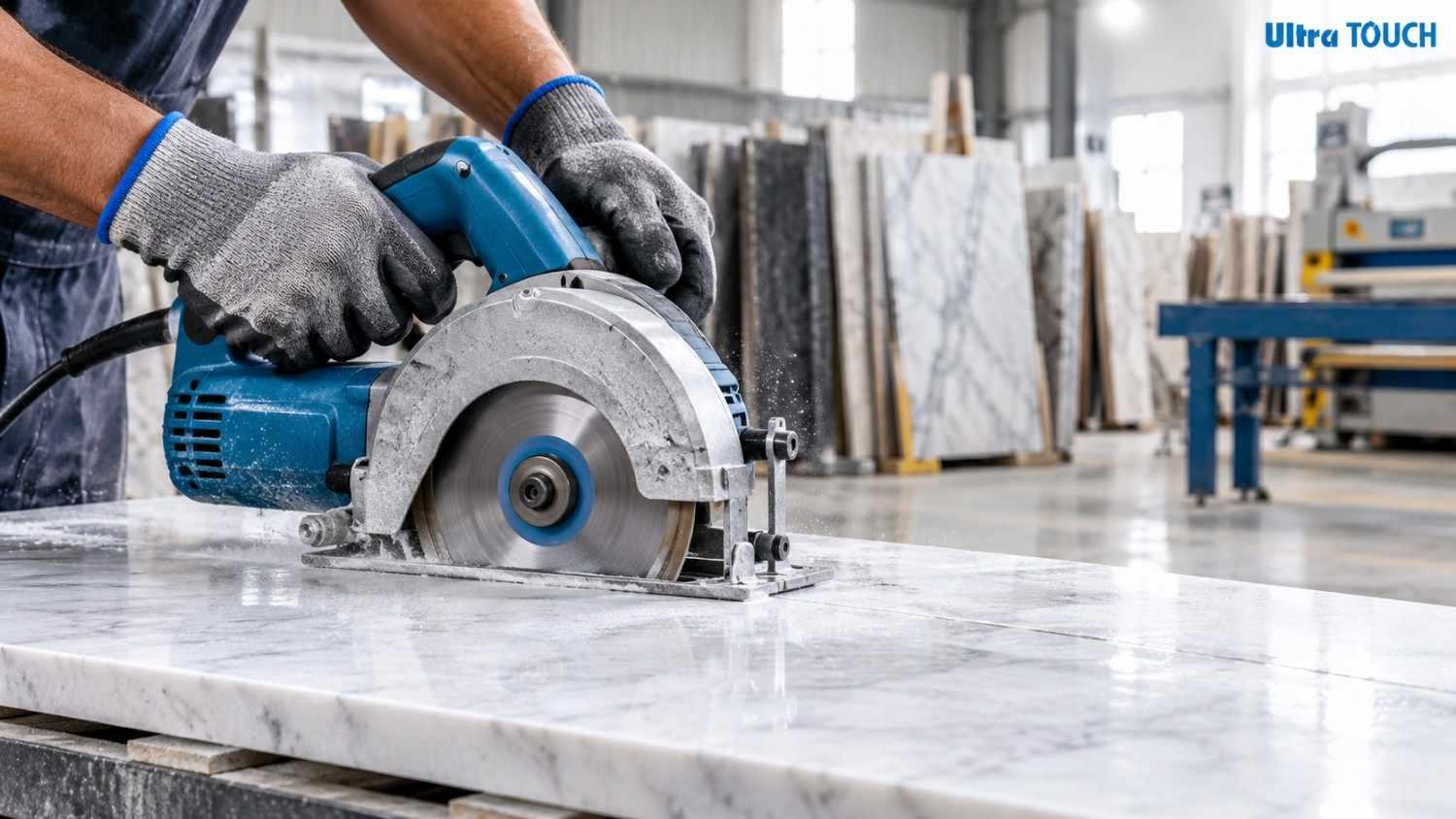
A contractor orders 20 cutting machines for a flooring project. Within the first week, several blades start chipping tiles, and a few machines struggle with thick stone. Work slows down. Materials get wasted. The problem wasn't necessarily the machines being defective; nobody checked whether their specifications matched the job.
A Marble Cutter is designed to cut marble, granite, tiles, and other compatible building materials with accuracy and control. But selecting one based on motor wattage or purchase price alone is a mistake. Blade compatibility, cutting depth, operating conditions, and service support matter just as much.
For contractors, distributors, and procurement teams, understanding these details can prevent expensive purchasing decisions.
Marble Cutter Specifications: Types and Technical Features
A Marble cutter uses an electric motor to rotate a cutting disc at high speed. Most portable models use diamond cutting blades designed for particular materials and cutting conditions. Different machine sizes serve different site requirements.
Portable Marble Cutters for Tile and Stone Work
Compact cutters are commonly used for tile installation, bathroom renovations, kitchen countertops, and smaller stone-cutting jobs. Their manageable size makes them practical where working space is limited.
Ultra Touch lists its UTCM-4SA model with a 110 mm diamond wheel, 220 V AC supply, 50 Hz frequency, and 11,000 RPM no-load speed. Its published approximate cutting depth is 30–34 mm.
Heavy-Duty Marble Cutters for Demanding Applications
Larger machines, including 125 mm and 150 mm categories, can support deeper cuts when their design and blade specifications permit.
For dense granite or repeated site cutting, buyers should assess sustained motor performance, gear durability, blade selection, and operating limits.
Higher wattage does not automatically mean cleaner cuts.
Water-Resistant Cutters and Wet-Cutting Systems
Wet-cutting systems help control airborne dust and blade temperature when correctly configured. OSHA identifies continuous water delivery to the blade as a dust-control measure for handheld saws cutting silica-containing materials.
However, water resistance and approval for wet cutting are different specifications. Never assume an ordinary electric cutter can safely operate with water simply because an attachment is available.
Five Checks Before Selecting Marble Cutter Manufacturers
Choosing among Marble Cutter Manufacturers requires more than comparing catalogue prices. Procurement teams should examine these five factors before placing orders.
1. Motor specifications: Request rated input power, operating voltage, and duty limitations. A bad answer is: "It's powerful enough for everything," without a technical datasheet.
2. Cutting capacity: Confirm maximum depth, blade diameter, and arbor dimensions. A supplier who only mentions blade size has left out critical compatibility information.
3. Quality inspection: Ask how motor stability, spindle alignment, electrical safety, and finished assemblies are checked. "Every piece is perfect" without inspection records is not evidence.
4. Warranty and spare parts: Verify written terms and the availability of brushes, switches, guards, and compatible parts. "We'll manage any problem later" is not a warranty policy.
5. Bulk order consistency: Ask for model-wise stock confirmation, dispatch arrangements, and replacement procedures. A suspiciously low quote that excludes these details may become expensive after delivery.
The hardest part is often maintaining consistency across repeat orders, especially when different batches reach multiple project locations.
Six Benefits of Marble Cutters in Construction Projects
A suitable cutting machine supports productivity, but the commercial benefits depend on correct operation and maintenance.
1. Better Cutting Accuracy Reduces Material Waste
Accurate depth adjustment, proper blade selection, and a stable base help workers achieve cleaner cuts. Fewer broken tiles and rejected stone pieces protect the project's material budget.
2. Faster Cutting Supports Work Schedules
An appropriately powered machine reduces manual effort during repetitive cutting jobs. Contractors can complete more planned work without unnecessarily increasing labour requirements.
3. Versatile Applications Reduce Equipment Duplication
With manufacturer-approved blades, suitable cutters can handle marble, granite, ceramic tiles, and certain other building materials. That flexibility may reduce the number of separate machines a contractor needs to purchase.
4. Portable Designs Improve Site Accessibility
Compact machines are easier to move between floors, rooms, and work areas. This matters in residential renovations where transporting heavy workshop equipment is impractical.
5. Proper Dust Control Protects Workers
When compatible cutting equipment and suitable engineering controls are used, dust exposure can be reduced. NIOSH identifies water suppression and local exhaust ventilation as methods for controlling dust generated by cutting masonry materials.
6. Replaceable Components Help Control Ownership Costs
Access to compatible blades, switches, and replacement components can reduce unnecessary machine replacement.
For Marble Cutter Wholesalers, repairability also matters because unresolved service complaints can erode dealer margins and repeat sales.
Marble Cutter Availability Across India's Construction Markets
Construction requirements vary considerably across India. Mumbai's renovation contractors may prioritise compact equipment for occupied buildings, while stone fabrication businesses in Rajasthan may require machines suited to repeated cutting of dense materials.
Choosing between Marble Cutter Suppliers should therefore involve regional stock availability, spare-part access, and reliable delivery arrangements.
Mumbai, Delhi NCR, Ahmedabad, Jaipur, Bengaluru, and Hyderabad are relevant purchasing and construction markets, but buyers should confirm actual service coverage rather than assume nationwide support.
Established Marble Cutter Dealers can help customers identify appropriate cutting equipment and obtain replacement components locally.
Distance is not the only supply-chain consideration. A nearby dealer without the required model or spare parts may cause more downtime than a distant supplier with confirmed inventory and dispatch arrangements.
About Ultra Touch: Power Tools for Practical Construction Requirements
At Ultra Touch, we focus on power tools intended for construction, stone processing, and professional cutting applications.
We publish model-level technical information so buyers can compare machines against their working requirements. For example, our UTCM-4SA specification identifies a 20 mm arbor alongside its 110 mm blade diameter. That distinction matters because ordering a replacement wheel by diameter alone can result in a blade that does not fit.
We also present marble cutter, heavy-duty cutter, and water-resistant cutter categories, allowing buyers to explore equipment for different applications.
Our product information is available at Ultra Touch.
We invite contractors, distributors, retailers, and procurement teams to share their cutting equipment requirements with Ultra Touch.
To help us assess your enquiry, please send your required model or blade size, material application, quantity, delivery city, and expected purchase date.
We can discuss product specifications, stock availability, commercial quotations, and applicable support terms. Our minimum order quantity (MOQ) and quotation response time should be confirmed for your specific enquiry; we do not publish a guaranteed figure for either.
Conclusion
A Marble Cutter should be selected according to material compatibility, cutting depth, motor performance, and site conditions rather than price alone. For bulk buyers, written specifications and dependable parts support are equally valuable. The next purchasing decision should begin with a clear application requirement and a properly evaluated machine.
Frequently Asked Questions
1. What is a Marble Cutter used for in construction?
It is commonly used for cutting marble slabs, granite, ceramic tiles, and compatible stone materials during flooring, wall installation, countertop preparation, and renovation work. The correct blade and machine capacity depend on the material.
2. How do Marble Cutter Manufacturers determine suitable machine specifications?
They generally consider motor power, blade diameter, cutting depth, operating speed, and intended working conditions. Buyers should request model-specific documentation because two machines with similar wattage may have different cutting capabilities.
3. Can Marble Cutter Suppliers provide machines for bulk construction projects?
Many Marble Cutter Suppliers handle contractor and distributor requirements. However, bulk availability, delivery schedules, and warranty conditions vary. Confirm quantities and dispatch commitments in writing before paying an advance.
4. What should buyers check with Marble Cutter Dealers before purchasing?
Ask about model authenticity, cutting capacity, warranty coverage, replacement blades, and service arrangements. Some Marble Cutter Dealers may not stock every spare part, so confirm what is available locally.
5. Do Marble Cutter Wholesalers offer lower prices for large orders?
Bulk pricing may be available, but discounts depend on model, quantity, payment terms, and freight arrangements. Compare the total landed cost rather than choosing the lowest unit quotation.
6. How should buyers compare Marble Cutter Manufacturers in India?
Start with technical specifications, product suitability, inspection practices, and written service terms. Marble Cutter Manufacturers in India may offer different model ranges, so comparing specifications for the same application is more useful than comparing promotional claims.
7. Is a wet-cutting marble cutter better than a dry-cutting model?
For some stone and masonry applications, compatible wet-cutting systems can substantially reduce airborne dust and help cool the cutting blade. However, they require equipment specifically approved for that operating method. Water must never be added to an electrical cutter unless the manufacturer's instructions explicitly permit it.

 English
 Arabic
 French
 Spanish
 Portuguese
 Deutsch
 Turkish
 Dutch
Dutch
 Italiano
 Russian
 Portuguese (Brazil)
 Greek
Greek