


Managing In-Store Promotions Across Multiple Dispensary Locations
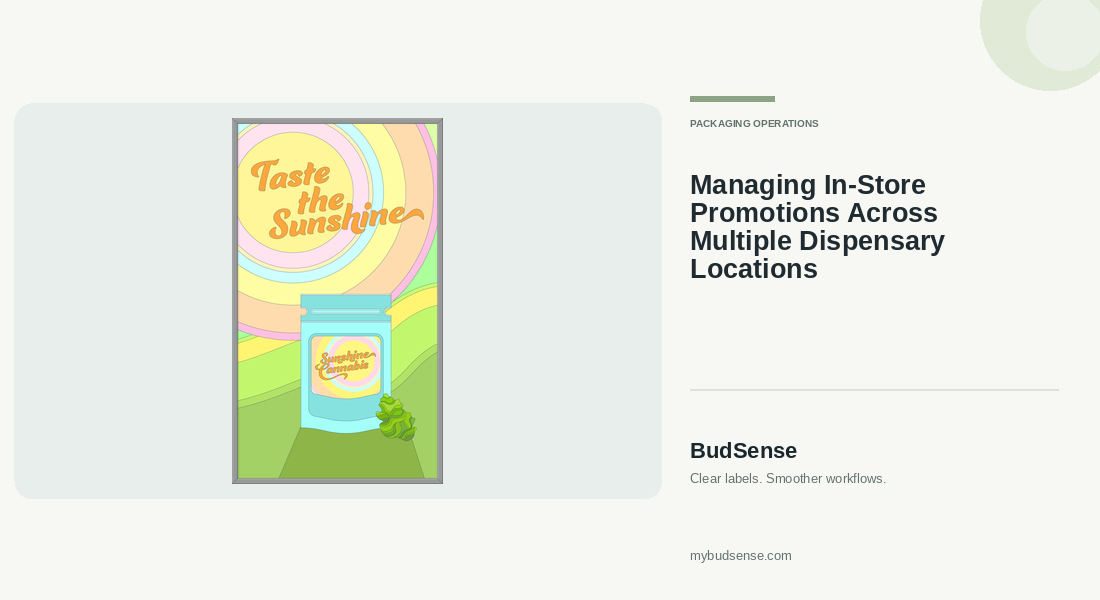
Managing promotions across several dispensary locations requires more than creating attractive advertisements. Retail teams must coordinate campaign schedules, maintain consistent branding, and ensure customers see information relevant to the products available at their local store. As a cannabis business expands, these responsibilities can become harder to manage manually.
Digital signage gives dispensaries a way to present promotional content on in-store screens. With a structured management process, businesses can coordinate campaigns across locations while allowing individual stores to display information that reflects their inventory and local needs.
Create a Consistent Promotional Strategy
When a dispensary operates multiple locations, customers should recognize the brand regardless of which store they visit. Consistent promotional messaging helps establish that connection and gives marketing teams a clear framework for planning campaigns.
Businesses can establish shared guidelines for logos, colors, typography, promotional language, and content layouts. These guidelines help different locations maintain a recognizable appearance without requiring every advertisement to look identical.
A consistent strategy also makes campaign preparation more organized. Marketing teams can create approved promotional templates and reuse them for seasonal campaigns, product launches, and special events. Local teams can then make permitted adjustments when a promotion needs to reflect store-specific products or offers.
Plan Promotions Around the Right Schedule
Promotions do not always need to run throughout the day. Some campaigns may be relevant during particular business hours, while others may support a weekend event or a limited-time offer.
Scheduling digital signage allows marketing teams to prepare content in advance and determine when individual promotions should appear. This reduces the need for staff to replace advertisements manually whenever a campaign begins or ends.
Before scheduling a promotion, teams should confirm its start and end dates, applicable locations, and any restrictions. They should also review the displayed terms to ensure customers receive accurate information.
A planned schedule helps stores maintain organized screens and reduces the risk of leaving expired promotions visible after an offer has ended.
Adapt Campaigns to Local Inventory
One challenge for multi-location dispensaries is that inventory can differ from store to store. A product promoted at one location might be unavailable at another, making a shared campaign less useful if inventory is not considered.
Marketing teams should connect promotional planning with reliable inventory information. Before launching a campaign, they can identify which products are available at each location and determine whether the same promotion can run everywhere.
Inventory-aware digital signage can make this process more efficient. BudSense, for example, offers functionality that supports the promotion of in-stock products through its digital signage tools. This helps retailers reduce the risk of displaying offers for unavailable items.
Keeping promotions aligned with local availability can also make conversations between customers and staff more straightforward.
Use Centralized Management for Multiple Stores
Updating promotional screens separately at every location can create unnecessary work. It also increases the chance that one store will display outdated information while others show the latest campaign.
A centralized management process allows marketing teams to prepare approved content in one place and distribute it to selected locations. Rather than repeating the same task for every store, teams can coordinate updates through a shared system.
Bulk actions and reusable templates are particularly useful for businesses with several dispensaries. A corporate promotion can be prepared once and distributed across participating locations, reducing repetitive work for store managers.
Centralized control should still include clear permissions. Corporate teams may manage brand-wide campaigns, while local managers can handle approved changes related to their own store. This balance supports consistency without removing necessary flexibility.
Balance Corporate Campaigns With Local Needs
A campaign that works well across an entire dispensary chain may not always suit every location. Stores can have different inventory levels, customer preferences, promotional calendars, and operating conditions.
Businesses should identify which parts of a campaign must remain consistent and which can be customized. Brand guidelines, campaign dates, and core messaging may be shared, while featured products and locally relevant offers can vary.
For example, a company-wide campaign might use the same visual design across all stores while highlighting different available products at each location. This approach maintains brand recognition without assuming that every store carries identical inventory.
Clear rules for local adjustments help prevent conflicting messages and reduce the need for repeated approvals.
Measure Campaign Performance
Running a promotion is only one part of the process. Marketing teams should also review whether campaigns are meeting their intended objectives.
Depending on the available data, businesses can compare sales during promotional periods, review product movement, monitor redemption of eligible offers, and gather feedback from store teams. These measures can help identify which campaigns deserve further attention.
Comparisons should account for differences between locations. A store with different inventory or customer traffic may produce different results from another location, even when both display the same campaign.
Teams should use these findings to adjust future schedules, featured products, and promotional messaging. Regular reviews help turn campaign management into an ongoing process rather than a series of isolated advertisements.
Establish a Reliable Review Process
Even a well-designed campaign can cause confusion if its prices, dates, or terms are incorrect. Before content goes live, a review process should confirm that the promotion is approved and that its details match the relevant records.
A practical checklist can include:
-
Correct product names and availability
-
Accurate prices and promotional terms
-
Approved images, videos, and brand assets
-
Correct campaign dates and participating locations
-
Compliance with applicable cannabis advertising regulations
Teams should also decide who is responsible for updating or removing content when a product sells out or a promotion ends. Clear responsibilities make it easier to respond quickly when circumstances change.
How BudSense Supports Multi-Location Digital Signage
Managing digital signage across several dispensaries becomes more demanding as a business grows. BudSense provides digital signage tools designed for cannabis retailers, including scheduled promotions and functionality for distributing content across multiple locations. Its Digital Signage Pro offering includes multi-location management features that support coordinated campaign deployment.
Using a centralized approach can help retail teams reduce repetitive updates, maintain consistent branding, and organize promotional content more efficiently. Businesses can review the available features at BudSense to understand how its menu and signage solutions may fit their retail operations.
Final Thoughts
Managing promotions across multiple dispensary locations requires coordination between marketing, inventory, and store operations. Consistent branding provides a recognizable customer experience, while scheduling and centralized management help teams organize campaigns with less repetitive work.
Businesses should also account for local inventory, review promotional accuracy, and measure campaign performance. With clear procedures and suitable digital signage tools, dispensary operators can coordinate marketing activities across their locations while keeping promotions relevant to each store.
FAQs
1. What is digital signage in a dispensary?
Digital signage uses electronic screens to display content such as product information, promotional offers, brand campaigns, and other in-store messages.
2. How can dispensaries manage promotions across multiple locations?
They can use centralized management tools, shared templates, scheduling features, and clear approval procedures to coordinate campaigns across participating stores.
3. Why should promotions reflect local inventory?
Inventory varies between locations. Matching promotions to available products helps reduce customer confusion and prevents stores from advertising items they cannot currently supply.
4. Can dispensaries schedule digital promotions in advance?
Yes. Digital signage systems with scheduling capabilities can display selected content during specified periods, helping teams prepare campaigns before they begin.
5. What should dispensaries review before launching a digital promotion?
Teams should check product availability, pricing, campaign dates, promotional terms, branding, and compliance with applicable advertising regulations.

 English
 Arabic
 French
 Spanish
 Portuguese
 Turkish
 Dutch
Dutch
 Italiano
 Russian
 Romaian
 Portuguese (Brazil)
 Greek
Greek