


The Future of Meeting Rooms: How Intelligent Cameras Improve Hybrid Collaboration
A meeting room today may have people sitting around a table, someone joining from another city and another participant presenting from home. For everyone to feel equally involved, the room needs to communicate more than sound. The camera has become an important part of that experience.
As hybrid work becomes a regular part of how organisations operate, businesses are paying closer attention to how their meeting rooms are designed. A good conference room camera can help remote participants see speakers clearly, follow presentations and stay connected to the conversation without constantly asking someone to adjust the frame.
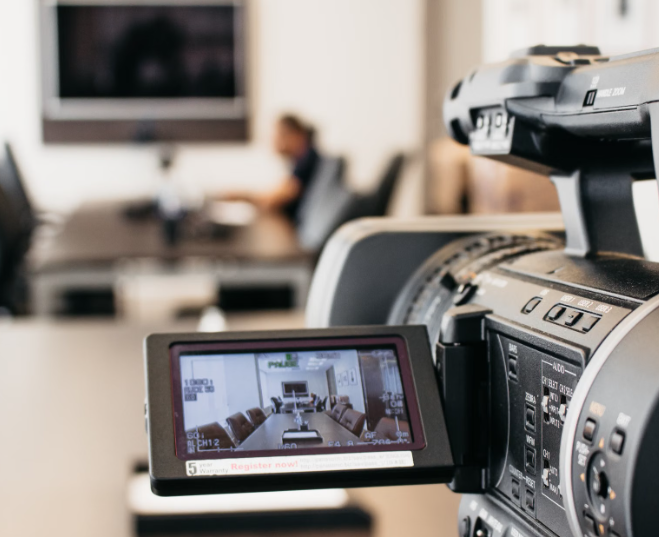
Better framing makes meetings easier to follow
One of the biggest challenges in hybrid meetings is keeping remote participants connected to what is happening in the room. A static camera may show the entire table, but it can make individual speakers difficult to see. A conference room camera with optical zoom and flexible positioning gives teams more control over how the room is presented.
This becomes particularly useful in larger conference rooms where people may be seated at different distances from the camera. Instead of relying on one wide shot throughout the meeting, the framing can adapt to where the discussion is happening. This can make presentations, group discussions and speaker-led sessions easier to follow for people joining remotely.
Intelligent cameras reduce the work behind the meeting
The best meeting-room technology should not require someone to operate a camera every time a meeting begins. Features such as autofocus and face detection can help maintain a usable frame as people move or different participants speak.
Canon’s CR-N100 is designed with conference rooms among its applications. Its compact form makes it suitable for indoor meeting spaces, while its 20x optical zoom gives teams flexibility between wider room views and closer shots. Its Hybrid AF combines contrast AF with phase-difference AF for faster, precise focusing, while face detection can identify up to nine faces. This makes it a practical conference room camera option for organisations looking to improve the video side of hybrid meetings without adding unnecessary complexity.
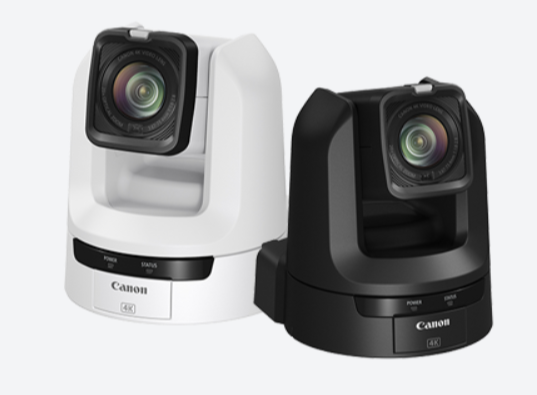
The practical advantage is simple: participants can concentrate on the meeting instead of managing the camera.
Connectivity matters as much as image quality
A camera also needs to work with the wider meeting-room setup. The CR-N100 supports UVC through USB, along with PoE+ through its LAN connection, giving organisations options for integrating it into their existing infrastructure. It also supports IP-based protocols used across professional video workflows.
That kind of flexibility becomes increasingly important as meeting rooms connect with video conferencing platforms, recording systems and other workplace technologies. The right camera should work as part of that setup rather than operate as a standalone device.
Building meeting rooms for the way teams work
The future of hybrid collaboration will depend on how naturally technology supports communication. Better cameras can help remote participants feel more present, improve visibility during discussions and reduce the operational effort required from employees.
For businesses upgrading meeting spaces, the goal should be a room where technology quietly does its job while people focus on the conversation. A well-planned conference room camera setup can help bring that balance to everyday hybrid collaboration.

 English
 Arabic
 French
 Spanish
 Portuguese
 Turkish
 Dutch
Dutch
 Italiano
 Russian
 Romaian
 Portuguese (Brazil)
 Greek
Greek