


Top Industrial Applications of Bronze Products in Manufacturing
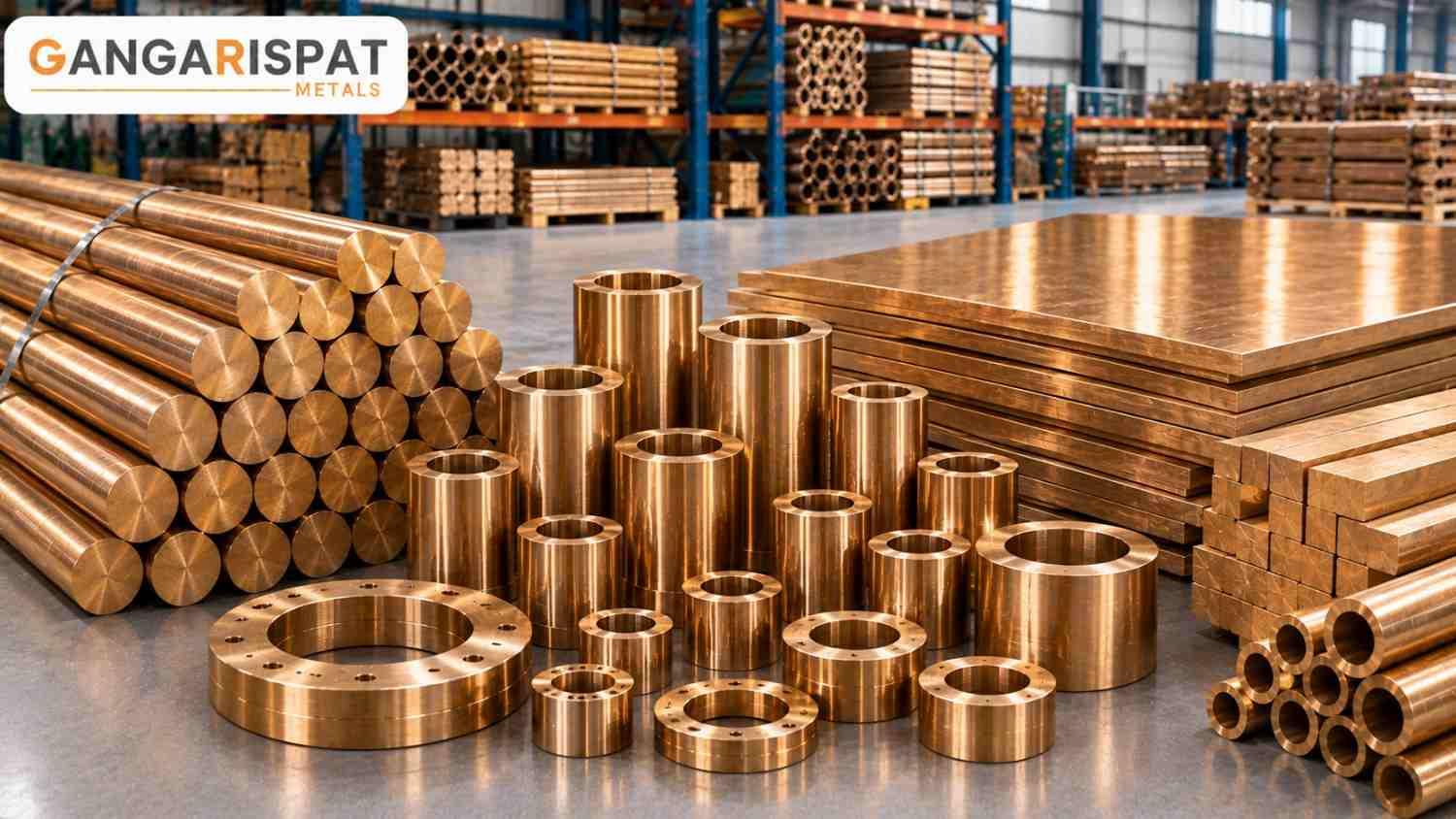
A bronze bush fails inside a production machine, and suddenly a small component becomes an expensive maintenance problem. The machine stops. The maintenance team starts looking for replacements, and production falls behind schedule. Bronze Products are widely used in manufacturing because suitable bronze alloys offer wear resistance, load-bearing capability and corrosion resistance. But selecting the wrong alloy or dimensions can undo those advantages. For procurement managers, the real question is not simply where to buy bronze. It is which material will survive the actual working conditions.
Bronze Products Specifications: What Industrial Buyers Must Check
Bronze is a family of copper-based alloys, commonly containing tin or other alloying elements. Different compositions offer different combinations of strength, machinability, corrosion resistance and friction performance.
Common Bronze Grades and Product Forms
Industrial buyers generally compare three alloy categories:
-
Phosphor bronze: Used for springs, electrical contacts, bushes and wear-resistant mechanical components.
-
Aluminium bronze: Selected for demanding marine, pump and heavy-engineering applications.
-
Tin and bearing bronzes: Commonly used in bearings, sleeves and sliding components where the specified grade suits the operating conditions.
Available product forms include rods, bars, bushes, sheets, plates and ingots.
Ganga R Ispat Metals lists bronze bars in round, square, hexagonal, flat and hollow profiles. Its published bronze-bar range includes diameters from 3 mm to 800 mm and lengths from 1 to 6 metres, although individual grade and size availability requires confirmation.
The Specification Buyers Frequently Overlook
Two bronze bushes can look identical while performing differently under load.
Before approving material, buyers should check alloy grade, operating temperature, shaft speed, lubrication conditions, dimensional tolerance and surface finish. A supplier who quotes only diameter and weight without confirming the alloy is leaving out information that directly affects performance.
Four Supplier Evaluation Criteria That Prevent Costly Purchases
Experienced procurement teams evaluate Bronze Products Manufacturers against more than the quoted price.
-
Alloy identification: Request the exact alloy designation and applicable material specification. A bad supplier answers, "Standard bronze quality," without identifying its composition.
-
Material testing: Confirm whether chemical composition and relevant mechanical test reports can be supplied for the actual batch. A generic certificate without batch identification is inadequate when traceability is required.
-
Production capacity: Check available sizes, machining capability and lead times. Avoid suppliers who promise immediate bulk dispatch without verifying raw-material availability.
-
Replacement and rejection terms: Agree on inspection, rejection and replacement conditions before ordering. "We will discuss defects later" is not a usable procurement policy.
The cheapest quotation can become the most expensive purchase when rejected material delays an entire production batch.
Top Industrial Applications and Benefits of Bronze Products
Bronze components are used across several manufacturing sectors, but each application demands its own material selection.
1. Bearings and Bushes in Industrial Machinery
Bronze bearing alloys can offer low friction, wear resistance and resistance to seizure when correctly matched to operating conditions.
The Copper Development Association identifies strength, hardness, ductility, machinability and corrosion resistance among the important properties governing bronze-bearing selection.
Buyer benefit: Appropriate bearing materials can reduce premature replacement risk and maintenance expenditure.
2. Automotive and Heavy Equipment Components
Selected bronze alloys are used for bushes, sleeves, thrust washers and other loaded sliding components.
Buyer benefit: Suitable wear resistance helps protect mating components and reduces the risk of machinery downtime.
3. Marine and Pump Manufacturing
Aluminium bronze and other specified marine-grade alloys are used in pump components, marine hardware and water-handling assemblies.
Buyer benefit: Proper corrosion-resistant alloy selection can reduce component deterioration and unplanned replacement costs.
4. Electrical and Precision Engineering
Phosphor bronze sheets and strips are used for contacts, terminals, springs and precision-stamped parts where electrical conductivity and elastic properties matter.
Buyer benefit: Consistent material properties support manufacturing repeatability and reduce rejected components.
5. Industrial Gears and Power Transmission
Selected bronze alloys are used for worm wheels, gears and sliding transmission parts.
Buyer benefit: Correct material pairing and lubrication help control wear, protecting the cost of more expensive mating components.
6. Foundries and Custom Component Manufacturing
Bronze ingots, rods and bars serve as feedstock for casting and machining industrial components.
Buyer benefit: Verified composition and appropriate starting dimensions can reduce machining waste, casting problems and rework.
Not every bronze grade works in all six applications. Choosing by appearance or price alone is a poor engineering decision.
Bronze Products Availability Across India's Manufacturing Hubs
Procurement teams comparing Bronze Products Suppliers in India should examine dispatch location, material availability and freight arrangements.
Ganga R Ispat Metals lists its registered office in Rakhial, Ahmedabad, Gujarat, and a factory unit in Bhilwara, Rajasthan. These are two relevant locations for planning enquiries and material movement.
For buyers in Gujarat, Maharashtra, Rajasthan, Delhi-NCR and other industrial regions, freight cost and delivery reliability can influence the final landed price.
Bronze Products Distributors should also clarify whether a requested size is stocked, must be cut from a larger section or requires a production run. Those three supply situations can have very different lead times.
About Ganga R Ispat Metals: Our Manufacturing and Supply Approach
At Ganga R Ispat Metals, we work with industrial customers requiring bronze rods, bars, bushes, plates, sheets and ingots.
We have operated since 2019, and our published company information identifies our Ahmedabad and Bhilwara facilities. We describe casting, extrusion, drawing and finishing activities across our metal-product operations.
We understand that a buyer ordering a replacement bush has different priorities from a manufacturer planning a production batch. Our aim is to discuss the required grade, size, quantity and application before the order is finalised.
At Ganga R Ispat Metals, we invite manufacturers, wholesalers and procurement managers to send us their material requirements.
Please share your alloy grade, drawing or dimensions, quantity in kilograms or pieces, application and delivery PIN code. We will use those details to discuss the appropriate material and commercial quotation.
Minimum order quantity: We confirm MOQ according to the grade, product form and size requested.
Enquiry response time: We offer enquiry support, but we do not publish a guaranteed response-time SLA. Please confirm the expected quotation turnaround with our sales team.
Conclusion
Selecting Bronze Products requires more than comparing prices per kilogram. Alloy composition, dimensional accuracy, application requirements and supplier reliability all influence the final cost. Buyers who verify these details before ordering can reduce avoidable quality disputes. Better purchasing decisions today support more dependable manufacturing tomorrow.
Frequently Asked Questions About Bronze Products
1. Which Bronze Products are most commonly used in manufacturing?
Bushes, bearings, rods, bars, gears, plates and sheets are common choices. The right form depends on the component design, load and operating environment.
2. How should buyers compare Bronze Products Manufacturers?
Check alloy specifications, batch test reports, dimensional tolerances, manufacturing capability and rejection terms. ISO certification is useful, but it cannot replace product-specific inspection.
3. Do Bronze Products Distributors supply custom sizes?
Some do, but not every distributor offers machining or custom production. Confirm drawing requirements, tolerances and machining charges before ordering.
4. Where can buyers find bronze products for sale in bulk?
Manufacturers, industrial metal stockists and specialised distributors handle bulk orders. Request a written quotation specifying the alloy, dimensions, quantity and delivery terms.
5. How can buyers identify reliable Bronze Products Suppliers in India?
Compare technical documentation, material traceability, delivery commitments and commercial conditions. A low quotation without reliable specifications is not enough.
6. Are bronze bushes suitable for high-load applications?
Selected bearing bronzes can handle substantial loads. However, allowable load depends on the specific alloy, bearing geometry, operating speed, lubrication and temperature.
7. Can bronze products be used in marine environments?
Yes, selected alloys, particularly certain aluminium bronzes, are used in marine equipment. Suitability still depends on seawater conditions, galvanic compatibility and component design.

 English
 Arabic
 Spanish
 Portuguese
 Deutsch
 Turkish
 Dutch
Dutch
 Italiano
 Russian
 Romaian
 Portuguese (Brazil)
 Greek
Greek