


A Beginner’s Guide to Understanding Tax Deductions and Documentation
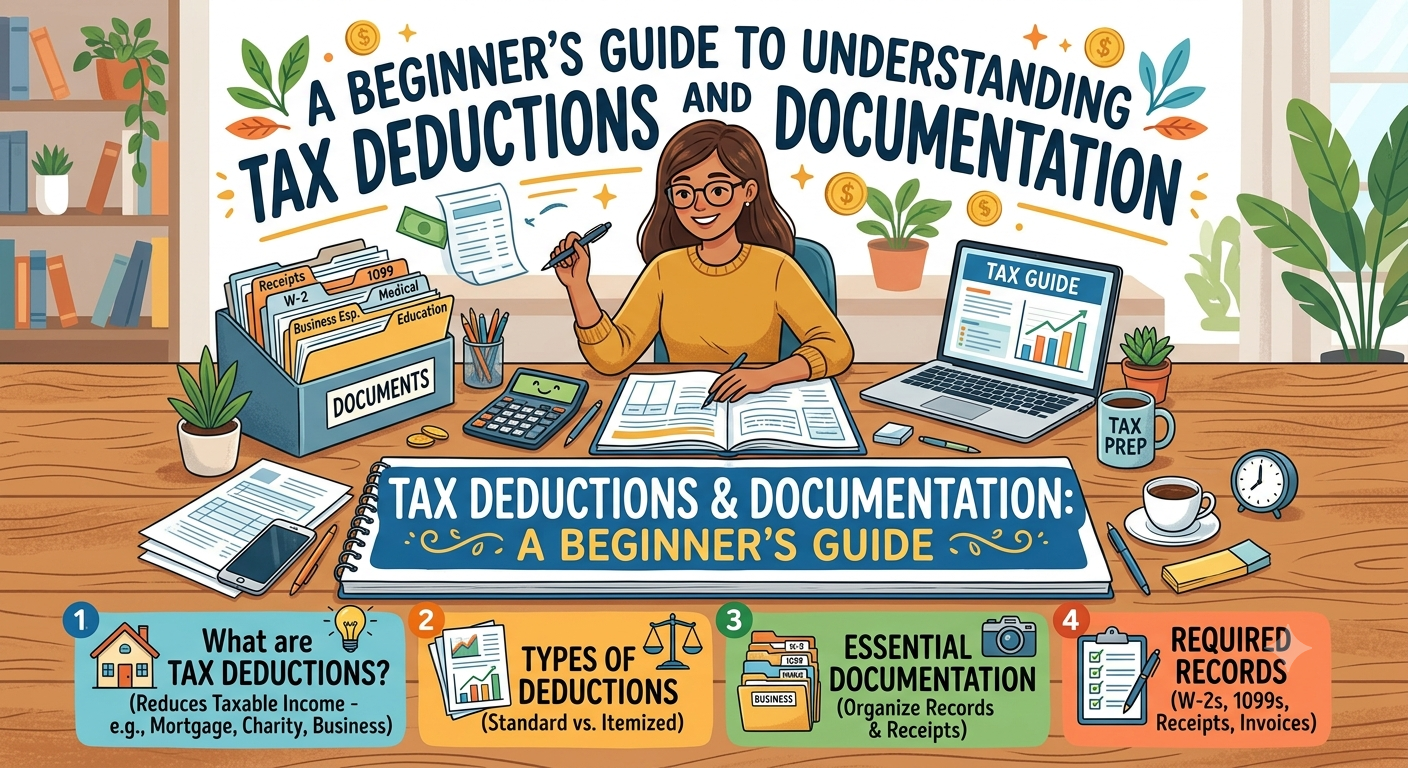
Understanding tax deductions and maintaining proper documentation are important parts of managing personal and business finances. For beginners, tax rules can seem complicated, particularly when different expenses, supporting documents, and eligibility conditions need to be considered.
Keeping accurate records helps taxpayers understand their financial position, support eligible claims, and prepare tax returns more confidently. For businesses, good documentation also supports accounting accuracy and broader financial controls.
This guide explains the basics of tax deductions, the documents taxpayers should maintain, and how organised financial records can support better compliance.
What Are Tax Deductions?
Tax deductions are amounts that eligible taxpayers may subtract from their income when calculating taxable income, subject to the applicable tax provisions.
The availability of a deduction depends on factors such as the taxpayer's circumstances, the nature of the expense or investment, and the rules applicable to the relevant tax year.
It is important to distinguish between a deduction and a tax rebate. A deduction generally reduces the income on which tax is calculated, while a rebate may reduce the tax payable when the relevant conditions are satisfied.
Taxpayers should review the applicable rules before claiming a deduction rather than assuming that every expense or investment qualifies.
Understand the Difference Between the Old and New Tax Regimes
In India, the availability of deductions and exemptions can differ between the old and new income tax regimes.
The old regime permits various deductions and exemptions for eligible taxpayers, subject to specific conditions. The new regime restricts many of these benefits, although certain deductions and exemptions may still be available under particular provisions.
Before selecting a regime, taxpayers should understand which benefits apply to their circumstances and compare their tax calculations under the relevant rules.
The appropriate choice depends on individual financial details, eligibility, and the provisions applicable to the relevant year. General advice may not produce the correct result for every taxpayer.
Why Is Tax Documentation Important?
Tax documentation provides evidence supporting income, expenses, deductions, and other information reported in a tax return.
Depending on the nature of a claim, relevant documents may include invoices, receipts, investment statements, insurance records, bank statements, donation receipts, and other supporting evidence.
Proper documentation helps taxpayers verify the accuracy of their claims and respond to questions if additional information is requested.
For businesses, organised records also help reconcile accounting entries, track expenses, and maintain reliable financial statements.
Common Documents Taxpayers Should Maintain
The documents required depend on the taxpayer's income sources, claims, and legal obligations. Common examples include:
-
Income records: Salary statements, relevant tax statements, invoices, and records of business or professional income.
-
Investment records: Statements and supporting documents for investments that may qualify under applicable provisions.
-
Insurance documents: Policy statements and payment records where relevant to an eligible claim.
-
Expense records: Invoices, receipts, and payment evidence for expenses that may qualify for tax treatment.
-
Bank records: Statements that help verify receipts, payments, and other financial transactions.
-
Tax filing records: Filed returns, acknowledgements, and relevant tax payment information.
Taxpayers should retain documents according to the applicable legal requirements and ensure that the information is accurate and consistent.
How to Determine Whether an Expense Qualifies for a Deduction
Not every expense reduces taxable income. Eligibility depends on the specific tax provision, the taxpayer's circumstances, and the purpose and nature of the expense.
For example, certain business expenses may be deductible when they meet the applicable requirements, while personal expenses generally cannot be treated as business deductions simply because they were paid from a business account.
Similarly, investment-related deductions are available only when the relevant conditions are met.
Before making a claim, taxpayers should identify the provision under which it is being claimed, verify eligibility, and keep the supporting documents. When the treatment is unclear, seeking advice from a qualified tax professional can help avoid incorrect reporting.
Common Documentation Mistakes to Avoid
Even when a taxpayer is eligible for a deduction, poor recordkeeping can make it difficult to support the claim.
Common mistakes include:
-
Losing receipts or failing to maintain supporting documents.
-
Claiming expenses without verifying eligibility.
-
Recording personal and business expenses together without clear classification.
-
Entering incorrect details in financial records.
-
Overlooking differences between accounting records and tax statements.
-
Failing to retain filing acknowledgements and relevant payment records.
A consistent recordkeeping process can reduce these problems. Taxpayers should organise documents throughout the year rather than waiting until the return-filing period.
How Businesses Can Improve Their Financial Documentation
Businesses often handle multiple transactions, employees, suppliers, customers, and tax obligations. Without clear procedures, records can become inconsistent or incomplete.
Business owners should establish processes for recording income, approving expenses, storing invoices, reconciling bank statements, and reviewing financial reports.
They should also assign responsibility for maintaining records and periodically check whether transactions are supported by appropriate documentation.
Reliable records help businesses prepare accurate tax information and provide a clearer view of their financial position.
How Internal Audit Supports Better Documentation
Internal audit examines relevant processes, records, and controls to assess whether they are operating appropriately and to identify areas that may require improvement.
Depending on the scope of the engagement, an internal audit may review expense approvals, financial reporting procedures, supporting documents, transaction records, and compliance-related controls.
Internal audit firms India businesses engage may help assess internal processes, identify weaknesses in documentation practices, and recommend improvements to financial controls. The exact scope depends on the organisation's requirements and the services agreed upon.
Internal audit is different from preparing a tax return or providing a statutory tax audit. Businesses should confirm which service is appropriate for their particular needs and whether any separate statutory requirements apply.
An effective internal control system can support more reliable records, but it does not guarantee that every tax claim is eligible or every error will be prevented.
Practical Tips for Organising Tax Documents
Taxpayers can make documentation easier to manage by following a few straightforward practices:
Create a dedicated filing system. Keep income records, expense receipts, investment documents, and tax filing records organised by category and period.
Store digital copies securely. Scan important documents where appropriate and maintain suitable backups while protecting confidential information.
Review records regularly. Compare financial records with bank statements and relevant tax information to identify discrepancies.
Track deadlines. Maintain a calendar of applicable filing and payment dates.
Keep evidence for each claim. Ensure that deductions and expenses are supported by relevant documentation.
Seek professional guidance when necessary. Ask a qualified professional to clarify complex tax provisions or uncertain claims.
These habits can help individuals and businesses maintain more consistent financial records throughout the year.
When Should You Seek Professional Help?
Professional guidance may be useful when a taxpayer has multiple income sources, complex deductions, business-related expenses, or uncertainty about the applicable tax regime.
Businesses may also need assistance reviewing financial controls, improving documentation procedures, or understanding the relationship between accounting records and tax reporting.
When considering Internal audit firms India businesses can work with, organisations should evaluate relevant experience, qualifications, independence where required, and the scope of services offered.
Tax advice, accounting support, internal audit, and statutory audit are distinct areas of work. Choosing the right professional depends on the issue being addressed and the applicable legal requirements.
Conclusion
Understanding tax deductions and maintaining proper documentation can help taxpayers manage their tax responsibilities more effectively. By checking eligibility, retaining supporting evidence, organising financial records, and reviewing claims carefully, individuals and businesses can improve the accuracy of their tax reporting.
For businesses, strong documentation practices also support reliable accounting and better internal controls. Where processes need further review, appropriate professional guidance can help identify areas for improvement.
The best starting point for beginners is simple: understand the rules that apply, keep accurate records, and ensure every tax claim is supported by appropriate evidence.
FAQs
1. What is a tax deduction?
A tax deduction is an amount that eligible taxpayers can subtract from their income when calculating taxable income, subject to the applicable provisions and conditions.
2. Which documents should I keep for tax deductions?
Depending on the claim, relevant documents may include invoices, receipts, investment statements, insurance records, bank statements, and other supporting evidence.
3. Can every expense be claimed as a tax deduction?
No. Eligibility depends on the relevant tax provisions, the nature of the expense, and the taxpayer's circumstances. Supporting documents should be maintained for eligible claims.
4. How can Internal audit firms India help businesses with documentation?
Internal audit firms may review financial processes, expense approvals, supporting documents, and internal controls to identify weaknesses and recommend improvements within the agreed scope.
5. How long should tax-related documents be retained?
The required retention period depends on the type of document and the applicable legal requirements. Taxpayers should verify the relevant rules and retain records accordingly.

 Arabic
 French
 Spanish
 Portuguese
 Deutsch
 Turkish
 Dutch
Dutch
 Italiano
 Russian
 Romaian
 Portuguese (Brazil)
 Greek
Greek