


Is a Dental Implant Better Than a Dental Bridge?
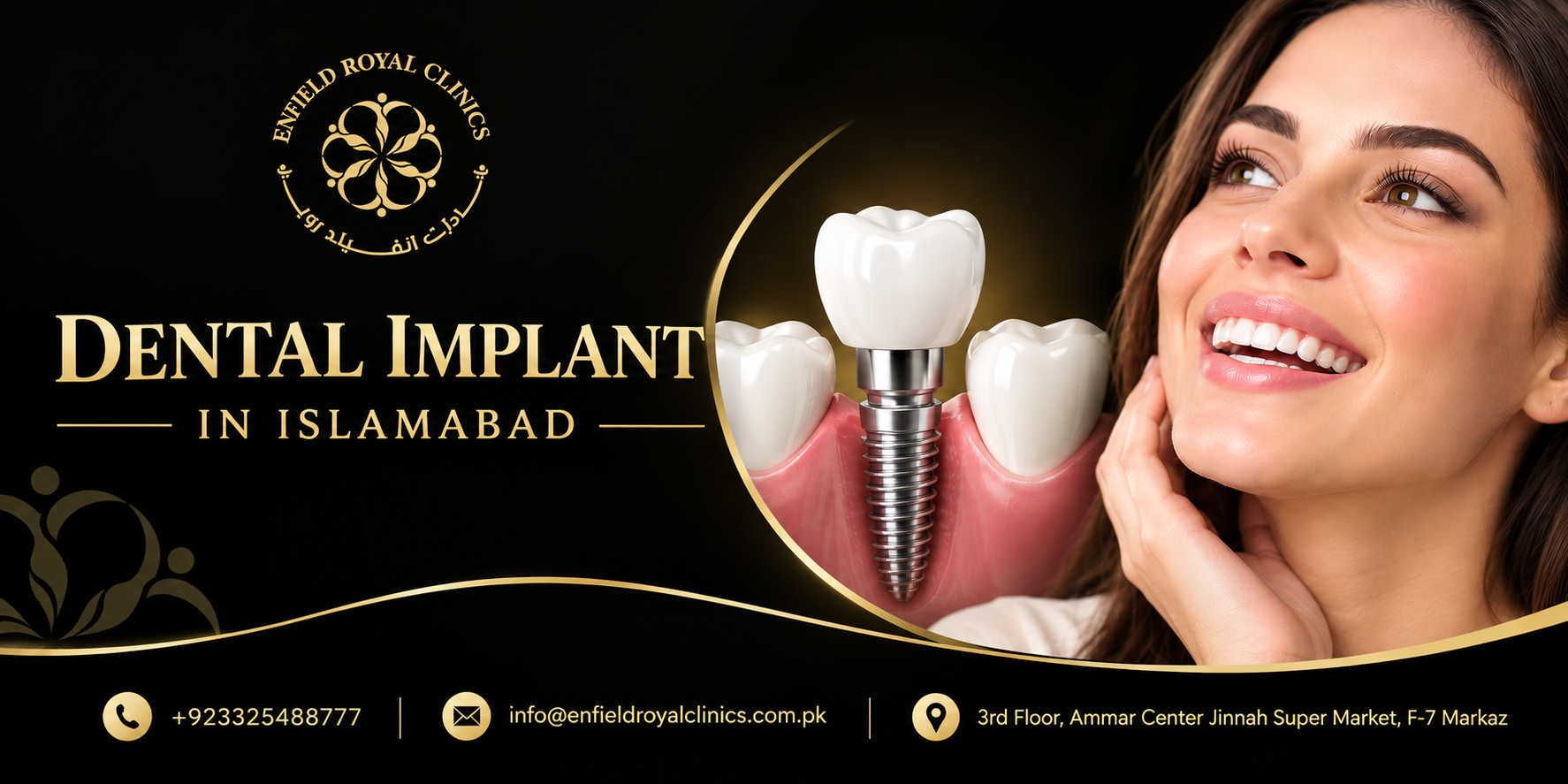
Missing teeth can affect a person's smile, chewing ability, and overall oral health. When a tooth is lost, choosing the right replacement can help restore everyday function and prevent some problems associated with an untreated gap. Two common options are dental implants and dental bridges. Both can replace missing teeth, but they differ in how they are fitted, how they support the replacement tooth, and how they affect surrounding oral structures.
A dental implant uses an artificial root placed in the jawbone to support a crown, while a dental bridge typically uses neighboring teeth or other supports to hold a replacement tooth in place. The better option depends on the patient's dental condition, bone health, budget, personal preferences, and long-term goals.
People researching a Dental implant in islamabad may want to understand how implants compare with bridges before deciding on treatment. Learning about the advantages, limitations, and care requirements of both options can help patients make an informed choice.
1. What Is the Difference Between a Dental Implant and a Dental Bridge?
A dental implant and a dental bridge both replace missing teeth, but they use different methods to provide support.
A dental implant is a small post, commonly made from titanium, that is placed into the jawbone. After the implant integrates with the bone, a connector and custom-made crown are fitted to complete the restoration. The implant functions as an artificial tooth root and supports the replacement tooth independently of neighboring teeth.
A traditional dental bridge replaces a missing tooth by placing an artificial tooth between supporting teeth. The neighboring teeth are usually reshaped so that crowns can be attached to them, holding the replacement tooth in the gap. Other bridge designs may use different supporting structures depending on the patient's needs.
The main difference is that an implant is supported by the jawbone, whereas a traditional bridge relies on adjacent teeth. This distinction can influence treatment planning, the amount of tooth preparation required, and long-term maintenance.
Neither option is automatically best for every patient. A dental examination helps determine which approach is appropriate for the location of the missing tooth and the condition of the surrounding teeth and gums.
2. Can a Dental Implant Help Preserve Jawbone Health?
Jawbone health is an important factor when comparing implants and bridges. Natural tooth roots transmit forces from biting and chewing into the surrounding bone. When a tooth is lost, the bone in that area may gradually shrink because it no longer receives the same stimulation.
A dental implant replaces the missing root and transfers chewing forces to the surrounding bone. This can help maintain bone around the implant site, although it does not prevent every type of bone loss.
A traditional bridge fills the gap above the gum line but does not replace the missing tooth root. As a result, the bone beneath the gap may continue to change over time.
However, implant placement requires sufficient bone to provide stable support. If the bone has already shrunk, a bone graft may sometimes be necessary before treatment can proceed. The need for additional procedures depends on the extent of bone loss and the planned implant position.
For patients considering a Dental implant in islamabad, jawbone condition is therefore an important part of the assessment. An implant may offer an advantage for maintaining bone around the replacement site, but the patient's overall oral health and treatment requirements must also be considered.
3. Which Option Is Better for Protecting Neighboring Teeth?
The condition of the teeth next to the missing tooth can strongly influence the choice between an implant and a bridge.
A traditional bridge usually requires the supporting teeth to be reshaped so that crowns can fit over them. This process removes some natural tooth structure. If the neighboring teeth are already heavily filled, damaged, or crowned, using them to support a bridge may be a reasonable option.
However, when adjacent teeth are healthy and intact, a single-tooth implant can replace the missing tooth without requiring those teeth to be reshaped. This may help preserve their natural structure.
Dental implants do not eliminate every risk to nearby teeth. Proper positioning, healthy gums, suitable spacing, and good oral hygiene remain important. Food can become trapped around either type of restoration if its shape or fit is unsuitable.
The decision should consider the condition of the entire area rather than the missing tooth alone. A dental professional can assess whether the neighboring teeth are strong enough to support a bridge or whether an independent implant-supported crown would be more appropriate.
4. How Do Treatment Time and Recovery Compare?
Treatment time is another important difference between implants and bridges.
A dental bridge can often be completed in fewer visits because it does not normally require surgery or a period of bone integration. After the supporting teeth have been prepared, impressions or digital scans are taken to create the restoration. A temporary bridge may be provided while the final one is being made.
Dental implant treatment generally takes longer. The process begins with an assessment of the teeth, gums, and jawbone. The implant is then placed surgically, followed by a healing period during which it integrates with the bone. Once it is sufficiently stable, the final crown can be attached.
The healing period may take several months, depending on bone quality, implant location, and whether procedures such as bone grafting are needed. Some patients may receive a temporary replacement during this time, depending on their clinical circumstances.
Recovery also differs. Bridge preparation may cause temporary sensitivity in the supporting teeth, while implant surgery can lead to short-term swelling, tenderness, or discomfort.
Patients who need a quicker restoration may prefer a bridge, while those willing to undergo a longer process may consider an implant for its potential long-term advantages. The appropriate timeline should be discussed during an individual dental assessment.
5. Which Option Lasts Longer and Requires Less Maintenance?
Both dental implants and bridges can provide reliable tooth replacement, but neither lasts forever. Their lifespan depends on oral hygiene, the materials used, bite forces, general health, and regular dental care.
Dental implants can remain functional for many years when the implant integrates successfully with the bone and the surrounding tissues stay healthy. However, the crown attached to the implant can wear down, chip, or require replacement over time. Implants can also develop complications, including inflammation and bone loss around the implant.
Dental bridges can also last for many years with proper care. However, the supporting teeth may develop decay or gum problems, and the bridge itself can become loose or damaged. If a supporting tooth develops a serious problem, the entire restoration may need to be reassessed.
Daily cleaning is essential for both options. Patients with bridges need to clean carefully beneath the artificial tooth, often using a floss threader or another recommended cleaning aid. Implant patients must clean around the crown and gum line to reduce plaque accumulation.
Regular checkups allow the dental professional to monitor the restoration, assess gum health, and identify problems early. The most durable option is not simply the one with the longest potential lifespan; it is the one that suits the patient's dental condition and can be maintained properly.
6. What Are the Main Advantages and Limitations of Each Option?
Each treatment offers benefits, and understanding its limitations helps patients choose more confidently.
Dental implant advantages
-
Replaces the missing tooth root as well as the visible tooth.
-
Can help preserve bone around the implant site.
-
Does not normally require reshaping healthy neighboring teeth.
-
Provides a fixed replacement that can look and function much like a natural tooth.
Dental implant limitations
-
Requires surgery and a healing period.
-
Needs adequate bone or, in some cases, additional bone-building treatment.
-
May not be suitable for every patient.
-
Requires ongoing maintenance to protect the surrounding gums and bone.
Dental bridge advantages
-
Often completed more quickly than implant treatment.
-
Does not usually require implant surgery.
-
Can be suitable when neighboring teeth already need crowns.
-
May provide a practical option when implant placement is unsuitable.
Dental bridge limitations
-
A traditional bridge usually requires reshaping the supporting teeth.
-
Does not replace the missing tooth root.
-
The bone beneath the gap may continue to shrink.
-
Cleaning beneath the replacement tooth requires extra care.
The choice depends on the patient's priorities and clinical needs. An implant may be attractive when the adjacent teeth are healthy and the bone can support it. A bridge may be more suitable when treatment needs to be completed sooner or when the neighboring teeth are already suitable for crown restorations.
7. FAQs About Dental Implants and Dental Bridges
1. Is a dental implant always better than a dental bridge?
No. An implant may offer advantages for bone preservation and protecting neighboring teeth, but it requires surgery and sufficient bone support. A bridge may be more appropriate in some cases. The best choice depends on the patient's oral health and individual circumstances.
2. Which option looks more natural, an implant or a bridge?
Both can look natural when carefully designed. The final appearance depends on the restoration's shape, color, position, and the condition of the surrounding gums and teeth.
3. Can a dental bridge be replaced with an implant later?
In many cases, a bridge can eventually be replaced with an implant, but suitability depends on the supporting teeth, bone volume, gum health, and the condition of the area. An examination is necessary before changing treatment.
4. Which option is easier to clean?
Both require daily cleaning. An implant crown can generally be brushed and cleaned between teeth much like a natural tooth, while a bridge often requires special tools to clean underneath the artificial tooth. The dental professional can recommend suitable cleaning methods for either restoration.
Conclusion
Dental implants and dental bridges both provide effective ways to replace missing teeth, but they differ in support, treatment time, and effects on the surrounding structures. An implant replaces the missing tooth root and can help maintain bone around the implant site without relying on neighboring teeth. A bridge may offer a quicker solution and can work particularly well when adjacent teeth already require crowns.
For anyone considering a Dental implant in islamabad, the most appropriate option depends on bone health, the condition of neighboring teeth, treatment expectations, and the ability to maintain good oral hygiene. A professional dental assessment can help compare the benefits and limitations of both treatments and establish a plan suited to the patient's needs.

 Arabic
 French
 Spanish
 Portuguese
 Deutsch
 Turkish
 Dutch
 Italiano
 Russian
 Romaian
 Portuguese (Brazil)
 Greek